Episode Transcript
[00:00:05] Speaker A: Good morning, everybody, and welcome to the Unscripted SEO podcast. Today I have Karina Baldwin here with me. She is a high level mental performance coach. Did I say that right?
[00:00:16] Speaker B: Yes. Yes, you did.
[00:00:18] Speaker A: All right, so today's conversation isn't going to be about backlinks. It's not going to be about AI and how to get yourself to show up or anything like that. It's about the steps before.
You know, you can be doing SEO all day long. You can be setting yourself, trying to set yourself up for success. You can be doing all these things so that way you can further your, your career in whatever way that, you know, SEO might be helping you do that.
But I can personally attest that if you don't have your mind in the right spot, like literally, I have books on here on my desk, some just random books that Zoom decided to blur out. U2 or U squared, for example, is just one of the many books I have with me. If you don't have your mind right, you're not going far.
Karina, before we started, you made a, you said a quote or you just said a line.
You know, you can't be running a $2 million business with a $2,000 mindset. And I was like, dope, yeah, yeah, thank you for being here.
[00:01:21] Speaker B: Of course, of course. So for anyone who has never heard of mental performance or they're like, oh, I've heard of a mindset coach. I'm. That's not what I do. That's not what I am.
I have real science backed behind it. I spent many, many years in the education, academia side of things, looking at research, writing, and reading God knows how many peer reviewed studies. There's real science behind it. I didn't just like, let's cross our fingers manifest, look in the mirror, write some affirmations and like, let's hope our business grows.
I have my master's in sport and performance psychology and I used to work at Florida State University within their athletic department.
I worked there for two years as an intern and as a mental performance coach for one of their athletic teams. And then I was hired by the US army to come out to Washington State. So that's what brought me out to the west Coast. I am originally from Florida, but made it out to the west coast and I was working for the US army as a mental performance coach for a handful of years. And then I decided to just start my own thing. Honestly, I just didn't want to keep on the corporate running circle and all the red tape of I want to go on vacation or I want to go visit my family. You know, as someone who lives quite literally across the country from my family, I can't just drive home and have dinner with them. It has to be, you know, and a six hour flight home, it's not just a two day trek. Like I want to go home and you know, it takes me two days just to get there. I'm back anyway, so it was a lot of, I didn't like all the red tape of corporate, so I decided to start my own thing. And here we are. I left corporate in 2022. I left the US army and started serving business owners and working with them on their brain. And so all the skills that I worked with athletes on, all the skills that I worked with the US Military on, soldiers, high octave individuals within the US Military, I now use those skills in the business owner world and in the business world. And you know, to, to the thing that I said before we started and what you just said, the. You can't run a $2 million business on a $2,000 mindset.
In the athlete world, your sport, in the military world, what you are capable of doing, it is all 100% mental. Like those people. There are, you know, in the athlete world, in the, in the military world, there are some aspects that are given talent you're born into, you know, like, you know, basketball players are tall, right? Their genes literally made them that way. But there's also basketball players who only 5, 10, only 6 foot, like 6 foot in the grand total of the world is still relatively tall, but in the basketball world they're incredibly short. And so like how are they still able to keep up with people who are 6, 5, 6, 6, 6, 7, 6 10, you know, and they're able to actually compete with those people. That's where skill, preparation, mentality all comes in, right? And in the business world, physical attributes aren't the biggest thing. Obviously there are some studies and if you didn't know this, there are some studies about like presentation of yourself and why and actually people who are more attractive do go a little bit further and have the ability to go a little bit further.
But that's just the like, okay, now you're over six foot, now what, what are you going to do with it? You could also waste it, right? Okay, you're naturally pretty great, you're naturally handsome, great. Now what? But the charismatic, the, the skill set, the mindset, all of those things are learned skills. And I think a lot of people forget like, oh, that person's just really confident and so their business is really successful. No, that person learned to be confident. That person learned to know what they're capable of doing and that's what made them successful.
So that's a, that's a background of what I do and kind of like bringing it to human terms instead of just like, here's this title and what do I do with it?
[00:05:12] Speaker A: Right. So in other words, you have zero credentials in others.
[00:05:16] Speaker B: I have no credentials, no.
But the thing is, is like everybody, like, you're not born a business owner, you're born an NBA player. You're not born.
You know what I mean? Right. So like, I think it's really cool that I always tell people all the time that like these successful people, you know, and you can take like wildly crazy, well known names, Elon Musk, Jeff Bezos, like these people that you're like, holy shit, how did they build this company? You know, regardless of whatever else is happening, but like the company, the business side of things that both these people or Bill Gates or, you know, whoever it is, they don't have anything special.
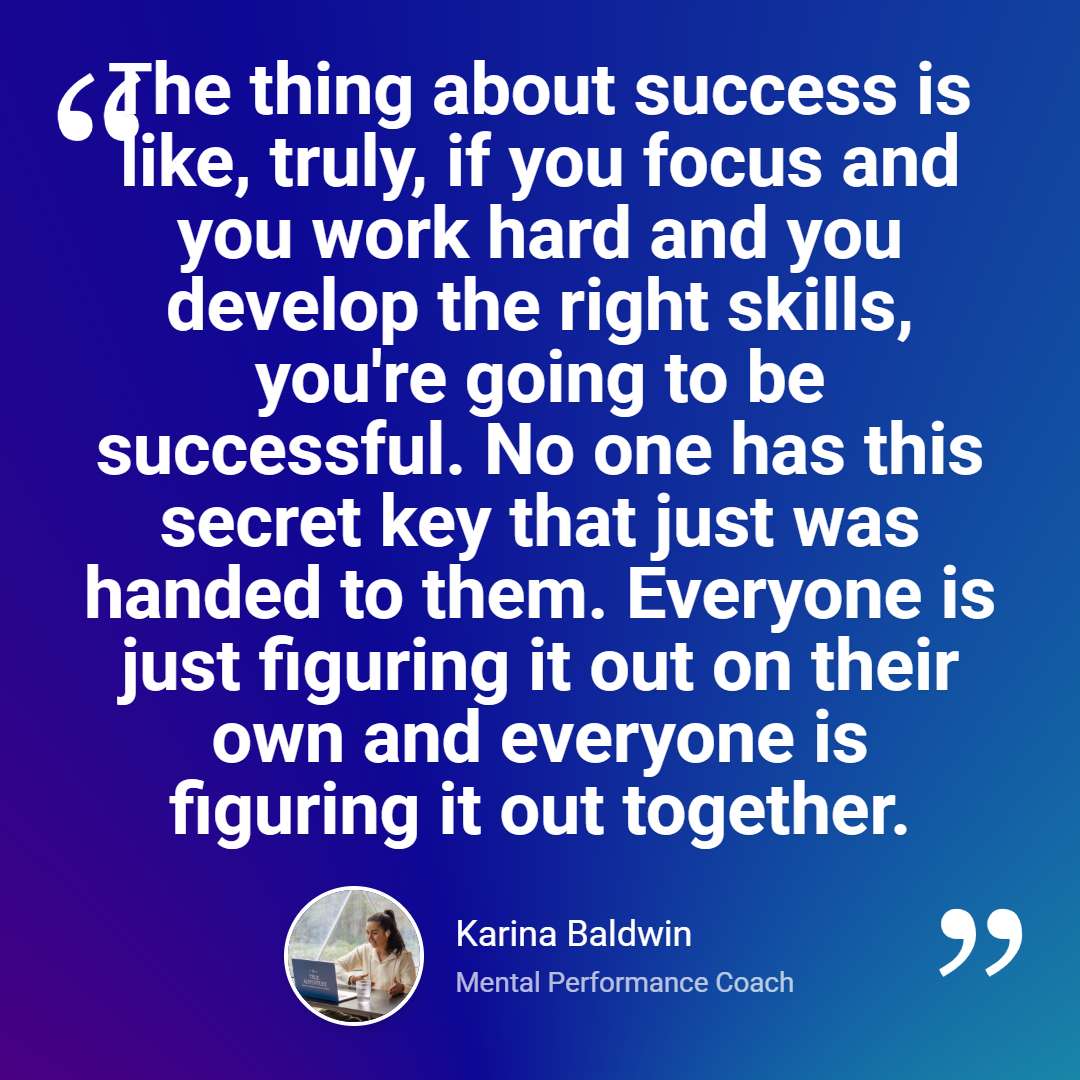
They. The thing about success is like, truly if you focus and you work hard and you develop the right skills, you're going to be successful. No one has this like, secret key that just like was handed to them.
I read, if you've ever read the book Shoe Dog, which is Nike's, I forget his name. The, the like owner of Nike, the founder of Nike, um, and he wrote this like autobiography and reading one, the shit that flew in the seventies of business owners is like crazy. He would like lie and they would like, his investors would be like, oh, do you have X, Y or Z? And he was like, I have X, Y or Z. And he'd go home and be like, I don't have X, Y or Z, but like, I'm going to figure out how to have it tomorrow.
And like the first time he, he worked with a company out of Japan on shoes, he lied to them about having a company within the US because they didn't have the Internet back then. Like, they didn't have the ability to check his sources of like, do you actually have a company? And he went to this, like this, this shoe manufacturer in Japan and was like, I have this company called Blue Ribbon. And he literally made up the name on the spot because they were like, do you have a company? And he was like, yes, it's called Blue Ribbon.
And so Nike used to be called Blue Ribbon. And he, you know, rebranded and did all of that and he actually didn't like the name Nike, someone else came up with it and he was like that's a stupid name. And then everybody voted like on his board and he was like okay, I guess it's called Nike.
But anyway it just shows that like they don't have anything special. Everyone is just like figuring it out on their own and everyone is figuring out together. And so like don't give people more credit than they honestly need. You can make it work. Like anyone can make it work.
[00:07:51] Speaker A: So we were going to go down prior to hitting record we were going to go down one topic.
We can still go down that rabbit hole but in the context of something you were talking about and his name is Phil Wright or Phil Knight with a Phil Knight.
[00:08:10] Speaker B: Yes, that's what it is.
[00:08:12] Speaker A: The shoe dog author.
As you were talking, you reminded me of a conversation I had, I don't know, a week or two ago with someone. And they're, they're stuck with where they're at. They make you know, multiple six figures. They have nothing to complain about. They're you know the 1%.
But they have been trying to grow their business and just numerous things just keep not working.
And they, the, the thing that they said they're big into Buddhism and I think it's Buddhism. And the word that they used was they found themselves in a negative cyclic or like a cycle pattern.
And they just keep seeing every handful of years the same sort of what's type of events take occur or the same obstacles.
And I've seen that pattern with whether it's myself or others. I like another guy I was talking to last week actually he runs a, runs and owns a nine figure business annually. Nine figures, high level. Right.
But he's like part of our conversation was he's like I'm stuck where I'm at, stuck at making nine figures a year. It's like 180 million a year.
But his goal is to get to a billion a year. And he's been at 150 to 200 somewhere in there again, 150 million to 200 million annually. He's been there for a couple years and he even was, and this, these people don't know each other.
He was like, yeah, stuck trying to figure out what I need to do to take it to the next level. And you know, we were talking funnels and SEO, social media, AI, all this stuff.
But again same like two different dudes, worlds apart in their income. And you can even talk about people who are, you know, in the under 50,000 a year income and they keep Repeating the same sort of cycles in their lives.
How would you go about I getting out of that cycle? If you're making 150 million a year and you wanted to hit 2, hit a billion a year or you're at 36 a year and you want to get to 100 a year or whatever the next income is.
And how do you identify those?
I don't know what the words are.
[00:10:48] Speaker B: Pattern. They're patterns.
[00:10:50] Speaker A: Yeah, patterns. And break them.
[00:10:52] Speaker B: Yeah. Well one, hire me.
Two, I would say like something that we need to recognize is the brain operates off of patterns. It operates off of the past and the past alone. It cannot calculate the future. It's just like that's not what it's built to do. It's not what it's capable of doing.
And we can predict all day long. Right? It's kind of like the idea of like a business plan for a bank. You can predict all day long, but it's not going to fucking happen. So I don't know if I'm allowed to curse on here, but all day long it's not a guarantee. We cannot guarantee the future. We cannot guarantee anything. And like, and that's where I like when people talk about affirmations and all of these things, don't get me wrong, there's some, you know, like real science behind some levels of affirmations. But at the same time, if we're just like I'm a billionaire and stare at yourself in the mirror and say I'm a billionaire, like it's not gonna happen. What happens is action like where you create change is action where you create change is looking at your past and looking at patterns that have have occurred.
When it comes to people that are noticing that like essentially they're creating like waves. I mean from what you were describing, it sounds like they have waves in their business where they're like I'm coasting, I'm coasting. Oh, we have this really great thing. We're falling again. Sos. How do we stop that from happening? I still can't get over. And it's just repeating itself again and again and again.
[00:12:22] Speaker A: Or like the younger guy with the lesser he kept getting to higher income levels for bigger opportunities.
But from my perspective from the outside looking in unintentionally would subconsciously self sabotage.
[00:12:41] Speaker B: Yeah.
Comfortable at for sure. And it's kind of like what I see this a lot. The problems that you're feeling now at $10,000 months are the same problems that you're going to feel at $10,000 days $100,000 months, million dollar months. Like whatever it is, it's the problems that you are, are feeling the symptoms, the thoughts, the emotions, the stress, the anxiety, all of those things. You just simply deal with it at a different scale.
And if you can't handle it at $10,000 months, at $10,000 days, it's just going to be exacerbated.
It's just going to be there.
[00:13:20] Speaker A: There were balloons.
[00:13:22] Speaker B: There were balloons. Zoom said, hell yeah, $100,000 days. Like, I don't know.
[00:13:28] Speaker A: So then, but keep going.
[00:13:31] Speaker B: So how you deal with that, how you kind of break the pattern is one recognizing the pattern. The biggest thing that I talk with my clients about is we have to name it to tame it. If you just crush your fingers, stick your head in the sand. No, I just have to keep operating, keep going, keep pushing and keep doing more and hiring more and figuring, oh, SEO is working really well. So we're going to throw more money at SEO. Like, there are some times that like, yeah, absolutely. If something's working, like, blow it up, make it bigger, make it happen, get more people involved and like, absolutely, that works in business.
But it's only a temporary fix for something that's underlying. It's going to rear its ugly head again. It's going to. That SEO is only going to take you so far. A business coach is only going to take you so far. You need to figure out what's happening inside of you. Again, your brain operates on patterns. And so finding the pattern and breaking the pattern is going to be the biggest thing that's going to help you in your business.
One skill set that I work with my clients on is the idea of like the story that you are telling yourself. Our brain is really good at finding evidence. It's really good at it. That that is what it's meant to do.
Unfortunately, a lot of the evidence is what you are telling it to find. So if you're saying, I can never break out of this pattern, your brain is going to be like, look, you've operated this way 10 times in the same pattern. You're right, you're never going to break out of this pattern. You, you falter. Once you hit 100k months, your next month is going to be a 10k month and it's going to keep happening and your brain is going to show you again patterns that that is true. It's what's called the negativity bias or the confirmation bias, depending on like, you know, both of them kind of play into one another. Confirmation bias. Is literally confirming the belief that you are having negativity bias, is simply only paying attention to the negative side of things, the bad side of things.
I think a lot of people really latch on to both of those because our brain, that's naturally what our brain does. Our brain is not meant for success, it's meant for survival.
And I think that like, that's something that business owners forget. And we operate. I, I call, I think this is a little extreme, but I, I call it like we're accidentally operating. We're not operating on purpose. We are just kind of like floating through life and like crossing our fingers that we figure something out. Something's gonna click, click. And there's days I, everyone has it. Every business owner feels the flow. They feel like everything's a high. They. On Cloud nine, everything clicked, everything worked. That launch went great, that product went amazing. The SEO hit, the web designer was like, this is the perfect thing.
But then there's days that you're like, what the fuck just happened? Where did my time go? Where did my money go? Where did.
I don't have enough money to make payroll next month and I'm a million dollar company. Like, that's insane, right?
And it's simply because the brain is only looking at, you know, 20% of the information on any given day, right? I'm making that set up. But it's not 100% of our information.
And on any given situation we are, our brain is, is doing its job and it's filtering information through just like SEO, right? Like Google going through and like operating SEO of like if someone types in acupuncture SEO, the purpose of it is to literally filter and help that person find the perfect acupuncturist for them in their area. That's within. They're not going to give, if they're in Seattle, they're not going to give an acupuncturist that's in Milwaukee, right? Like, that's the whole purpose of it. Your brain is that same search engine that we're only taking in X amount of information on any given day.
And so we have to intentionally look for different information.
What am I missing?
Where am I filling gaps that do not need to be filled? Where am I turning a blind eye, walking around with blinders on? If your launch only sold 50%, that's not a failed launch. You sold 50%, right? And depending on your launch. I personally just did a launch this last like March and I sold 50%. And I was like, that was a failed launch. And then I had to remind myself I made $25,000 in a month. Like, can you chill out? Like, relax, like, hang on a second. And that's 50%. Like that's not a failed launch. I mean, $25,000, that's crazy brain. Did you not pay attention to that paycheck? That $25,000 just came in your bank account.
No, my brain was like, yeah, but look at the other $25,000. I didn't make, I didn't make 50.
Okay, right. So we need to ask ourselves these questions, these businesses. The dollar amount on businesses for me personally doesn't matter because someone that's operating a billion dollar business, a million, multi million hundred thousand dollar business versus someone who's going for their first 10k, we're all, we all have very similar problems.
And I love when my clients are like, yeah, but mine's different. And I'm like, I love you, sweetie. No, it's not.
Our brain is 99 the same. Right. It's like our DNA in, across the human spectrum, 99.9% of our DNA is the same. And yet you look around the room and not a single person looks alike. And that's the way the brain operates too. All of our problems, 99.9% of our problems are all the same.
We all want a sense of belonging, we all want a sense of safety, we all want a sense of self worth.
And every single business problem that you have is tied to one of those.
[00:19:19] Speaker A: Yeah. So those three things were self worth.
[00:19:23] Speaker B: Self worth, safety and belonging.
[00:19:26] Speaker A: Belonging, got it.
[00:19:27] Speaker B: Yeah.
[00:19:28] Speaker A: So I have a couple notes here. So two things that you said that two thoughts that I had from numerous things you mentioned was identity based belief system versus, you know, fear based fantasized events appearing real or whatever these stories are. Oh, that was another thought. One of my favorite quotes by Seth Godin, it's in the book. All marketers are storytellers and it's humans, we humans, let us lie to our stories, let us lie to ourselves. And those lies satisfy our desires.
And so if, you know, if my subconscious desire is to feel safe and I feel safe, then I'm going to find reasons, elements in whatever my situation is to tell myself. Oh, I'm going to justify, like you were saying, I'm going to find the facts to justify, to make it okay to be down here and comfortable and safe.
[00:20:32] Speaker B: Yes.
[00:20:34] Speaker A: So.
[00:20:37] Speaker B: People talk about, people talk about that. They're like logical decision makers. Humans aren't logical. We make emotional decisions and we use logic to reason it and back it Up. And even the different decision makers that they're like, oh, I love stats that stat. You've decided, your body has decided whatever. The answer is, invest in the person, move to the city, accept the job, whatever it is your body has decided. You just use those stats, you use those different things in order to back up and be like, yes, that's the correct decision.
There's nothing wrong with that. But I want everybody to like, realize that like the science shows that actually humans are emotional decision makers. That's okay. It doesn't mean that we're emotional beings. Right. It just because I think a lot of people are like, emotion means bad. Emotion is not bad. In fact, it's really good if you use it correctly.
[00:21:32] Speaker A: Right?
Yeah.
So I totally agree with that because, you know, 99%, like anytime someone, you know, makes any especially purchasing decision, you know, I bought my iPhone because of my emotional attachment to the identity that is Apple, largely Steve. Steve Jobs or, you know, all the other things that I purchase. I like, I wear Oakleys because I'm from Southern California and I identify as a surfer skater dude. So I wear Oakleys.
And you know, I like that warm and fuzzy feeling. I like that cool, edgy rawness, that of a rebel sort of vibe that a skater often has.
And so, you know, I resonate with that. So I surround myself with, you know, products or whatever items that back up whatever story I feel like telling myself.
[00:22:36] Speaker B: Yeah.
[00:22:37] Speaker A: So we make a lot of. We behave largely on our identity and the stories we tell ourselves.
So how do I identify? And this might. You could take this a different direction if there's a better question within what I'm trying to ask. But if my identity is, you know, I'm a.
I'm a broke trailer living. Nothing wrong with that.
But I live in a trailer and I'm broke and nothing ever works out for me. And my parents are divorced.
Whatever story it is I'm telling myself that I identify as, how do I.
[00:23:21] Speaker B: Break out of that? Yeah, yeah.
[00:23:23] Speaker A: How do you break out of that and not just break out of it? It seems like there's three parts that keep. Three core elements that keep repeating themselves in the whole self growth cycle. Identify the problem, figure out what you want to be, and then figure out the steps to get there.
Something in that line. Does that make sense?
[00:23:44] Speaker B: Absolutely. The, the simplest thing that I can tell you is the idea of like, dress for the job you want. Right? That's like, essentially it all boils down to like, dress for the job you want. This does not mean you need to buy a $5,000 suit, right? To be a multimillionaire, if you're currently broke and living in a trailer and that's all you can afford one. We have goodwill, we have resources. There are things that, like, becoming a resourceful person is going to be like, step one. And the idea of becoming a resourceful person is like, underlying the dress for the job you want. And when I say dress, I don't just mean physically dress for the job you want. Mentally act in this way. This is when you wake up in the morning. Does a millionaire have breakfast or do they skip breakfast? Like, it's up to you. There's some millionaires that fast. But for me personally, that's not my million dollar mindset that I have a nice, healthy, yummy, like, fantastic breakfast every single morning. And that is one aspect of like, quote unquote, dress for the job you want.
And if you're like, oh, I don't have the ability to buy organic, fine, that's okay, right? You can become resourceful within your own resources. Right now, I literally have a garden in my backyard. I don't have to buy strawberries every single day. I literally pull strawberries from my backyard and I bought, you know, like, I think, like $30 worth of plants in, in the spring and I planted them, and now I have strawberries for the season. Right? Like, they don't necessarily, and I'm lucky because I have a plot of land. You're like, we can, we can go and be like, yeah, but I don't have. Yeah, but I don't. There's the story that you're telling yourself. You can make something work. I don't have an entire backyard. I have a very small backyard. But I was like, you know what? I want to, I want to farm. I want to, you know, have a garden. That's something that's really valuable to me and that's the, the lifestyle that I want to live is one day I want to have fresh food resources on my own land. And, you know, I live in a city and I don't have a massive farm. I don't have cows, I don't have chickens. I don't have. And that doesn't necessarily mean that's what I want in the future. But right now, can you identify what this millionaire mindset, for lack of a better term, this millionaire action, what does that look like? And how can you become resourceful to make it happen? Now, something that I got in the, in the business world, everyone is, is making it up as they go, right. There is, you know, there's this famous quote from Henry Ford that was like he, if I asked the people for one that they want, they would say a faster horse.
[00:26:29] Speaker A: Yep.
[00:26:29] Speaker B: And he was like, I'm going to give them a car. Right. Like he created something that did not exist before. And in order to have a successful business, it doesn't necessarily mean that you have to create a car when there were no cars. Right. You don't have to create an Apple product when all we had was Dell like, or hp.
You know, like, you don't have to necessarily do those things, but you have to get creative to figure out how can you find resources. I think the number one indicator of whether or not someone is going to be successful is how resourceful they are.
And the idea of dress for the job you want.
How can you, without money, figure out how to wear a suit to a networking event? There are free networking events. There are resources to get clothes to homeless shelters. There are free showers for people who don't have running water. There is free food for people who. There are resources and abilities to, to get information, to get the things that you need as a business owner. And one, if you're starting a business, we're not worried about food. Right. Like in all reality, like we're, we're privileged enough to not have to necessarily worry about water or food in our fridge if we're like, I want to start a business. Like, we're past the point of like physical survival on this earth, which is a amazing privilege to have, that we get to worry about business.
So breaking that habit and becoming resourceful in your own way, getting creative, figuring out, okay, I may not be able to do a TED Talk, but can I speak to a local networking group? Can I go to a coffee shop and just walk up to a random stranger and tell them what I do for a living. Like, you can do a mini TED Talk. You can do that with just one person in a coffee shop? Why the hell not?
Something that. I was raised by an engineer. She, my mom was an imagineer at Disney. If you don't know what that is, they are the, like in the engineering world, they're like really, really sought after jobs. And she's in, she's an engineer that imagines, you know, the Disney rides, the Disney restaurants, the, like, she created all of those when she was in her younger years, when she was in her like 30s and 40s, she was working as an imagineer and when they were creating rides.
So like the magic carpet ride, she worked On Tower of Terror, she worked on Winnie the Pooh. She worked on Test Track, she worked on all the Space Mountain, like all these incredible rides that people well know now.
And how they created these ideas is they quite literally took post it notes and they were like, no money, no time, no gravity, no rules, no nothing.
Ideas. Put it up on a whiteboard and they wrote ideas and something that she distinctly remembers. And I think this was, I can't remember if this was Space Mountain or if this was Mission to Mars that she was working on, but it was a space one.
And someone wrote like we take.
They're called guests. They're not clients. They're or customers. They're called guests. We take guests to space.
Yeah. And they were like, we want to take them to space. They put, let's put them to space. And like that was on a post it note. Obviously no matter how much Disney can create, they can't take individuals to space. Especially back in the 90s, 80s. I don't know when this was happening. Right. They couldn't actually take people to space. But it was up on the board and my mom remembers that post it note so well. She didn't write it, someone else did. And then they were like, wait, this is a really good idea. How can we get resourceful that we don't have to leave the. The Earth's atmosphere atmosphere, but how can we create a ride that replicates taking guests to space to the International Space Station and like incorporate NASA and do all of these things and they created either Space Mountain or mission to Mars? Like I said, I can't remember which one it was. And now if you've ever been on either of these, it helps you feel like you're literally in space. All because a post it note said I want to take the guests to space.
So dress for the job you want. You don't have to buy a $5,000 suit, but can you go to Goodwill and find a $10 blazer? Can you go to the resources where you borrow your neighbors and get it tailored to you, or do you have people that you know, networks that you know, people are so willing to help you, especially when they're further along than you? I can't tell you how many people have looked at me in business and are like, oh my gosh, I want what you have. I'm like, buy me a cup of coffee, I'll tell you all my secrets. Like $7 will get you speaking to a six figure earner. You know, like it's resourceful. Ask the question.
[00:31:37] Speaker A: So Correct. Make sure I'm tracking with you. So resourcefulness in the sense that you're looking for physical, at least in the beginning, physical things that are on your exterior person to help validate the story in your mind that you are successful or going to be successful or you're acting as, as if you're going to be successful. So that in turn helps you to, you know, make the right decisions from the right frame of mind as if you were already.
Yeah, successful person.
[00:32:18] Speaker B: Absolutely. And, and creating that. The idea of fake it till you make it. I think it's so funny because you're not faking it. That's the best you got right now. As long as you're giving the best you got right now, that's the best you got right now. So like there's no faking it. There's no such thing as faking it.
And cosplay or like role play as a successful person have this mentality. If I were to have a million dollar business, what would I, what would I decide in this moment?
This doesn't mean that like you have to go.
I mean for me personally, million dollar business. I'm gonna get massages every single week. Like that's something that, that will be absolutely daily. My, like, oh God, I would love that. But like minimum, once a week. Absolutely. Once I have a million dollar business. That's what million dollar business means to me.
And so I'm doing everything I can to like, okay, I may not be able to do 150 massage every week right now, but I started doing 150 massage every two months. That this is a regular thing that like I'm doing what I can afford right now and what I can create. And like what I think is justifiable right now. The external plays a massive role on your internal. So when it comes to believing a story, you have two ways of doing it. Top down and bottom up.
So top down, literally your brain, if you're able to be like, I am a morning person and then you become a morning person, great. Top down worked for you.
That's amazing.
But more often than not, top down doesn't work for you, that's okay.
Because we have another way of processing. We have bottom up. Okay, I don't feel like a morning person, but my alarm is going to go off at 7:00am that's early for me personally. So 7:00am, I'm like, I'm going to wake up at 7:00am I'm an 8:00am waker upper and I'm like, ooh, nine hours of sleep, huh? That was crazy.
[00:34:20] Speaker A: I used to be just total side tangent. I used to be, you know, I want to sleep till noon every day if I can.
[00:34:26] Speaker B: Yeah.
[00:34:27] Speaker A: Like eight, nine o' clock pretty consistently for a long time. But in the last like nine. Oh, I know what happened. I moved up to Idaho and lived on a mountain with a cabin. And yeah buddy, whole upstairs had no. The master bedroom had no. It was a loft.
And so our.
[00:34:46] Speaker B: No airflow. No.
[00:34:48] Speaker A: There was no wall, no exterior wall. So like I could talk to the people in my living room which is right under the master. So it was big.
And the whole front half of the cabin was overlooking Spokane Lake river and was pointed directly at the mountain where the sun would rise every morning. And as you know up here, you know the sun. Right. The first light is like at 4:00am yeah. And so now like today I was up at 4:40 ish today, yesterday.
[00:35:26] Speaker B: That's the middle of the night. That's crazy town.
[00:35:29] Speaker A: Right. But now like last night I was just like, I'm falling asleep, can't really stop it. I'm exhausted and it was like 10 o'. Clock.
[00:35:38] Speaker B: Yeah.
[00:35:38] Speaker A: But so by the time I wake up, I get, depending on what time I go to bed, six to eight hours of sleep and I feel great in the morning and I just wake up with. And go to sleep with the sun anyway. Total side tangent point is an extreme everyone.
Yeah, an external.
[00:35:56] Speaker B: Absolutely it does. And like the thing is, is I think, I think people also forget how powerful their brain actually is in deciding things. Everyone has experienced something that they've decided and then it does.
Right. Like I'm going to. And then experiences. I know for me personally the, the biggest thing that I remember in my young, not quite adult life, I was a, I was a rower in college. I was an NCAA Division 1 rower and my high school team, we practice in the afternoon and in college it was a 6am practice so we had to wake up at 5.
And as an 18, what 18 year old is like, you know what time I want to wake up?
[00:36:48] Speaker A: Yeah.
[00:36:48] Speaker B: Right, right. So we would wake up at 5. Well, I would have to eat breakfast because I was going to, you know, practice and it was just day one and you wake up. Did I like it? No. But I had to do it. I chose to do it. I could, I quit any day. Absolutely right. Same thing happens when like people get corporate jobs for the first time. And I think when we switch from corporate to personal ownership, we so easily are willing to like, oh, I'm just breaking my Own promise. I'm not breaking a promise to somebody else. And. And so it's so easy for our brain to be like, I'll just sleep in. It'll be fine. I'm not disappointing anyone but me.
But if we were working a corporate job, you bet your ass you'd be up. You wouldn't like it. You don't have to like it, but you do it right. And there's a big difference. And I think that there's. I think there's something that we forget, that when push comes to shove, if you had to, you would. I think about this in, like, if your spouse, your child, someone that you love was diagnosed with cancer and they had no money, you sure as hell would figure out how to find the money to get them the care that they need. The time, the effort. If it's quitting your job and begging for money on the streets, you would do it because you care about that person. But if it was you, is that still something that you would do? Right. And we're so quickly able to, like, brush off promises that we make to ourselves.
And, and the only way to find success is to keep the promises to ourselves. And that's where, like, where I see a lot of business owners, the lack of self trust and you know, to throw it all the way back to the beginning of this podcast of the cycle of I keep failing, I keep self sabotaging. They lack a sense of self trust and something that I want everybody to remember.
And I use this because I use. I'm the queen of analogies. I fucking love analogies. They're so good at, like, getting people to, like, really grasp onto something.
There was once upon a time that you refused to brush your teeth in the morning, and now you don't even think about it.
Yeah, it's not even something that you literally wake up, brush your teeth. Like, it's not even a question. And when you don't brush your teeth, you're like, all day, you're like, oh, my God, oh my God, oh my God, I didn't brush my teeth. I hope no one comes up and talks to me closely. Like, I need gum, I need a mint. I didn't have time. Like, you know, like, there are those rhymes that, that it doesn't happen. But like, what of 365 days a year, you brush your teeth 363 days a year, you know, so like.
[00:39:39] Speaker A: Right, right.
[00:39:40] Speaker B: You, you have created the ability to create patterns, habits. And like you said with James clear of, like, you don't rise. What did he say you don't rise.
[00:39:51] Speaker A: To the level of our goals and aspirations?
[00:39:54] Speaker B: Yeah, you fall to your habits.
Right. And so like your, your ability to. The fact that like you brush your teeth every day, one shows. And this is not for atypical brains. Like I want everyone to ignite. If you are an atypical brain, if you are neurodivergent, there are different sciences behind it. Okay. Because I have clients that are like on the autism spectrum and they struggle with like personal hygiene. They're like, I don't brush my teeth every day. I'm like, cool. We need to like go a different way. But a neurotypical person.
If you brush your teeth every day.
[00:40:30] Speaker A: You can build self trust in an old mentor of mine. I just brought up a couple notes from like, literally this is July 2021. So this is basically four years ago.
One of the ways you could interpret integrity is the level in which you keep the promises to yourself.
So it's like, are you someone of integrity? Do you keep your word with others? Sure, that's a lot easier. Like you were saying, go out and you know, pan on the streets for, for change or whatever. But do you keep those same promises to yourself?
Something in all of this? Have you read Total Brain Fart?
Not Ego is Enemy.
Ryan Holiday.
There's another ego book. I can see the picture. The book of it in my mind. Eckhart Tooley.
Oh, you, oh, you would need. You need to read his stuff.
[00:41:31] Speaker B: Okay.
[00:41:35] Speaker A: But so he goes into a bunch of ego stuff. And so this is literally from July 10, 2021, a conversation with my mentor.
So this is in regards to. This is when I was first identifying my cyclical negative self sabotaging patterns.
My. So I'm just going to read some of my notes here. My shame and guilt came from the. What I labeled as the fall of me. I. I grew my business really big and then it didn't.
That turned into years of negative and so this external thing business went from multiple six figures to quite literally sleeping on my best friend's couch. Still humiliating.
That turned into years of negative and limiting behavior. So a big external thing and my identity was wrapped up in oh, Keith is an entrepreneur and now I'm not and I have nothing. I had the car, everything.
That turned into years of negative and limiting behaviors. This got me stuck in a weird cycle of is all.
In all of this, my ego became addicted to pain. And every time I begin to discover what this cycle was, I would allow my ego to bring it all down again. And Bring me back to the pain. The pain equals self.
Self centered. Where all the attention was on me. Oh, look at me, look at my life. I'm. Everything is bad, you know, Anyway, I can't believe I thought I had that thought. I was like, I wonder if I can find this really quick. And I happened to find it.
[00:43:19] Speaker B: Yeah.
It's tying your business results to your self worth.
Right.
And there's, there's a measurement scale, it's called the AIM scale, Athlete Identity Measurement Scale. I've adapted it to the business world.
And essentially creating a healthy identity around your business is the most important thing about having self worth outside of your business. And to stop the.
If this fails, that doesn't mean I'm a bad person. If I lose entrepreneurship, that doesn't mean that you're worthless. Right. Like we think about again, the analogies and I think it's so much easier when we think about something outside of us. Right. If Tom Brady, in the height of his career within the NFL, broke his femur, which is the, you know, strongest, hardest bone in a human body. It's the thigh, thigh bone. If you don't know what that is, he broke his femur. If he broke his pinky. If he, you know, like, pinky seems small, but like he's a quarterback, it's a huge deal. If he breaks something in his hands and he is, loses the ability to be a NFL quarterback and that's the only thing that his identity is wrapped up in, what does the rest of his life look like? And it doesn't have to be like a tackle accident. He could have gotten in a car accident and his entire career taken away from him. Now what does he identify as? A father? Does he identify as a husband? Does he identify as a sibling? As someone that can contribute to society. Right. We've seen a lot of athletes lose the ability to be an athlete and then become spokesperson people for other things. That's a, that's a healthy thing. That's good, right? That means that they were like, okay, I can't do this thing that I loved. Or maybe they have a sense of relief as well, right? Like you. We don't know. We're not inside their brain. But when it comes to your identity, it cannot be one thing. Something that a mentor once told me. And you know, and here's the science behind it. But she instilled me the coolest thing about you cannot be your job.
You know, how sad your life would be. Now don't get me wrong. Entrepreneurship. Badass. Super cool. It's not, you know, I'm a barista at Starbucks.
But if that's the coolest thing you have to offer to the world when you're 65, when you're are like, I want to retire and I want to be done. Because most entrepreneurs do not want to retire at 65. They want to retire, retire at like 45, right? So I want to retire like, you know, whatever it is of like you want to do it for the rest of your life or you only want to do it for 10 years.
Okay, now what? You're done.
And now you have to start all over. Create a new identity. No, a healthy identity is you have little aspects of these different things. And if one gets taken away from you because of an accident, a brain injury, a physical injury, a financial loss, right? There's some things in the financial market that we can't control, right? A different product comes on board and quite literally takes you out of business because it's newer, better, smarter, you didn't adapt, right?
And so, you know, and like, let's figure out how, how can we fill in these gaps. A business identity creating, you know, and like I said that athlete identity measurements, scale, you can look it up. It's seven statements, seven questions, essentially, like yes or no? I always ask. It's supposed to be built on like a Likert scale, which is like 1 through 10 or 1 through 7. And I think it's 1 through 7. I ask my clients, yes or no, it's black or white. And if it's like maybe no, the answer is no, right?
And so like that's where you can figure out how healthy is the identity. Are you identifying that you're successful regardless of the number in your bank account, regardless of the number of clients that are in your business, regardless the number of products that you sold last year, are you happy with your life and what you're creating without the business?
And that's a healthy identity and that's how you create more of the level mindset rather than high highs, low lows. Because if we feel too much of the high highs, low lows, that's where like mental health struggles really come in, versus like acknowledging, celebrating woohoo. This is exciting highs. And also knowing that like, you know, you can't, you are not necessarily responsible for every single aspect within your, but every single result within your business. There are things that you can't always control. A really good visualization. There was this.
I've been seeing a lot of golf. I don't know why, because I don't golf and I don't like golf. But it's been popping up on my social media a lot.
And I saw this guy literally take this think of like a slide, but just the size of a golf ball, right? So it's like a foot tall, a slide. And he was a foot and a half away from the hole.
And he was like, you could play the perfect game and still not get a hole in one, a par, or, you know, all the other golf terms. He took like five golf balls and dropped them all down this slide. And of the five, only two of them made it into the hole. And it was like, it just shows you that, like the green, the. The. If you know which is the platform. I don't know what the hell. If you don't know what a green is, it's the place that you golf on. I'm clearly don't play golf.
But there are things that you cannot control and you can do everything right. He dropped the balls at the same rate, same thing. They didn't touch each other and they all went different directions.
The green had an effect, Right.
[00:49:27] Speaker A: Something I think of often.
Jack Canfield was the first person who I was introduced to in regards to success type of thinking. He's the author of Chicken Soup for the Soul, Billion Dollar Brand books. Like what? Like Billion Dollar Brand. Before that was like.
[00:49:44] Speaker B: That's like Barnes and Noble Billion Dollar brand. Yeah, that's like pre Internet.
[00:49:49] Speaker A: Yeah, well, that's what I was gonna say. He was pre J.K. rowling and he has in his book Success principles everybody should read. It is an equation. E plus R equals O.
Event plus respond. My response equals outcome. The event, good or bad, does not dictate the outcome. It's only my response that does. So if I have a negative response, I'm gonna have a negative outcome. So I could have a good event and negative response and have a negative outcome. So the. The event, good or bad doesn't matter. It's my response that again dictates the outcome.
[00:50:26] Speaker B: Absolutely. That comes from Albert Ellis.
He's a scientist, he's a psychologist and he experimented. What's actually the difference between humans and mice?
And it all comes down to like your prefrontal cortex. Right. It's why. Why every human on planet could watch the same movie and have a different reaction. Yeah, right. The. The event does not change. It's the same movie. We can all watch the Notebook and some people are going to cry. Some people are going to go home and make love to their partner. Some people are going to Be like, that was the stupidest movie I've ever seen.
Some people are going to fall asleep during it. Like, whatever it is.
All of us are so different.
The event did not change. It was all, you know, the hour and 45 minutes of the Notebook. And.
But you and your past experiences, your thoughts, your emotions, all of that creates the actions, creates results. And we can take that into business, like, so easily because. And I say, I. I say it with, like, the utmost love is like the. The number in your bank account is your fault, right? And so if it's zero, it's your fault. If it's a hundred thousand dollars, it's your fault. Like, that's great. Own it. Yeah, right? If you once did a $60,000 launch, that's your doing. That's your fault. You did that, right? And I think fault. Sometimes we also, like, create this, like, negative connotation or, like, consequences. And Albert Ellis created.
He's the father of this, like, thought process.
And it's where. If you've ever heard of, like, cognitive behavioral therapy, CBT therapy, like this or cbt, this is where this is coming from. And like, your equation that you just gave, event plus reaction. Yeah, yeah. Equals. Yeah. Like, that all came from CBT therapy and Albert Ellis and all of that. Like, that's a direct derivative. Right. Of. Of this science, which is really cool to experience that. Like, I see this in business all the time. And people, business owners read things and they're like, oh, my gosh, did you know? And I'm like, yeah, that came from science. Like, there's a real science behind that, and it's not just someone just pulling shit out of their ass. They, like, you know, I'm sure he probably got that from CBT therapy and created his own version, which is amazing, right? Like, there. There doesn't need to be always this, like, idea. I think also business owners. Now I'm going on a different tangent that, like, you have to create something brand new. He didn't create something brand new. He just said it in a different way and more people connected with it. If you were to read what I read when I was learning about Albert Ellis, which when I was 22 and in a windowless room reading this literature review about thought processes, all these cognitive, behavioral, and regulation, all these science words, you'd be like, what the fuck did I just read? But if you read this book, A Chicken. No, Soup for the Soul, about success, and that clicked. Amazing. Let it click, let it work, right? Like, that's just a new way of thinking.
You don't have to always go back to like, I have to create something that's never been thought of before.
Newsflash. We are now in the age of AI. We are now in the age of. Of 21st century.
Fortunately, unfortunately, there's never going to be an original thought again.
Someone has thought your thought again. Someone has thought your thought in some way, shape or form before. That's okay. But if you say it in a different way, someone's going to connect with it. Right. It's like people. Yeah, people sell the same freaking product and someone will buy product A versus product B. There's, there's a reason, there's the marketing. Right. Someone's going to connect with one thing versus another and it's literally the same thing.
[00:54:20] Speaker A: And that a lot of it comes back to the stories.
[00:54:23] Speaker B: Yeah, absolutely. It's like you could find any Amazon product in the original store, but it's going to take it a week versus tomorrow. And so you're like, I want it tomorrow. So you're going to order through Amazon and you're going to spend more money with Jeff Bezos versus giving it to a small business owner. Right. And. Or if you're like, no, I'm going to do every. And this is something that I do personally as a business owner. I'm like, do everything I can not to order from Amazon, even if it takes me two weeks to get the product or get whatever it is, or I'm going to go physically go buy it. Right. Do everything I can to make that happen. Because for me, the story I'm telling myself is as a small business owner, if I put more money in small business, even if I pay the $5 for shipping, it's going to come back. It's going to help me in the future. They're going to feel it more than Jeff Bezos is going to feel it.
[00:55:14] Speaker A: So you mentioned a couple things.
If bands. Okay. So I identify my.
I see the pattern. I identify that it's either it's one of the three things you said it was worthiness or self worth.
What were those three again?
[00:55:34] Speaker B: I made those up on the spot. So self worth. Belonging.
[00:55:39] Speaker A: Belonging.
[00:55:42] Speaker B: I don't remember the third one I.
[00:55:43] Speaker A: Said Self worth, I think is a big one for many people. Yeah, but so either way, safety.
[00:55:48] Speaker B: It was safety.
Yeah.
[00:55:50] Speaker A: Identify where my.
What emotions are causing my.
My hiccup behavior that has got me in this weird pattern.
I now know or I now see the problem. I may not fully understand it, but I see the triggers and I see.
I See more.
What are some internal or external if thens that I can set up that are brainless like me. I didn't intentionally set out to become a I'm waking up at 4am every day guy. But you know, I slept where I could. I had like, you know, 100 square, 200 square feet of window space and I couldn't ignore that. So boom, there's a sun in my eyes every day. Something I can't change. I don't have to think about it.
Sort of if then, if the sun comes up, Keith is waking up at 4am Sort of. You can't control it.
Yeah. To set yourself up for success. Are there any if thans that you regularly see that are brainless that someone can install that they don't have to think about? Unlike, you know, going to a gym? I have to.
Or if I want to cook at home, organic.
You have to, you know, to cook organic at home, you have to first plan, you have to shop around locally, you have to prep it, you have to cook it and you have to clean it. That ain't easy. And I gotta think about every step of the way. And every step I might be annoyed, you know, versus the sun wakes up, comes up every day at 4, Keith wakes up.
Totally different external scenarios. So there any external if thens that you know of that you can set up, someone can set up so they can be.
Find that success much easier.
[00:57:41] Speaker B: Yeah, I think that's a really good question. I think something that I used to hate in grad school that my professors would say all the time and it's like the default answer in the psychology world and the brain world is it depends. Yeah, yeah.
I think something to identify and I think it can be traced back to go back to the like quote unquote, dress for the job you want idea like that fall under that umbrella is when it comes to self identifying, there is a spectrum of motivation.
And I think, I think some people have her and it like blows my mind obviously because I spent my life studying this, like my, my entire adult life I've been studying psychology. And so like things that we think, you know, in my world is like no brainer. I.
People don't know. It's kind of like people in SEO and web design. They're like, you don't know the difference between blah blah blah and blah blah blah. And I'm like, what the fuck did you just say? You know, motivation is not just a I do it, I don't do it. Motivation is a spectrum. There's internal and external. But even inside of that, within external, there's a massive spectrum that you can use as well.
And when I say internal, I think people like intrinsic motivation is quite literally no one will ever, ever, ever have to make you do this.
That is not like I go to the gym. That's not, that's not intern. I mean for some people it might be, but it means that like no one will ever have to tell you to do it. If you have to sometimes be motivated by somebody else you to go to the gym. It's not intrinsically motivating. That's okay. I don't want anyone to ever be like, oh my gosh, I should be. But it's kind of the idea of like what's fun, Petting your animal, your dog, your cat, like whatever you have at home. That's intrinsically motivating. Because no one ever has to be like, go play with your dog today because you're like, I love my dog. I will give up everything for my dog. This is the most amazing thing in the planet. Like easy squeezy eating, you know, your favorite food, you could cook it, make it, whatever. You never have to. When you're sick, when you're tired, when you're exhausted, you're like, I'm still going to make it. Absolutely no problem. That's intrinsic motivation.
[01:00:03] Speaker A: Yeah.
Within five by Daniel Pink. Real quick.
No, I have not really good book.
[01:00:10] Speaker B: Love it. Okay.
[01:00:11] Speaker A: Internal versus external motivation.
[01:00:13] Speaker B: Love it. Okay. I'd be interested to see if like if if what I'm about to share will align with what he speaks about.
But the motivation spectrum with an external is this massive spectrum starting from as simple and as non long term as rewards and punishment. Right? So like clean your room, you get a piece of candy. Good job.
All the way into self identity.
I am, therefore I do.
And self identity is as close to intrinsic internal motivation as we can possibly get. But it is still external.
Your identity is outside of you.
It's not like I, for the lack of a.
Simply for simplicity, I would say like it is you. But if we really want to get down to the nitty gritty, your identity is a social construct.
It is not who you are. It has been told to you from day one, this is who you are. This is the role that you're going to play. This is the label that you're going to have. You. Could we look at the animal world, right? Like what identity is, is like is conscious thought.
Identity in the animal world does not exist. There is no role playing. That's why, like some animals are, are bisexual and have sex with. With the same sex or they mate with the same.
There's no roles. There's no.
There's maybe a hierarchy within a pack, right? A pack of wolves, a pack of lions. Like whatever it is, it. There may be a hierarchy, but it's not like they're a lawyer, right? Like, no.
Um, but within human society, even in third world countries, even in tribes, even in caveman days, there were roles. There were hunters, there were gatherers, there were children, there were like play. Oh, you turned 13, time to go hunt with dad, right? Like now you're a man, right? There were roles that we played.
Self identity is the strongest type of motivation that you can pull on outside of intrinsic motivation.
And that's where the if then statements can come in and be really strong. If I identify as a lawyer, therefore lawyers do casework, lawyers go to court, lawyers show up in a suit, right? Like if then.
And so therefore you go do casework, you go to court, you show up in a suit, therefore you're a lawyer, right? It's kind of like flip flop, top, bottom, bottom up processing as well. Right. So something that I work with my clients on is what are these labels that you want to give yourself? Do you want to be. You know, I work with a lot of female clients. They want to be a caring mother. What does a caring mother do? When you think about caring mother, is it a mom that at five o' clock she checks out of work and she's checked into kids? Cool. So at five o' clock we check out of work and we check into kids. That's what caring mothers do in that person's role. Another caring mother for her might identify that like she has a nanny, so that way she can go back to work and her kid is still loved and cared for by someone that she trusts and she considers that to be a caring mother, that she's still getting her kids taken care of and loved and they're not on their own, they're with their favorite person, right? That like, for them, that's what works.
So if then statements. It depends on what your identifiers are.
What does entrepreneurship mean to you?
Is an entrepreneur someone who wakes up at 4am is an entrepreneur someone who has completely complete control of their sleep schedule so they don't wake up until 9am that was something for me that I used to have to be in corporate office at 8am and I was like, for me, entrepreneurship, owning my own business means that I can sleep until 8am Because I want to.
And so I have my alarm set at 8am every day. And that is when I wake up. And unless there's a meeting or some kind of event, I sleep until 8am every single day. And that for me is what a successful entrepreneur represents versus, you know, I'm sure everyone has heard of or read the 5am Club and, or 6am Club. I don't know what it is. And 5am Club, I read that and I was like, absolutely not. That will never, never be me. That's not me. That's not success to me. That is a chain, a ball and chain corporate.
Like 6am club to me is the opposite of success. That means I have no control of my schedule. Even though they're choosing to do that. I'm exhausted by 2pm but if I sleep until 8 for me, I can stay awake fully without coffee, no problem until 9pm, right? And that's success to me. That means I have control, I have, I have freedom. But for others, they want to wake up at six, great, do it. But it's your definition of success, your definition of entrepreneur. So those are the, like, if I am a lawyer, therefore I xyz, I am. I did this with the US Army. If I'm a soldier, I am a soldier. Soldiers show up for pt. Soldiers are war ready all the time. Soldiers are xyz, therefore I do those things.
And that is like the deepest, strongest sense of motivation to show up and be who you are.
[01:06:05] Speaker A: I love that.
Super dope.
[01:06:10] Speaker B: Yeah, it's, it's, it's really cool. I had a, I had a retreat once with business owners, female founders and I shared, you know, we did a workshop on self identity and motivation. And the next day one of our activities was surfing. Everybody went surfing and we like took surfing lessons.
And I had quite a few of my girls, like my female founders, my female CEOs come up to me and they were like, I identify as a surfer girl now. I am going to be a surfer. And I was like, I love that, I love that so much. And they're like, I'm going to wear Roxy. I'm going to bring my hair. I'm going to be beachy. And they're like, I'm going to live and move to the beach. And I was like, amazing. I'm so happy that you can do that. Yeah, right?
Yeah.
[01:06:54] Speaker A: I've seen a, I had a family member that, or I have a family member that lives in, on Kauai in Hawaii. And just like that's attempting.
[01:07:07] Speaker B: Absolutely. I love that.
[01:07:09] Speaker A: Well, I know we're. I have more calls that I gotta get to. I'm sure you have a schedule you gotta stick to.
I'm also quite certain that we could probably talk about this a lot more in many ways.
[01:07:23] Speaker B: Absolutely.
[01:07:25] Speaker A: If someone wants to dive into any of these aspects and level up their mental performance game so that way they can crush their SEO or their ads or whatever thing they're working on, where can they learn more about you and connect with you, hire you, buy your products?
[01:07:41] Speaker B: Is there a. Yeah, yeah, absolutely. I'm definitely most active on Instagram, so my handle is True Adventure. Cool.
And you can also check out my website, www.True Adventure Collective.com.
and I do have my own podcast as well, just called True Adventure Podcast. Everything is all the same name, so if you throw it in Google, everything will pop up.
And I do mental performance coaching for groups, for retreats, for workshops, all. All the things that you need for your company, for your leadership team, for you. And it's so much fun to do those things. And I love connecting with more business owners. I do primarily work with myself, work with female founders, but I do have a team that works underneath me that works with any gender. So if you're like, if you're a guy and you're like, oh, that would have been cool. I have another coach that I also work with closely that him and I used to work for the US army, and I hired him to join me and my team to handle more clients, which has been really, really cool. So he works for the US Air Force as well as me working part time with me. And so we can. We can serve all clients.
But if you're a female founder, I personally love working with female founders the most, for sure.
[01:09:04] Speaker A: Cool. And that was true. True Adventure collective dot com.
[01:09:09] Speaker B: Yes.
[01:09:10] Speaker A: Cool. And all those links from your home, your website to your Instagram, your podcast, all those different things will be in the show notes everywhere that this will be posted. So if you. This, you can just navigate there.
[01:09:23] Speaker B: Well, thank you so much for having me, Keith. I appreciate it.
[01:09:27] Speaker A: Pleasure, Karina. Totally.
Well, until next time, everyone. Karina, live long and prosper.