Episode Transcript
[00:00:00] Speaker A: Hello, I'm Jeremy Rivera, your unscripted SEO podcast host. I'm here with Rob Bonham who's going to introduce himself and tell us why we should trust him as an SEO expert.
[00:00:13] Speaker B: Great question, Jeremy, thanks for asking. So I'm Rob Bonham. I'm SEO with about two decades of experience in the digital marketing arena.
I've done a lot of local SEO work, a lot of E commerce, a lot of SaaS and a lot of home service based kind of clientele that I've served over the years.
Right now I am working very closely as an advisor to several different startups and also a fractional SEO manager director for a few different agencies. So thanks Jeremy for giving me the opportunity to talk with you.
[00:00:57] Speaker A: With I'm in that same category of 20 years. I'm curious what your perspective is on the SEO game at the moment compared to when you started.
[00:01:12] Speaker B: It feels like the pre Panda penguin days of Wild west SEO.
Now that we have AI to contend with and you know, for better or worse, try to use that to our advantage.
You know, I think there's, there's a lot of SEOs that you know, are, I think not as well versed in understanding of, you know, how AI is particularly changing the game and you know, what things are staying the same, what things do they need, do need to be approached a little differently.
So I think we're kind of at this next. I don't know if you want to call it SEO 3.0 or 4 point, whatever you want to label it, but we're at a very interesting crossroads where you know, there was a, where there was a time, you know, early days of our careers where you could do blog comment posting and get some SEO value out of that. You could do social bookmarking and you know, get, get your site on Digg and get some traction there over time that, that became, you know, watered down spammy, you know, less than desirable tactics. And I think we're starting to see the same thing because we're used to be able to have your proverbial low hanging fruit in, you know, doing work manually fixing meta descriptions, title tags, that sort of thing.
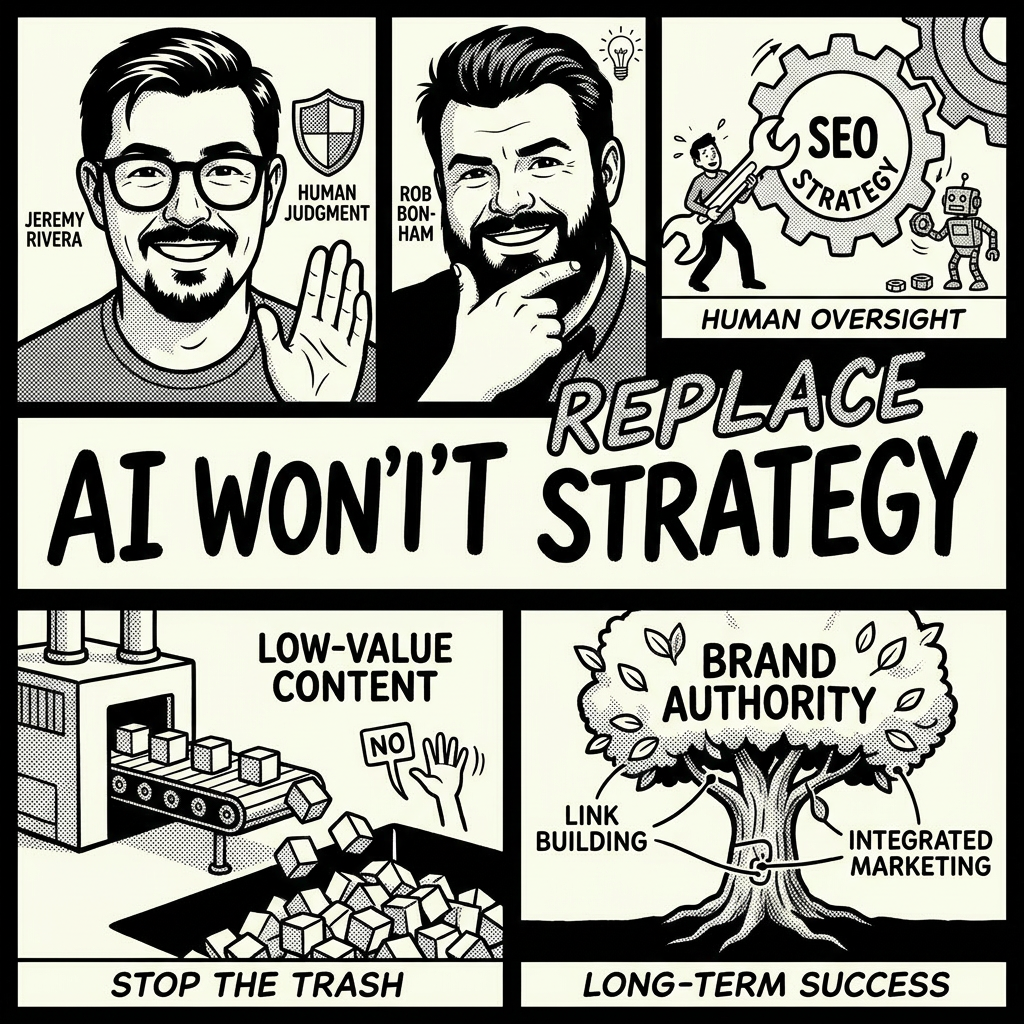
Now we, we're approaching or we're in this agentic age where we have, you know, AI and you know, AI related workflows to do that low level work that you know, just, you know, includes of course, human intervention and oversight to make sure it's being, you know, accurate and truthful. But you know, that's not where SEOs are going to be spending their time. Moving forward, um, which in a lot of regards, I'm, I'm very grateful for because I want to be more steeped in, you know, working on strategy and working on, you know, overarching, you know, digital marketing, integrated campaigns that aren't just, you know, okay, well, you know, let's focus on knocking out a hundred page titles this, this month for this client. You know, that's no longer the way that SEO can be approached and be effective anymore.
[00:03:43] Speaker A: Well, I mean, because now you can go into Claude code, connect WordPress through a rest API and say, hey, I want you SEO best practices and give title tags to update all of the title tags, give meta descriptions, and it's going run and be done in a few minutes. I remember I had tons of multiple different SEO agencies subcontract me out and pay me for hours and hours of hand editing title tags again in meta descriptions.
I too am grateful for that. I do think there's a bit of an unlock there as far as our time and we can multiply our reach that much better.
But it also means that leveraging AI functionality and scale of implementation is now table stakes.
What is the over under of, you know, managing that superpower as an SEO consultant? Because I've got my concrete wall. Guy down in Florida just literally came up with like a hundred pages. You know, it's a custom concrete wall, you know, page for every single city that they service.
And while on the one hand there it's like, oh, there was like an attempt to like, you know, do a little bit more and have, you know, different things. But I also had to give feedback of like, okay, I get the idea of what you want to do, but, you know, you, it's pulling like just random pictures of concrete walls. I don't think that's like the best. You know, there's like, it's, you can't do it raw, but the power is there. Oh, I, I, I just listened to this, this TikTok where somebody was like, there's this.
What was it? It was like a, your client went into a fugue state with their Claude or their GPT and just like sent you 40, 40 page documents of I want to do this. And it's like they're replacing expertise with volume and they're like, you know, like, oh, I got it. Like, I'm an expert now.
And you know, as you're looking at it from an actual, like, expert's perspective, you're like, no notionally it's good, but it's still, it's not founded in anything. And it's not based off your actual user database of like interviews. It's not truly anything with information gain.
It's just a whole lot more of a. Not great idea.
[00:06:48] Speaker B: Yeah. Oh, absolutely. And I think this is kind of the sticking point for the industry right now is that with much power comes much responsibility. Right. So, you know, if, if just because you can publish, you know, a hundred city specific, you know, pages for your concrete pouring business, should you.
Probably not. Probably not going to be the, the wisest idea. I mean, and it's probably going to be a lot of, you know, AI. AI at, at its essence is, is typically regurgitating what it can find from other websites. That's, you know, it's how it compiles answers.
So.
Yeah, and that's why I think that as SEOs, we are stewards of the AI, because the thing is that if you don't know how to use the tools appropriately, you could get your website in a world of hurt. You might, oh, you know, over a month we got, you know, all these users.
Well, you know, the thing is, is half those users might be bots and the other half are probably, you know, on the page for five seconds or less and bouncing.
So, and then, you know, if, if in, well, fingers crossed, you don't get, you know, penalized or, you know, your, your site, you know, takes a dive because Google's going to devalue that content. If they see that the, if they see that the user signals aren't there, they're going to say this content is useless.
[00:08:24] Speaker A: Yeah, there's a whole lot of the AI Bros. Graphs that look like this, but then you stretch out the time horizon and it's, you know, like, yeah, work, duh, work, duh.
But there's, that's like the long view, you know, that SEOs are accustomed to taking.
I guess the downside, we're not the ad guys and we can't drive immediate results necessarily unless it's coupled with some other kickoff campaign. Like I was part of a launch of a pretty big, you know, energy project and I was like, oh my God, if only every one of my sites could go out with links from LA Times, with links from New York Times, from Washington Post. But no, usually it's like, oh, I got a link from the, you know, the Cookeville Gazette.
Exactly. At the opening of the site.
[00:09:26] Speaker B: Sometimes it's baby steps, right? I mean, it's the Cookeville Gazette today. It could be New York Times in a couple years. Who knows?
[00:09:33] Speaker A: Who knows? But the point of that being like almost very few of my SEO projects have ever released with that level of, you know, trust and authority being transferred. Usually it's like I gotta do the rounds and gotta scrounge and look for opportunities to get off site and to build things. But I think that's, I think that's the moment right now, isn't it? We are getting to SEO that goes further.
Maybe it's again, but again goes further than itself. And the website isn't the end all, be all, it's the end and certainly optimize it, but a lot more off site work.
[00:10:15] Speaker B: Yeah, yep, for sure. And also as someone who's spent over half my career in agencies, I will say that agencies are at a precarious position right now.
We're seeing, you know, some clients starting to abandon their agencies because they're thinking, oh well, you know, I don't need to be paying the 10k a month for my agency. I can, you know, just use my in house guys and they can just use AI and we could get more done.
But you know, think about the strategy behind that and think about, you know, what pitfalls you may not be aware of before you pull your agency. Because, you know, it might be super enticing to, you know, publish that 50 pages in a month or a hundred pages in a month.
But think about how that will be perceived by not only, you know, you know, LLM bots, search engine bots, but perceived by the users too. Because if they start going through your website and they start seeing this low value content or you know, even worse, you know, the client sees it and they start noticing that it's just spun and respawn and respawn, drivel across all these pages.
You're going to work yourself into a hole and you might be looking like a hero for maybe a month, a few months, who knows, maybe six months out, but as soon as that site starts to tank, and it surely will after a period, then, then they're going to start looking at their, their agency sideways and looking at, you know, potentially parting with them. So it's very, very paramount to the success of agencies right now to not go absolutely nuts, but use AI as a tool but you know, cautiously and with human intervention so that you can still produce quality deliverables, blog posts, on page changes, whatever it is. Yeah, in, in a way that is actually adding value instead of just perceived value of. Oh, they knocked out five blog posts for me this month.
[00:12:35] Speaker A: Yeah, the, the old SEO package of, well, we're publishing four articles and we got you four backlinks and we spent four minutes looking at your GSC data.
That's not going to fly anymore.
It's also a time, it occurs to me that it's dangerous as a time because a lot of what business owners were turning to agencies for, there's not knowledge necessarily how to do something, but what not to do.
And we're in a moment where there's all of these new things that we need to do that are getting folded in. It's a yes. And you know, at the core of a lot of LLMs optimization, it's still SEO. But as I was talking to Patrick Stocks a few days ago, like, if you think that most Companies have enough SEOs on payroll to change the opinion of the Internet, you're wrong. Most people are not. They're understaffed already in SEO firepower.
So it's yes, LLMs and SEO overlap, but there's such a broader wider domain of new stuff, new aspects, new tools and a lot, some of it's BS and some of it is overblown. Like, do we really need the 532nd, you know, citation checker? No, we don't really need that. And you know, it was a, it's a nice thing to kind of add ish. But none of these, none of these channels are really going to de black box themselves. You know, they're not going to open up the data in a significant way. You can get bits and pieces here and there.
Microsoft Clarity will give you copilot information for citations.
[00:14:38] Speaker B: Bing Webmaster Tools that's hugely beneficial, especially if you don't have the cash or marketing budget to purchase a profound or comparable tool.
[00:14:49] Speaker A: Yeah, Google Search Console theoretically released it. So some people have some query data if they're absolutely gigantic in size, which thanks Google, Bing Webmaster Tools gives you some citation data. But there's an inherent problem of turning too profound or others which is in my opinion, you don't ever, you, you nearly don't ever get exactly the same thing out of LLMs that every time.
So yeah, there is something that can kind of signal that it kind of sort of knows something.
But how much of that is the monkey chasing its own tail? How much of that is the dragon eating its own tail? Okay, if you prompt it in your session, it's and you ask these query fan out things about your yourself within your singular microcosm, you'll get in your singular chat a much more complete picture. But how much of that is actually ingested upwards Unknown, you know, and how much of that you Know, like, you can kind of tell ish that it's returning things like, are you in the knowledge database set that it's pulling from from the start, or is it just going out to Google and pulling results from there?
Well, you can kind of maybe sort of tell ish not really. It's a black box. It's so like there's.
[00:16:22] Speaker B: At best it's directional. Right. Like, you know, I think it was.
Yeah.
Rand Fishkin from moz fame, now Sparktoro, he actually did a study of something like 80% of the time you're getting different results every. Whenever you're putting in a new.
Whenever you're running an LLM query, it's
[00:16:48] Speaker A: like, yes, that's exactly what I'm talking about. So if it's only repeating itself 20% of the time, then, I mean, being including it in the data set is kind of good, but also not guaranteed or kind of fundamentally the way that we think about that needs to shift.
It's because we got greedy. There was a moment where we were better than pr, we were better than newspapers because we had full attribution and we know we did these links and we got these rankings and it sent this many people for this, this keyword and they converted and boom. Then Google came along and said, not provided. Boom. That was step one. Then you might have noticed, Google Search console, you'll have 400 clicks. It'll tell you, your little table down there, they think you can't do math. That little table full of clicks for your queries. That ain't 400 clicks worth of information.
If you're lucky, maybe 60%.
Maybe I have one. Ironically, a ranking blog post about how Google Search Console data isn't reliable.
Guess how many of those 50 clicks I have query data for?
[00:18:18] Speaker B: 5.
[00:18:19] Speaker A: 4.
[00:18:20] Speaker B: I wasn't far off.
[00:18:23] Speaker A: Yeah, yeah, ironically, they've just proven my point.
Google Search Console's data is not related, reliable, especially when you're pointing out how not reliable it is.
[00:18:36] Speaker B: But I mean, I mean, I'll, I'll go, I'll go on the pages report, be like, oh, okay, each one of these pages has 200, 300 clicks. Then I go drill down, take a look at a query report for that URL and I'm like, where's all my clicks? Who moved my clicks?
[00:18:51] Speaker A: Who. Who moved my cheese clicks?
It's gone. It's. It's in. In that case, that's like 3% of the clicks you would actually be better served of randomly choosing rather than using a 3% to determine any Sort of directionality. So we've become untied from these ideas of attribution.
So in a post attribution world, how do you make the argument that you deserve to be paid?
[00:19:30] Speaker B: Excellent question. So, you know, I, I honestly think it, it's a matter of telling the right story, right? I mean, and I'm not talking about being manipulative, but using data to your benefit to show how you might impact things or how you have impacted things. So when you're doing your monthly reports or your quarterly reporting, whatever, you know, show with data as much attribution as possible. We know it's not going to be all the way there, but, you know, if you're able to at the very least show, well, you know, we're getting, let's just say the homepage is getting, you know, 15% more clicks and we know that based on people who enter from organic search sources, that we're going to see, you know, a particular amount of those people convert.
If, if we notice that, okay, maybe we're doing, you know, blog content or maybe we're doing some technical fixes with, you know, core web vitals.
That has an impact at a page level, but also it can, it can help the site as a whole. Right? I mean, as, as you're actually looking at these URLs in your reports, I mean, of course, make sure you're paying attention to how things are performing at a URL by URL level. But also, you know, you might be getting better visibility for your branded searches. So maybe your homepage traffic is going to go up, you're getting shown more frequently. Google trusts your brand more because they know that you're, you know, providing a quality website experience.
And if you saw a lift of, you know, 5%, 10% in conversions from, from the homepage, you know, and you're seeing some sort of correlation there, I say take a, take advantage of that opportunity to lay claim and say, hey, you know, look, we're working on these things.
SEO is a game of sums. We're seeing, we're seeing, you know, a win here. And you know, with all things being equal, you know, we understand that the value that we're adding adds to that game of sums. And we're seeing, we're seeing this Excel. We're seeing, you know, your conversion rate picking up and we're seeing, you know, x amount of more revenue from, from homepage visitors than we did. So, you know, it's, you know, getting them to understand, you know, when I say they, I mean the clients getting the client to understand that, you know, SEO is not in a silo and if you, if you touch something over here, something over here might change. You know, your homepage ranks for, you know, potentially thousands, tens of thousands of keywords.
You know, if we're talking about, you know, more, more enterprise type client that, that doesn't, those keywords aren't on the homepage. You're not, you're not, you don't need to have every single keyword you want to rank for on your homepage that would, you know, be a complete mess.
So, you know, you, you have to, you have to be able to tell the right story and say, because we made this change here, we're seeing some growth over in this area and it's reasonable because we're, you know, trying to optimize for these keywords, but the homepage is getting credit for it. That the work that we're doing is adding value.
[00:23:02] Speaker A: Adding value, I think is the key defining requirement for the next stage of SEO. You know, and you know, whether that's thinking re evaluating how you think of link building. Because I think it's an easier argument now to do link building than ever. Like, hey, I need to get more mentions of our brand and if I can, I'll get some links out of it too.
Is way easier than a five minute diatribe about, okay, this is PageRank and this is how it works. And you get anchored text and it helps directionally. Like they already, like, are accepting.
So many more of these conversations are a lot easier than in the past. You know, when I think of Frank Fishkin, visionary, you know, 2012 was the first time I think he mentioned, you know, unlinked citations being a factor.
And now, you know, we have, as you call it, a wild, wild west moment. But I think a re entry of competition into the search space has really revitalized and probably, you know, bravo for the moment in time we're at. Because some of these things that we were doing were just like, they worked but they were not like, great, you know. Right.
[00:24:27] Speaker B: Or they worked until they didn't.
[00:24:29] Speaker A: Yes. And that's kind of the game of SEO too, of like, well, it works until it doesn't. And like we'll, we'll chase this thing and narrow it down and get really close and then they'll change the game and move it over here and Right. You know, result search results in that process.
You know, it's weird because on the one hand I do know I accept blame for some of the less optimal things that I'VE optimized towards. But at the same time, Google also has taken on a campaign of insidification. You know, they have dialed up their pressure points to optimize their paid conversion elements and hcu.
Who is it helpful for?
Yeah, it's a helpful content update, but it's more helpful for Google to have results that it can sell ads on than, you know, the 400 plumbers publishing how to fix a leaky pipe.
They got enough of the content of that type out of the Internet and for sure.
So that's my take on it.
[00:25:47] Speaker B: No, no, I, I think, I think that's pretty spot on. And I think about, you know, are we, are we as SEOs, kind of a cog in the machine that helping Google turn and create, you know, basically we're the ones that are, that are feeding the beast so the beast can give of itself to everyone who comes and sees it.
[00:26:14] Speaker A: There is an aspect of that that I wonder about our, how we're viewed in the ecosystem of Google.
I'm sure that there are Googlers that would, you know, if they could, you know, take steps to ban, you know, SEOs, but the reality is that we hear and listen and we find the things that need to be done and push businesses to do them. And there's a reason why we've seen so many famous FUD campaigns. So outrage from Google, you can't, you can't guest post on other people's sites. It's messing up our rankings.
Wait, what? I, I can't reach out to another different brand and show off my subject matter expertise somewhere else because you're saying that's manipulative.
Well, like, so I should never talk to a journalist. I should never, you know, seek visibility elsewhere. What, what? And then you look at it and they chose like Annie Ann Smarty had was the big one. They hit her almost nobody else.
But hitting her was enough to put fear into everybody. Oh, watch out for that guest posting. And pulling back because they didn't actually have a, you know, a technical fix to figure out or sort out. Well, what are paid guest posts or what are, you know, how are they finding these guest posts and what's spammy? And they like, well, we're not going to figure that out. Instead we'll just scare.
[00:27:48] Speaker B: Well, and then, then they threw the, the UGC link link attribution on there and, and what's the other for affiliate too. So like they, they're like, well, you know, tell us, please give us a hint. So we know because, I mean, because it kind of shows you that they don't know, right?
[00:28:07] Speaker A: Like yeah, it's funny because they're like no follow is just a hint.
A hint that will Negate the value 60% of the time. It works every time. But also you need to do it because otherwise you're exploiting us and we can't tell what's trustworthy or not.
By the way, if you're selling links, please apply this special designator so we can identify it.
Why? Why would I help you not help me?
[00:28:47] Speaker B: Yeah, yeah, yeah, it's very funny. That's.
I don't know, I don't know. Sometimes it feels like Google's like trying to like pull on over on us or be clever.
I'm not sure what where their head's at but it's, it's fun.
It's a love hate relationship. And as SEOs we understand that more and more the older we get it
[00:29:08] Speaker A: is it's definitely, you know, Googlers, John Mueller massive respect for being able to say something so specifically true that it is false in all other occasions of or contexts. And part of it's our own, you know, the naive SEOs, the newbie SEOs just looking for crumbs that will credibly take anything and try to take any, anything that they say and smash it and apply it to literally anything else. So on the one hand I'm like, yes, organic CTR from browsers. We don't use browser click data in our as a ranking factor.
Well we know now that that's absolutely fundamentally true, but also fundamentally false. They don't use it as a ranking factor. It's the whole frickin ranking system. It's one third of the reason that you get traffic is the behavior signals that they've been mining because they figured out, oh hey, we've got one fourth of the world use what one half of the world using Chrome now and not even thinking about it. And we can see everything they're doing, everything they're clicking on and bouncing back on. We have the data to say whether or not this site sucks.
Gosh gee, should we not use that for some unknown unlegally specified reason? Yeah, no, they were using it the whole time. They just said that they weren't, they weren't using it in a way that if you didn't understand the way that they use words sounds like they were a denial.
But they very, very good at saying nothing so specifically eloquently.
[00:31:02] Speaker B: It makes you wonder are they using AI to come up with these crazy cockamania answers?
[00:31:09] Speaker A: I Don't think. I don't maybe now, but at the time it comes from a deep, complex understanding of the specific nuances of things to be able to. Elide, that's a new vocabulary word, elide. So eloquently, you know, correctly saying something in a way, in a man, in a deceptive manner that can't really be called out because it's so eloquently done.
[00:31:42] Speaker B: Yep, for sure.
Well, at the very least, I'm sure thinking they're probably running a pass legal because it's.
With the GDPR stuff, it's getting, it's getting a little harder for them to skirt the details.
[00:32:00] Speaker A: They have a whole lot of profit to push around to be able to say those things. But you're right, I think there is less and less space to maneuver.
I'm curious, what are some of the niches that you've been working on? Anything new or different or something old coming back that's working again?
[00:32:23] Speaker B: Yeah, well, the biggest thing right now, and you brought it up earlier, is the unlinked mentions. Getting visibility on other third party publications and marketplace sites is more important than ever. Because I mean, if you're asking for who's the best plumber near me?
Well, Google's going to first look at their gbp, what do the reviews look like? There's, and then we'll start, you know, looking at other sources and it's going to look at Yelp. It's going to look at, you know, maybe you know, like a home advisor, you know, other, other places where that, that plumber might have listings across the web and they can get a reasonable understanding of, you know, what, what does it, what's this individual, Is this individual trustworthy?
And are they trustworthy enough compared to their competitors for us to promote them at the top, you know, above those other individuals. So, you know, there's been this crazy debate, you know, during the entire tenure of my career is like, okay, link building, is it valuable? Is it not? Can you, can you get away with not doing it? Well, yeah, you could get away with not really investing too much in link building. But you know, at the end of the day, you know, whoever, whoever has, you know, the bigger footprint and the more people talking about them across the web in a positive way, that is the ultimate end all be all of winning and dominating the serps.
So it's been, it's been, it's been important, but I, I think now it's more important than ever. And I think the bigger your audience is, the, the more important that is so if you're a national E Commerce, you know, B2C retailer, then you know, you're gonna, you're gonna want to ensure that you're, you know, if you're, if you're, you're selling furniture, you're up against Wayfair, you're up against these, these, these big, you know, behemoths in the industry.
You're going to want to make sure that you are standing out and positively in, in some way, shape or form that someone will want to come and choose you over, you know, a trillion dollar enterprise.
[00:34:58] Speaker A: Yeah.
So is it that probably plays more into being like a cross pollinator and looking across your teams and their skill sets and looking to get as many wins, you know, making sure that you're, you know, piggybacking on the PPC spend. You're creating the organic SEO ass, the organic SEO assets and pages resources downloadables to go along with that email send blast. You're sending out to 5,000 people, you know, and thinking of all the ways to piggyback on, you know, that PR campaign. You know, your CEO's going out and doing some public speaking. Well, can you get the transcript? You know, and once you get the transcript, how are you repackaging, repurposing, what are the different video sites that you can get that pushed out on with little links?
[00:35:53] Speaker B: That's exactly it. Integrated marketing campaigns. Repurposing your content in every way, shape or form you can, you can think of that's going to resonate with your audience.
You know, I've, I've been, you know, running SEO campaigns for car dealerships for the past several years.
One thing that was really a needle mover for these dealerships is capitalizing on, you know, sales events like for example, say like Black Friday or even just you know, Memorial Day or you know, fourth of July.
You know, you, you, you know, stand up a landing page that's specific to, to that particular sales event.
You make sure that you know, that page, you know, is positioned the best way you can to rank well.
You, you know, have, include it in your email marketing campaigns to everyone who is interested in those vehicles that are gonna be, that are included within the sale.
And then you know, send paid search, paid social traffic to these pages. You know, include some organic social content, talking about it as well. And so you're hitting your audience from all angles that they might be interacting with you on.
And that's really how you win.
It's not one, one single pronged approach. You can't just do SEO, you can't just do ppc. You can't just do email marketing. They need to be working harmoniously as much as possible so that you that game of sums of all these channels hold each other up and are integrated into each other to make it a holistic marketing campaign rather than just a paid search or SEO campaign.
[00:37:46] Speaker A: Two questions from my friend Michael McDougald writing agency. He's curious if, if you've run into going too far.
You know, we have a number of different options for building links. There's PressWiz from Charles Float, you know, there's reciprocal link exchange platforms. I think it's karma link. There's, you know, helping SEO out several different platforms out there.
What are, are there any guardrails left outside of like Fiverr?
I think anytime buying Fiverr links is still a bad idea. Although I have to put in a foot. A caveat of I saw it work. Like I, I worked, I did a consult with a guy and he had a product selling banana hammocks for men.
[00:38:43] Speaker B: Okay.
[00:38:43] Speaker A: And like he had a banana, banana hammock page and he bought 400 comment spam links and the darn thing had nothing else.
Had never been optimized in any other way, shape or form. But it ranked better because it had anchor text links related to banana hammocks for men.
So I use that as a cautionary tail of like, okay, so we can see that that works, but I can't guarantee how long that that is going to work that way.
Let's get some good links and use that same concept. But you know, so I have the unfortunate experience of seeing what was a totally spammy tactic that definitely worked and you didn't think it should.
That's one of them. But it's also, you know, I know that there are things that are triggering penalties, there are things that are in the system that'll get you flagged and booted.
Where are those red lines that you've run into or you've observed in a consultancy of like, hey, somebody ran into this flagpole?
[00:39:56] Speaker B: Yeah, well, I, I'll tell you this. Whenever I approach link building, it's, it's always done with extreme caution because, you know, you don't, for one, you don't want the reputation of your site to be a poor one.
And two, you don't want to get penalized if you, you know, go crazy and you're getting links from every place you can.
So with that being said, you know, I, I, I'm very choosy with, you know, how I acquire links so like, I, I had, I've, knock on wood, never have had a challenge where I'm like, trying to recover from, like, a penalty.
But I will say, like, one thing that I've seen work quite a bit in links is getting links from legitimate partners that you work with. I was working for an E commerce maintenance, repair operations, parts provider. So they worked with a lot of hotels, worked with apartment complexes, that sort of thing.
And so, you know, we carried, you know, hundreds of brands and those brands have, you know, store locators and, or, you know, you know, at least we didn't have physical stores since we were E commerce. But, you know, we could be included in, oh, hey, here's a site that carries our product. Because we're not an E commerce site, we are not selling to the public.
So we would get links from these, from these partners, our suppliers.
And it worked tremendously well and it was very easy. Typically good link building is not very easy. It's tedious. It requires a lot of outreach. But, you know, I thought that was something that was, you know, kind of a, an easy win that I was like, oh, shoot, these are, it's like shooting fish in a barrel. But we're still getting, you know, great results and improving our authority. And it's, you know, we're not doing anything bad. We're not paying for these links.
We're not twisting their arm. We're just saying, hey, you know, we have something that's going to be important to your business. You might want to use us so we can, you know, kind of, kind of help each other grow.
[00:42:20] Speaker A: It's always astonishing to me how little businesses think about their site but then turn around and watch so much out of their site.
You know, like, it's supposed to do everything, but you give it nearly nothing. Or maybe it's because it seems like it's so difficult to get stuff onto it that it's like, oh, I put my name on it. Isn't that enough? I have a website. Isn't that enough? Like, no. Like, and it's not just like your own site. It's like, did you get your site listed on your partners?
Yes or no? Like, oh, you did. Like, you donated $50 million to charity. Did you at least get a followed link out of it from somewhere?
No.
[00:43:13] Speaker B: Okay, but did you even get a press release out about it? Yeah.
[00:43:17] Speaker A: Did you get a press. Oh, yeah. Like, there's been so many things where I've seen of like, you didn't get any juice, you didn't squeeze that, that you didn't squeeze for that juice.
[00:43:30] Speaker B: Yeah. Yeah. And you know what, it's funny, I mean I've probably experienced this in any medium to large organization that I've worked for or with is like, you know, I'll come across something like some sort of mention or like a press release of something cool that the brand or organization I've, I'm working for did.
And, and I never heard about it. And, and I think that's that. I think that's the biggest issue that, that I have is the, the disconnected communication with the SEO department. And I, I think they don't realize, you know, whether it's the Marcom team or if it's a social media manager, whoever's doing it, they don't realize what, that, what kind of impact they can have outside of just their position alone in getting that, you know, press release or whatever it is, you know, published and out the door.
[00:44:26] Speaker A: You've been in the business for quite a while. I'm guessing that you've been in house freelance consultant.
So this comes from Patrick Stocks and I'm going to give you a chance to pass on a head scratcher or a question for the next SEO guest. Something you're, you're having a challenge but his, he's wondering if you're going independent as an SEO consultant, what goes into the contract?
How do you price the retainer and how do you filter out the tire kickers who just want a free SEO audit?
[00:44:59] Speaker B: That's, I love that.
So, yeah, so I mean, and I've done, I've done a ton of contract work, a ton of freelance stuff. So you know, the way that I typically put mine together, I mean every, everybody's, you know, going to be a little bit different to how you put a contract together. But you know, at, At least you have to make sure that you are setting the right expectations so you don't get scope creep, so you don't work yourself into a hole.
That's my, that's my biggest, my biggest piece of advice is, you know, make sure that when you craft your proposal and you know, you're giving your roadmap of six months or 12 months, whatever it is, you're including deliverables that you can reasonably fulfill on and that you can make sure that you're going to do, you know, great quality work for and if you need help, you know, maybe you cut into your margins a little bit, bring you know, somebody in that, that, that, that can help you fulfill on that because at the end of the day you're going to make more with that client or that, that organization with, you know, making sure that things are done on time and done at a, you know, high quality acceptance criteria, then if you, you know, are late and the work is half assed and you know, you're not, you know, you're, you're not, you're not doing your best. So with that being said, I also be choosy on who you, you take work from. If you're not going to feel passionate about that work or you, you don't have the bandwidth, maybe you're, you know, maybe you're, you're maxed out, you already have enough clients, you know, make sure you're not hamstringing yourself in a way that is going to put you and the client both in a bad position. Because, you know, that's, that's a, that's a terrible thing. I mean, I've, I'll be perfectly honest with, with everyone watching this and you, Jeremy, like, you know, that's happened to me before in my career earlier on and it's, it's a terrible feeling. And you don't want to let your, you know, your partners down or you don't want to let your client down and you want to, you know, be a person of integrity and making sure that you are, you know, fulfilling on what you say you will and within a reasonable time frame. So, you know, above all, that's how you should put your contracts together.
And then as far as, Sorry, there was a second part of that question, wasn't there, Jeremy?
[00:47:37] Speaker A: That was, yeah, what goes into the contract? How do you price the retainer and how do you filter out tire kickers when you're trying to, you know, land new clients? And also if you want to speak to that of like, what's the game right now of actually getting work as a freelance SEO consultant?
[00:47:55] Speaker B: Yeah, for sure. So as far as pricing goes, don't sell yourself short. You know, make sure that you are, you know, whether it's hourly or whether you're doing a monthly, you know, retainer price point, make sure that it, it makes sense for, for you, like, you know, for, you know, your tenure in the industry. You know, if you're brand new, you're trying to, you know, get your, get your feet wet. You know, you probably want to charge a little less. You know, if you've been in the industry 10, 15 plus years, you can charge a little bit more.
Make sure it, it makes sense for you, but also make sure it makes sense for the client too. You know, you don't, you don't want to. Clients don't want to feel like they're getting ripped off and you don't want to feel like you're ripping yourself off.
So, you know, take a look around. I mean, we have an awesome team, you know, AI landscape for us to rely on. As far as trying to figure out, okay, you know, for my tenure and my background, like, what's a reasonable market rate to charge? You know, that's a good way to go about it and, you know, look at, you know, do your homework. Don't just trust the first AI answer. But, you know, that's a great way to kind of start, you know, getting an idea of where you should be.
And, and as far as making sure the tire kickers are, you know, not, not stealing your time, you know, I, I typically will charge, you know, a small fee for, you know, putting together an audit or, you know, a cursory overview of their site. Even if it's just like, you know, a 15 minute loom video going over their website and showing opportunities there. You know, maybe, maybe it's not, not a ton. Maybe you're charging, hey, you know, I'll do this loom video for 50 bucks. I'll give you a few, you know, full overview of, of, you know, a curse. Well, cursory overview of, you know, what can be, what can be done in this 15 minute video. But it could be, you know, really, you know, helpful to your business and I could be the one that helps you champion these, you know, items and improve your site. Or if you want, you could take that and, you know, do whatever you want. But, you know, it shows that your time is valuable and it also shows that, you know, you're, you're, you're working, you're both working in good faith, right? Like, okay, we know this guy's going to do, you know, what he says he's going to do. So make sure whatever the, you know, whatever you're charging for, whether it's an audit or the, you know, loom video, whatever, make sure that you get it done in time and make sure it is inclusive of everything that you stated it was up front. So that's a great way to earn that trust and to establish a working relationship quickly and show that you are capable of what you say you are and that you can actually fulfill too.
[00:51:05] Speaker A: And don't forget that having a higher price point in and of itself can be a justification for having a higher price point.
The perception of the quality of the work, of what they are Expecting to get out.
If you race yourself to the bottom of the barrel, you can 100% screw yourself out of a magnificent payday.
Forget the imposter syndrome, put it out there. And you know what, if you charged 300% more than you were going to, but you got three less contracts, well, you're still doing the same amount of work, but you're getting paid, you know, three times as much. You lost those two opportunities, but it's better at the end of the day. But at the same time that's in balance of don't price yourself out of a market. But I think with the cognitive load, cognitive expertise aspect, you know, that's what you gotta play your strength to, of, you know, hey, I'm here in this role to be the inspector detector, to figure out what buttons not to push and you know, to play that role for your, your team.
You know, I'm bringing a particular set of skills.
So, you know, you don't want to come to the table and be like, yes, I am the fabulous art thief. It'll be $5 to steal the Mona Lisa. Like, wait, what if you could steal the Mona Lisa? Then why is it $5?
I undervalued myself personally.
I understood undervalue my. So they'll either think you're an idiot for not pricing yourself appropriately or you're spammy or scammy and not trustworthy. So I'd rather charge more and work harder to meet that higher level price point expectation which, you know, does come with its own headaches, folks. You know, you work with an enterprise level entity, be prepared for red tape. I've taken a drug test to edit a website and you know, I've had to sit through three, you know, four meetings with at least 10 people to change one H1 tag on a major healthcare website. I won't say which one HCA.
But you know, you have, you know, things that are very important to hippos. Highest paid person in the office and sometimes that takes a couple extra meetings.
But they're generally a little bit more reliable on paying their invoices than the little guys.
Unless you have to go through a finance team which wants net 60 terms. If there's anything you can put in your contract, it's I want to be paid upfront for the next month's work.
Always try to get that. If you have to take 30 day net terms, just try to get it 30 day net terms from your invoice at the beginning of the month instead of 30 day net terms for your invoice. At the end of the month, which means you go two months without being paid. Just be aware that happens. It can happen with larger outfits, so it's a push and pull.
Give a shout out to where people can find the Rob Bonham.
What social media are you on? People want to get a taste for what you do. If you're available at all for consulting or conversation.
[00:54:51] Speaker B: Absolutely. I'm always happy to talk.
Definitely have some capacity to take on another client or two right now, so reach out to me on LinkedIn.
I'm a LinkedIn head, so always on there, it's on my phone, so I'm tied at the hip with LinkedIn, so find me on there. Rob Bonham. I think I'm the only Rob Bonham doing SEO. There's some other Rob Bonhams, but I'm the only SEO out there.
[00:55:21] Speaker A: Fantastic. I'd like to invite you back. I'm going to put together a roundtable to talk about the industry state of SEO, winning contracts, what to put into your guidelines, what clients to fire, if you'd be interested.
[00:55:34] Speaker B: Absolutely. I'd love that.
[00:55:36] Speaker A: Fantastic. I'll make sure that your LinkedIn profile gets linked in the show notes.
Thanks for coming and visiting.
[00:55:43] Speaker B: Absolutely. Thanks, Jeremy.