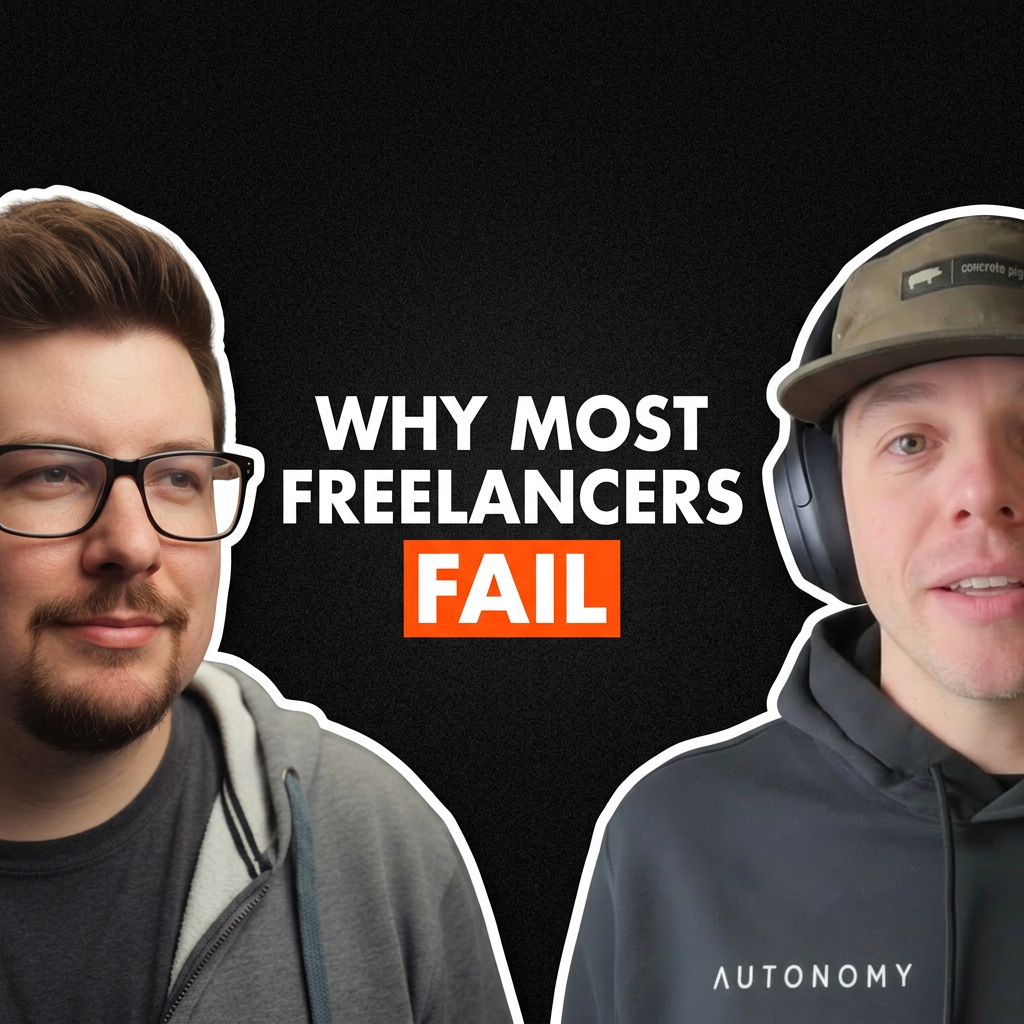
Episode Transcript
[00:00:01] Speaker A: Hello, I'm your host, Jeremy Rivera, and this is the unscripted SEO podcast. I'm here with Colby Wechter and why don't you give yourself a quick intro and then we'll be on our way.
[00:00:11] Speaker B: Yeah, thanks for having me, Jeremy. I really appreciate being on. So I am Colby Wechter. I've been in Digital Marketing for 12 years running an agency, the last nine. But actually as of the time of recording, I just started my own venture two months ago and it is actually coaching other agency owners because turns out they're a pretty under supported group. So I help six figures figure agency owners get to seven figures working 30 hours per week.
[00:00:35] Speaker A: Nice, Nice. Well, as somebody who has, I myself have worked in house, I've worked at an agency, worked freelance, and worked enterprise.
Definitely know that there's a challenging world when it comes to the business of SEO.
And running an agency has so many moving pieces.
So when you're trying to help an agency, where's the first problem area you look at or what framework do you use to approach that part of the SEO?
[00:01:12] Speaker B: Yeah, well, I always want to start with the agency owner themselves, right? Because especially the population I serve, you know, they got to six figures pretty much on their own or they have a really small team or something like that.
And so I always want to start with their personal time because anyone who they do employ and even the clients, it's going to trickle down from how they behave. Right. It's kind, kind of like if you say, hey, I want you to have really good work life balance employees, but then you work 90 hours a week, right? They're, they're just going to follow what you do instead of what you say.
So I call it self scale, Jeremy, where it's just like if you can't scale yourself, you're not going to sustainably scale the agency.
[00:01:50] Speaker A: No, that's 100% true. I worked at an agency where it was very much every call, every weekly call was like, keep your work life balance. And like we'd get messages at 3am from the founder of. Hey, look at this.
Can you. This is on fire. And we caught pneumonia. He caught Covid twice because he was like continuing to work so hard and just like had like a mental breakdown. So it's definitely a case where putting yourself on the line and being invested in what you create makes sense, but also trying to create systems that can support that.
So you start with, with the founder. Like, what are some of those things? Is it just like, hey, you should take a day off or like, where do you, where do you go with that? I mean, where do you keep it from being cliche of hey, relax man, like let it go to actually like something concrete or solid or a path that you use to get them to get agency owners to let go a little bit?
[00:02:56] Speaker B: Yeah, I mean that's, that's the toughest thing. Like what you've identified there subliminally is the mentality around it, right? So they're not going to have any favors done for them by having someone say, hey, chill out. They've had plenty of people in their life say chill out and they're still not doing it right. So systems do need to be, I would say, entered really, really quickly. But the first thing I'm trying to identify is what is the key fear, right? Is the key fear of like, if I stop, this whole thing crumbles? Is it I have feast or famine months? Is it I feel less than when I'm not working? What is the actual thing that's driving this unhealthy behavior? But once we know what that is, then I like to, I would say kind of apply some softball systems and you know, just something that doesn't like freak em out, like, oh man, I have to fundamentally change as a person, even though they do over the course of the program. But in the beginning, you know, one of the most important things, Jeremy, is like data, right? So like a simple example, I call it calendar curation, which is a fancy way of saying color coding your calendar. Everybody has, you know, their calendar and then different colors for anyone they share with. But either way it's like their calendar is just one wall of color. Typically if you have Google Calendar, it's like that light peacock blue or whatever, right? So you don't have any clue if you're, you know, you schedule lunch and you schedule a hair appointment and you know, a sales meeting and all that sort of stuff. It's just a wall of blue. And so there's no like visual leverage there. And humans at a baseline level are visual creatures. If I say green, you think positive. If I say red, you think warning, right? Like it's not that difficult.
And so one of the first things we'll do like day one is just, hey, give me access to your calendar and let's go through it together in five minutes of setting up tags and organizing based on four criteria. So if it's red, it's a task and stuff you hate. If it's blue, you keep that as a meeting. If it's green, it's Personal as in, like, it doesn't move the needle, but it brings you joy. And then yellow is. It does move the needle and it might bring you joy. Right. And so just by that one exercise alone, every single one of my clients in the beginning has a ton of blue and red and very little green and yellow. Right. And so it's all about transitioning from, okay, you're a low leverage human being just on data alone. This isn't my opinion. This is true. Okay, and so how do we get you from low leverage to high leverage? We start looking at every single one of these low leverage activities. All of these tasks.
Do you need to be the Chief Everything Officer and send that email? No, probably not. Let's look at that task and say, can we automate, eliminate or delegate? Right. So it's kind of like really, really simple systems, which I pride myself on. Complexity is not necessary. Simplicity is the ultimate complexity. That's what I love about it. Right. So the simpler the better, because you can start seeing drastic changes quickly. Like, every single client I've ever had has reduced at least five hours of working time just in the first week. And that's because of data. They didn't actually fundamentally change how they behave. They just looked at it and was like, oh, yeah, I guess I don't need that.
[00:05:52] Speaker A: So you said it in the middle of that. But I really like that. The automate delegate.
And what was the third one?
Eliminate.
I like that. That's going to be, that's going to go in a graphic for sure.
[00:06:08] Speaker B: I mean, that's. As a business owner, I know we can talk SEO in detail, but as a business owner, especially an agency owner, that is like, you should be. Your baseline goal, like you should be asking that question almost daily, is how everything I'm doing right now, like, almost like a time audit, can I automate this? Can I eliminate this, or can I delegate this? And you know, another simple system I have my clients install is really, it's, it is more mentality, but it's just, I call it the opportunity filter. Right. It either needs to bring you joy or move the needle. If it does both of those things, you'll like double and triple down on it. If it doesn't do either of those things, that's a candidate for automating, eliminating or delegating. Right. Like that makes sense. Admin's a really good one. You probably don't think you're moving the needle when you're like getting the proper paperwork for taxes and stuff, but you have to do it so you can't eliminate it, but you can absolutely delegate that to like a bookkeeping service for like 40 bucks a month.
[00:07:01] Speaker A: Right.
So a lot of SEOs like me are, are freelancers. So it's a little bit of separation from just straight up agency world.
I think what you're saying does seem to have that carryover because it's really a solopreneur. Like if you're a freelance consultant, in some ways you're a one man agency.
So do all of these concepts, do some of these concepts carry over? Have you ported any of those ideas from agency to freelance?
Or if somebody listening? Because I know I've got SEOs who are in all kinds of niches. Some founders, some, I'm sure there's people who want to do SEO or they're learning, like what kind of things as people are taking these things on, do you think that SEO should consider as they kind of make systems for themselves?
[00:07:58] Speaker B: Yeah, I mean, man, that's a, that's a deep question. I could answer that from like a sales perspective. But let's just talk about like, you know, managing your time and like how you can do that as a solopreneur. Because I'm, I'm a solopreneur now, right? Like I'm not, I don't, I have a staff technically, but they're all VAs. They're all like 1099s, right? And that's something I would highly recommend. Like I have, my VAS are a little bit more expensive because they're doing like content editing. For me, it's a high level skill. Like editing video is not something, you know, I look at everything kind of through that opportunity filter. Right. So I enjoy it. But if I do it, it's not going to move the needle because I don't have the skills. And so therefore it's going to get lost in a sea of, of stuff like that. But in terms of, you know, an SEO person, I would look at those things and say, how much of this is just like generalists, right? So is it sending the email that you could make a template out of? Is it doing a custom proposal every time? You probably don't need that, right? Like, I actually just explored a software a few days ago that I'm like, oh, this cuts down proposal time by a ton. Right.
And it's free. So it's like one of those things where it's just like.
How do I summarize this? To answer your question in a really succinct way, I would say giving that Example, I am a firm believer in that 20% of every dollar you make should be in experimentation of moving the brand forward or in making the brand more efficient.
Like, every single dollar you make, take 20 cents off the top of it, because that's already allocated for how am I going to make this business, solopreneur or otherwise freelancer. Otherwise better next year than it is right now? Because it's very easy to just say, I sell local SEO services, we're going to help you get found in Google Maps, we're going to do a handful of local listings for you, blah, blah, blah, blah, and this is what it costs. And then you have to go fishing every month.
And also it's not a differentiating factor because anybody can freaking do that now. Like, just hop it into any of the SEO tools. And it's pretty much automated at this point, right? And so if, if there were systems in mind, because there's a billion of them, I could use those time systems are really good. Like, if you're feeling overwhelmed as a freelancer, this is my personal challenge to you is like, you are, it's your business, so make it how you want. Your business should run by design, not by default, I. E. Suited around your life, not your life around the business. No one's forcing you to freelance, so stop feeling bad about it and start making some changes. Right?
And very few people do that because they fear, oh, if I say no more often, I'll make less money.
Warren Buffett said 90% of or people who are the most successful say no 90% of the time. He said that for a reason.
Like, Warren Buffet is a billionaire because he made 11 really solid investments in his career.
Not 111, not 10, 11. He said no most of the time.
And so what I find with, I'm going all over the place, but I'll finish it this way just because it's a really common problem. Jeremy is like what I find with freelancers and small agencies. I mean, there's like a hundred thousand agencies in the states. Like 60,000 of them are three people or less in terms of teams, right? So what I find is that you'll say yes to everything in the beginning, and then you'll also like have a billion different services because the client doesn't understand what SEO is. It's like buying air. And so they'll say, okay, you're just solving all my marketing problems. So you also do social media, right? And you also do email, and you also do blah, blah, blah. And the freelancer says, yes, it's like, no, you just do SEO. You can add those as bumper offers later.
But you will have so much more peace of mind, actual good data to say, how can I scale this? Because if you're doing seven different services as a, as a freelancer, you have no idea where the scale is. You have no idea where the bottleneck is. You have no idea where the actual profit and re in revenue is. Like, you don't have any of that figured out because you're everything.
So to stop myself from saying any anything else because I could go on and on and on with that one question I'm deeply passionate about. It is like my. The first thing I would say is Opportunity Filter. Does it bring me joy or move the needle? And how do I get more and more comfortable saying no more often? Because you will actually build a business that you like and can last for a really, really long time.
[00:12:22] Speaker A: Definitely. I mean, disconnecting from like the hourly mentality too, of hey, I'm going to scope this project, I think it'll take 10 hours to do. And then you lock yourself into a contract of like, I'm spending 10 hours.
Even if you become more efficient, then you're kind of stuck at a conundrum of, okay, well, I told them it would take 10 hours, but now it's taking five.
Next time do I bid if I'm bidding hourly, it actually only takes me five.
So the more efficient I become, the more I mess with my profit margin.
So is the recommendation to step back from hourly projections and quotes and go for more productized deliverables?
[00:13:17] Speaker B: It doesn't have to be productized.
You can go custom every time.
What I would say is that the whole hourly for money thing is it's a mentality. It's not even a structure, it's a mentality. It's like, okay, this is what I've seen happen, therefore I must do X. It's like, you can be successful in a million different ways. Right? And so when I finally got out of hourly base pricing and got into value based pricing, you switch how you market it. Right. So what do I mean by value based pricing? I mean, clients don't care at all how many hours it's going to take you to do something. They only care how many hours it's going to take you to do something. If it's too many, that's all they care. As in, like, my project's going to take six months, I thought it would be two. You know what I mean?
So what you're honestly selling is a transformation you're selling, here's where you are. Hopefully you can't hear my dog in the background. Somebody's at the door.
He's, he's saying, here's where, here's where you are. And that's why you're talking to me at all while you're on the phone, or why you're in my DMs or whatever. And here's where you need to be or want to go.
So my service is the bridge between where you are and where you want to go. It costs this much?
That's for you to determine. Your client has no clue how you execute it. They don't freaking care so long as it's ethical and follows the rules. They don't care whether it takes you 10 backlinks or a hundred backlinks. They just want the result.
So if you promise the result, it does not matter how many hours it takes you like. And just a perfect example is I promise a client of mine, I'm still doing contract work for them because I, like, made this. I call it, it's part of my program. I call it creating beta offers where you just like, we were already doing SEO at like 4,500amonth, 4,700amonth.
And I was like, okay, so SEO's crushing it, right? We know this, this is great. What other problems do you have?
And so they would tell me. They were like, oh, well, we'd like to get into more email marketing, a little bit more social media, and we feel like our competitors are producing more than us. I said, okay, if I were to put all that into a slide deck, not a formal proposal, just like, hey, my spitball of a solution on these things, would you want me to present that? Yes.
I put all those together. It's a multichannel marketing plan.
Right.
Presented it.
I put value based pricing because I said if I can accomplish all this, their sales are going to go up by 5x so long as they deliver on their end.
So I priced it at 15k.
They said yes.
Right.
I just did a month's worth of work for that client in the four hours this morning before this call.
Should I not charge them 15k because it only took me 4 hours because I'm getting better at my job every day. No, all the client cares about is 5x in sales and they know that marketing is required to get that. So I provided the bridge. It cost them 10,000 more per month. They said yes because all they care about is the transformation. That's it.
[00:16:17] Speaker A: Right?
It's the trope of, you know, plumber comes out, you charge, you know, charges $500 to come out. And he turns one screw and leaves. And they're like, I paid you all that money to come out. Well, I knew which screw to turn.
[00:16:33] Speaker B: Yeah, it's or the Picasso thing where it's like, you know, somebody goes to him in a bar and says, hey, can you draw me this, this picture on this napkin?
And he does it and he hands it back and he goes, that'll be $10,000. And she's like, well, it took you like 10 seconds. He goes, yeah, but it took me a lifetime to learn how to do it right, so.
Especially in SEO. This is one caveat for SEO specifically is you should absolutely be pricing based on the perpetual value you're offering, not just on how long it takes the project to go. Because we all know SEO is not like, oh, within two months you can turn it off and you're good to go. No, you, you run it. Because if you run it for over a year, it is the most cost effective marketing tool on the planet, right? Still, it's getting less so, but it still is.
And so, like, for instance, that same client, right, they went from 1k in traffic costs in terms of like, semrush, right? Like, or I say semrush, I know it's semrush, whatever. But 1k in traffic costs before we started, now they're at 10k.
So they 10x, right? If they were to pay Google directly, it'd cost them ten grand every single month to pay for those ads. They're getting all that organically now.
And they will keep getting that if I turned it off today for at least another five, six months, which means at the minimum, my perpetual value is six months more than what I'm actually charging them for, right?
[00:18:02] Speaker A: And that is one of the challenges of SEO too, of like, understanding, like, potential time frames and the hit or miss factor too, because, like, if you make 10 blog posts, none of us who are legitimate SEOs can guarantee that all 10 of those are going to be the home run hit that keyword research indicates. You know, one might be, maybe one will really take off, maybe the second one will do really poorly. But then in six months, maybe it's up. Like, and also taking into the account that usually the number one ranked article in a content topic area has been online at least a year.
So then if you're competing for number one ranking and like, across the board, it's like 60, 70% of all number one ranked articles have Been online for a year. If you're not giving that expectation to your client of like, hey, we're going to publish this content and we're looking long term, not just today, but long term, what is this article going to do for you? Then you're kind of shooting yourself in the foot and putting yourself on unrealistic expectation time of like, okay, well we published this. It's been two months. Like, there's no results. You know, I just had that problem with a client and you know, they, they had a site that was like two pages and they had a budget. I'm like, okay, we're investing in the long term. We're going to rebuild the site, we're going to start publishing real content. And after, you know, three months of paying my bill, he's like, we're not seeing the traction right away on this. I'm like, were you not listening when I said, like, this is a long term strategy? Like, there's only so much that I can do with, like, you've given me budget. I'm making as much valuable content as I can in this timeframe. It just drives me nuts because he canceled and then three months later he started getting.
I saw he still has the analytics.
I of course see the results. Like, oh, now he's getting the lead. Now he's got, he's got another lead. I'm like, ah.
[00:20:15] Speaker B: Like, so sometimes it's just identified the number one problem anybody has selling SEO. Like the. I've been in for 12 years, Jeremy. You know how many times I've heard that, right?
[00:20:28] Speaker A: Yes. No, it's constant.
[00:20:31] Speaker B: Yeah. Can I jump on that? Is that cool?
[00:20:33] Speaker A: Yeah, do it.
[00:20:33] Speaker B: Yeah.
[00:20:34] Speaker A: That's why we're having this conversation. Give me your, give me your truth problems. I'm not here to Steve.
[00:20:39] Speaker B: No, seriously, I love it. Because anyone who listens to this will probably have felt that, or if they haven't yet, they will.
Because SEO is slow, right? So that's something, I think, that kind of set me apart in my career because I would literally tell clients, you know, I've had over 1100 in my career personally. And I would tell clients in the beginning, like just what everyone else was saying at every other agency, right? Like, SEO is great, it's organic, you don't have to pay Google directly. Like, you know, you're going to get traction and then it's going to compound and blah, blah and all that sort of stuff. And I was realizing I'm like, every single thing I'm saying is not in my control and so the moment I started flipping that conversation, we kept clients two times as long, three times as long. Like, my average client retention now, personally, was like, well over four years, where our competitors was like six to eight months. Right. Because they kept staying in that spot. And so whether this would work for you or not, it worked for me. So I can tell you what I did. But I explicitly told clients, I said, okay, just because you signed with us, do you think Google cares at all about you?
And they would immediately start laughing or say, no, well, obviously not. Or whatever I said, exactly. I'm not trying to appeal for your business. I'm not a salesperson for your business. I'm not promising any sort of tangible result because I can't ethically do that. What I can tell you is what we're up against. Google changes their algorithm 20 to 30 times a day. That's 5,000 times a year. Google guidelines give us over 200 touch points that we need to factor. And keep in mind when we're doing this thing, because it's always changing and because there's a million things to do, not only can I not promise results, I can't even promise something won't break. I can guarantee something will break.
Right?
[00:22:26] Speaker A: Right.
[00:22:26] Speaker B: Because humans are executing this work.
What I can promise is how quickly we'll respond to it and how I can be more transparent than any other agency on earth in how we're getting these results. Right. So how would I back that up? I would message them regularly. They would get custom dashboards.
Every single time I got them on a conversation, in my mind, I was thinking, what's a win? What's something we're watching? What's something that's not going well?
Because the problem, too, even if it is going well and people still see their clients leave. Why is that? Because clients, many times, small businesses, whatever, they'll come to you. And they have no online presence. Right. So just by you doing something, they're only going up into the left. Well, the moment that drops, because it will, they lose their mind and it's your fault. They forget about all the good work that they were completely irrelevant before, and now you've gotten them to some sort of relevance and they forget it all because it's down.
That's not because something went down. It's because the expectation was way the hell off because you only spoke positively the whole time. So every. We could triple a client's traffic.
And I would be like a. I didn't expect this. So I'm. I'm liking what I'm seeing here. But just so you know, I fully expect it to go back down next month.
And just by saying that, like, as SEO is, you are selling magic, you're selling pixie dust.
You objectively are not in control of anything you do. Because deliverables are one thing, but how Google responds is the only thing that matters. And you can't control Google. Google doesn't care about you.
Right. And so I would like say these in, you know, politically correct ways with clients. And so I would say. So this is not. My role is not to double your business or guarantee your results or anything like that. My role is to make sure that you're doing enough to play the game.
And I have over 10 years of experience in doing so. So when you want to freak out about a keyword dropping, I'm going to be the spiritual guide that says it's all good.
Right? When you want to freak out about not doubling your revenue, I'm going to be the one who says this will be the most cost effective tool for you 12 months from now.
Right. And then one final statement I would say with every single client, two actually, because this is getting long. I want people to actually, like, retain. This is one. I would say I want you to treat our agency like it's in review every three months. So every quarter, I want you looking at other agencies because I don't want you to work with me because you like me. I want you to work with me because you know it works.
And what do they do? They don't look at other agencies. They feel so comfortable with someone who would say something that confident that they're like, okay, whatever, you know, I trust you. You're the expert. Right? And then the ultimate confidence is like, hey, my job is to make sure. Because you don't understand this. That's why you hired me. Okay? I'm going to show you and educate you as much as I possibly can. All right? I don't want you to guess it's working. I want you to know, and I'll explain it in like a third grade language so you do get it right. But there will come a time where you're looking and saying, does this work? And you're going to consult with me and ask what I think, and I will tell you, scout's honor, if it's not going well to fire me.
I said I tell. I would say this in like the first week.
Yeah, it's like, you will never have to fire me. I will fire me if it's not going well.
[00:26:05] Speaker A: And on that going well is that in terms of like you're doing the hitting the deliverables, you've done what you've said you would do or produce what you said you would produce. So how do you rectify some of the concepts of that SEOs get into, which is, you know, looking at like keyword research and doing due diligence of saying, hey, we want to target this particular aspect of the purchase process. And it looks like there's these keywords that has this much volume and some competitor articles similar to it are getting something like this.
Here's how they're, how much traffic they're estimated to be getting.
So that's in the range of what we could maybe get. So where does the hedging stop or where does the data lead you to?
Versus you know, there is that honesty piece of like at the end of the day I can't control how Google is going to respond to anything that we publish. I can move, I can spin this wheel and ring this chime and I know that, you know, like creating content that's thorough, that's well written, similar to other content or has a unique view, tends to do this. And you will usually see, you know, there's a need to get links to articles to rank. So there are formulas that we follow as SEOs to get results.
How do you divorce? How do you balance that? The sales side conversation of.
At the end of the day, I don't control Google, but I have these processes that I have found worked versus like, you know, like that up and down cycle ride because you know, like anytime you publish something, yeah there's algorithm changes and it's going to go down and sometimes you won't be able to tell why. Like you could be hit by HCU and you genuinely have no real way to reverse engineer exactly which piece of content is now on the, the, the standing on your, your content and cutting off the oxygen. How do you square those two forces within SEO or the practice of SEO versus like what you're talking about?
[00:28:29] Speaker B: Yeah, it's a really good question.
Again, all these questions are good, Jeremy, where I could answer it like a dozen different ways. But no, not all dozen. Let's see. So what I would say to that is and kind of, you know, as kind of bookend. Everything I said prior in the conversation is like it depends on what relationship you want with a client. Right.
I the reason I am now into coaching other agency owners is something because I left my, I had a really good thing with my agency. I left it Because I felt like I had no choice. Like, I have to help these people. It's kind of like a calling, and I just am answering the call, right? Like, almost kicking and screaming, but it's like, I know I'm meant to do it. Yeah.
But the reason I say that is because so many of these agency owners, they just need somebody else. And I'm. I'm answering it this way for a reason. They just need somebody else to kind of, I don't know, move the weeds because they're. They're weeds high above their head and just move them and say, you don't have to do it this way.
And so I mean that because, like, when you do the work, you're the expert.
The client is hiring you for a reason.
And so I don't necessarily see it as my role. When I say show them everything, it is showing them everything in a way that they can digest and understand.
Because you can send them an AHREFS report, you can send them an SEMRUSH report, you can send them your custom reports from your dashboard. They don't have a fricking clue what they're looking at. Okay?
So provided that you want a relationship with your clients. And the reason I coach people is because I was noticing they had so much feast and famine, they kept chasing, chasing, chasing, and they kept chasing the wrong type of prospect, right? And so they said yes to the wrong people. And then the cycle goes over and over again. You're on a hamster wheel, and it all feels terrible, right? That's a person who gets four or five years in their SEO freelancer agency, and they're like, why doesn't this feel better? I've been doing this for longer. Shouldn't I be better at this? Right?
And if you do, like, fundamentally, whether you're selling SEO or this pen I'm holding or whatever, you are literally trying to understand why that person needs it, right? And so if you don't have an intimate knowledge of what that person needs, you cannot serve them, right? Your service and revenue that that person is paying you is at risk because you don't know.
And so, like, having a client bible is a really good example. Not a client bible, as in, like, hey, here's their name, here's what plan they're on, here's the results.
But, like, here's what their body language was on the last call. Here's their biggest pain point that they told me on the sales call. Here's when I confirmed it 90 days in, right? Here's something that's been added to their pain points list and all that sort of stuff. Because if I'm looking at, say, Google Analytics and the client's number one pain point is their phone's not ringing enough.
They don't care at all how many people landed on their contact page if their phone's not ringing.
So I would be much better off saying like, acknowledging it, not showing it at all. But I'd be like, you got 150 visits to your contact page this week.
Right. Your form was only filled out twice.
Right. Your phone number isn't prominent enough. Whatever it is, you start like actually trying to understand because your, your problem is your phone's not ringing. Right?
[00:32:10] Speaker A: Right.
[00:32:11] Speaker B: Or you're not getting enough leads through a website. Right. And just like reinforcing, reinforcing, reinforcing. Don't try and solve a billion problems. Solve the most important one if your phone's not ringing. What is my role? How can I help? Because I'm going to do the SEO work regardless.
It's almost like, see, again, when I could answer it a billion different ways, it's hard to answer it specifically, but like, it's almost like you're what you're actually providing. In my opinion, if you want to keep a client for a really, really long time is secondary to what one problem you're trying to solve. Right. It's like, I'm doing the SEO work anyway. I'm doing the blog posts anyway. I'm doing the backlinks anyway.
I know what function they serve. Yeah, right.
But if the client doesn't care about the blog post, they just care that they get a result. Why would I waste their time talking about, you know, this volume here and this keyword difficulty there and this traffic. They don't care.
[00:33:08] Speaker A: Okay, okay, I see what you're saying. So it's, it's not that there, there aren't ways to kind of generally, like there aren't best practices and that there isn't some method to the madness of SEO, it's that you know those things, you do those things, you set up your framework so that you execute on those things. But when you're connecting your service and all of those processes to your client, you want to do that through like a people first framework, like through the lens of this is their problem that they're trying to solve. This is their goal they're trying to achieve. So it doesn't matter if the pen writes upside down in space, it matters if they can sign their paycheck a hundred percent.
[00:33:54] Speaker B: Yeah, it's there's this, somebody revealed this pyramid to me. I guess it's 20, 25 now, right? So last year, which was one of those things when I saw I actually did a YouTube video on it that I just published today. Cause I was like, I can't believe I didn't realize this right when he said it to me. But I know this is getting really sales focused. But honestly, this is just like how you speak to clients. Like that's. I would tell clients that I'd be like, hey, just so you know, our strategy isn't any better than any other agency. Like I would say that, say our strategy is about on par the difference you get.
And I would also say it's like because Google gives you the strategy, right? Everyone's just following the recipe.
It's called Google guidelines. You can do this work client, guess what? You don't have over 10,000 hours of experience or even 10 hours a week to do it. And even if you did, you wouldn't do it well because you don't have the experience. Right? So what you're paying for is knowledge. You're paying for like my brain, my fingers, my discernment and my team's discernment and all that sort of stuff, right. And they, they get it. I'm like, what do you think you like I would ask them, what do you think you bought? Well, I bought more rankings, I bought more traffic. No you didn't. You bought work.
You bought work and expertise. That's it.
Right. And so anyways, I forget where I was going with it, but oh, the pyramid thing. Yeah, this is turning into a sales conversation. But like I think again, just speak to anyone in this with this kind of at top of mind and whether they're an existing client, you're trying to sell somebody or even like a good friend is if you're trying to get them to like be indoctrinated into your thinking or just go along and try and like make it smoother for you guys moving forward. Is if you look at the pyramid, there's four levels, the bottom to the top. It is harder to part with the further you go up. Right. And so at the bottom of the pyramid is money, everybody. Like if you are speaking to someone who is money conscious right off the bat, like if you're getting money conscious vibes in the beginning, maybe even your person who only stayed with you for three months, my guess is that was a pretty low budget.
I could be wrong, right? But it's always the lowest paying clients that are the highest Maintenance. There's a reason they're stuck at the bottom of the pyramid. Parting with money in the scheme of these four levels is easy, but if it's hard for that person, it's going to be really hard for you to serve them. Okay, so that's one. Above money is time.
Right.
So at the very least, at a minimum goal, if you are selling SEO services, you are going to have a much stronger statement of I'm going to save you 20 hours a week to get your company more visible.
Then I'm going to, you know, it costs two grand to get your company more visible. Right. Like it's just a stronger argument. Okay. Above time is energy.
If you're talking directly to the business owner, the marketing director, the CEO, whatever, that's a person who wants to do other stuff. They don't want to write a blog post, they don't want to do links, they don't want to manage a team of project managers. They don't want to do any of that. They want to work on higher level things. You give them the chance to do that so you can sell them more energy back. Not wasted energy on something they're going to do poorly. Like I have tattoos. If I started tattooing other people, I'd be so frustrated I can't draw.
Right. So I pay someone else because it saves me energy. Yeah.
And then at the very, very top, this is kind of like if you can master this, you will never want for money ever again.
I'm currently trying to get there. Right. It's a process is identity. It's the hardest thing to part with.
So if a CEO sees them as a valued leader and then you're trying to sell them and say, well, you know, our, you need our service. We're smart, you're dumb. Like, you're, like you're. You're just kind of creating division and all that sort of stuff. But if I can sell like for instance, my population, the identity I'm selling people is right now because they're doing everything. They're a chief everything officer.
I want to sell them to a visionary leader, which is what they see themselves as, but are wondering why they're not there.
And so whether it's religion, politics, orientation, status, whatever. If you can nail down what does this person care most about, it's exactly how I sold that 5k deal to 15k deal. How did I do that?
It wasn't the deliverables, because I'm not a salesperson. Like all this is. I'm just learning it wasn't the deliverables when they told me that they had more problems, and I was reading their body language because I already knew them. Like, I don't recommend you do this on, you know, the intro call, but I already knew them.
And I was like, hey, can. Can we speak real for a second?
Based on everything you're saying to me, it almost seems like this isn't about what you guys want. This is about, like, making sure that you look good to the president of the company. Am I right?
And they immediately just went.
So it was a bold. It was a bold move, but that was when I got the sale.
That was an identity shift of, like, right now it's tough for me to look good to my boss, but you're saying you can help me look like a freaking pro to my boss. Let's do it right.
[00:39:16] Speaker A: Interesting.
[00:39:16] Speaker B: It's hard. It's not easy, but it's.
If you are stuck on money and even time, your agency or your freelance business is always going to feel just kind of clunky. If you can get to, like, energy and identity conversations, you're a fricking star and you can charge whatever you want.
[00:39:35] Speaker A: I like that. I like that.
All right, time for one more truth bomb, one more hard drop, one more hot take before we end the interview. What's your hot take for the new year?
Somebody listens to this, you want them to walk away with this?
Pressure's on.
[00:39:58] Speaker B: I don't know. I don't know. Yeah, the pressure is on.
Honestly, maybe it's not going to be sexy, but if you.
Something that served me really, really well. And again, I'm really client focused. I will never claim to be the smartest SEO person. Like, I have the chops to do it. And I run my o. SE campaigns and all that sort of stuff. I'm not the most technical. I was always client facing, right? It was. I always saw my mission as, don't try and, like, be the best at delivering for the client. Be the best at making the client feel like there's no better solution, right? Like showing them that you are best possible advisor, executor, whatever. And when I say me, I mean the agency, right?
That their investment in time and money isn't in vain.
Like, out of 1100 clients, at least 500 of them, Jeremy, came from other agencies, right?
They got burned, but they knew they needed marketing, and so they tried one more time.
And I would tell them, I write like, hey, I am so glad you're here because you. You got. You just came out of a Divorce. And that sucks, right? We're going to be married for a long time. Like, I would just say stuff like that because it was triage, man. Like, you can start an SEO agency by the time this podcast ends and have your website up by the end of the day and sell your first client tomorrow and not have a freaking clue what you're doing. And all you care about is you and not the client.
Right. So if I were to give one more truth bomb, I would say if you want to make it something you actually enjoy, stop thinking about you.
Stop thinking about the service you provide. Clients don't care. Stop thinking about how cost effective you are. Clients don't care. Stop thinking about what you know and they don't know. Clients don't care.
What they care is, do I trust this person? And do I think I get a return on my investment if I trust them for long enough?
And so the way I did that was I always, always, always, whether I was talking about Google Analytics, a blog post, or just a random email I sent, was always connecting it to what do they care about most?
How does this connect to their bottom line? Or how does this connect to them saving time? Or how does this connect to them looking like a higher status individual company?
And by doing so, they synonymously. It's almost. I don't know if you ever watch the Office, but when Michael's trying to court Donna and he, like, will show a picture of a sexy guy on the. On the slideshow, and then him, and then a sexy guy and then him, he's like, she'll associate me with sexy guy. Like, literally associate your service as like one of the best investments, period, that they've made.
Right. And so the. The truth bomb, I guess, overall, is like, care about your client and put them before you.
It'll. It'll be way easier. I'm not saying answer their email at 9pm on a Saturday.
Nope, I'm not saying that. I'm saying with proper boundaries and constraints of how you're going to serve them, I would always tell clients exactly how they'll hear from me, when they'll hear from me, in what format they'll hear from me, all that sort of stuff. So with that out of the way, that it was always about them after that.
[00:43:20] Speaker A: I like that.
Yeah, definitely go and go back and take some notes off the transcript for myself for some of my processes. Thanks so much for your time, Colby. Where can people find you?
You have materials, you have a website. I know you said you were posting a video today, so Where. Where should I link my shownote stuff?
[00:43:41] Speaker B: Yeah, I. I'm pretty sure I'm the only Colby Wexler on earth, so if you just give that a Google, you'll find this stuff. In terms of if you' figure agency owner and you're working too much or want to get to seven figures or both, then my program is called autonomyagency.com would be the website, and that's the ultimate flex to me. It's not how much money you have in the bank, it's being able to say yes or no to whatever the hell you want, which is what autonomy is. So autonomy agency if you're an agency owner. Otherwise. Yeah, check out all my free stuff. I post on LinkedIn every day, Instagram every day, and YouTube a couple times a week.
[00:44:13] Speaker A: Awesome. Thanks so much, Colby.
[00:44:15] Speaker B: Yeah, thanks, Jimmy.