Episode Transcript
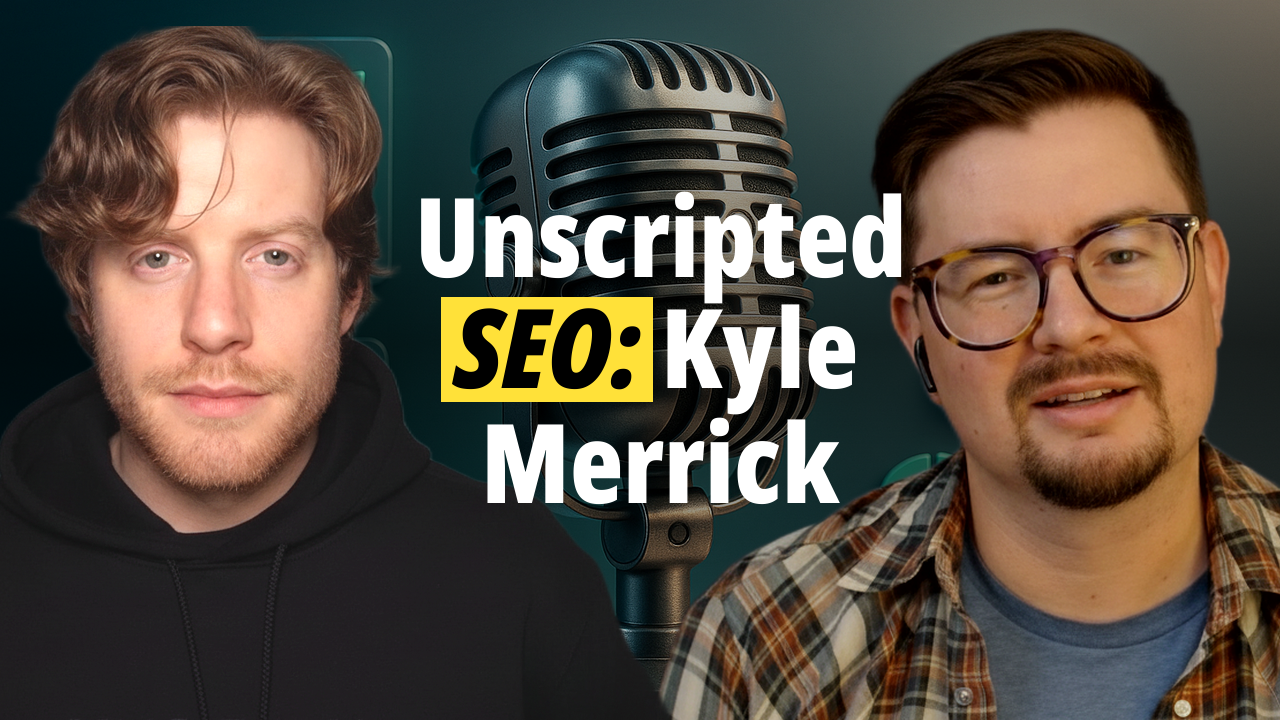
[00:00:00] Speaker A: Hello, I'm Jeremy Ribeiro, your unscripted podcast host. I'm here with Kyle Merrick, who's going to take a moment to introduce himself and specifically those things he's done in life that should make us trust him as an expert in his niche.
[00:00:17] Speaker B: First off, trust me, I'm a marketer. That's the very important thing. To open with, uh, Kyle Merrick, the actor, voice artist and now, well, still marketing coach.
I, I, I never, I, you know, no marketer is really trustworthy until you actually get to know them. So I'm not even going to try to like pitch myself on that. Like, let me get through this conversation listener and then I, then you can make whatever kind of a, you know, summary that you want for me. And you know, we'll take that as we need to.
The so what do you want? Like a quick overview of kind of, okay, how things choke out.
[00:01:08] Speaker A: So where you been?
[00:01:10] Speaker B: Well, okay, so I'll put it, I'll start with what I'm up to these days and then we can kind of drag it back maybe a decade or so.
So these days this is the, the, you know, second podcast recording for the day. There's been a couple different scenes for different projects that I've worked today, a couple different auditions that I've gotten out and you know, I get up 5am I will, you know, start with some affirmations and you know, some might call it manifestations if you wish, but then, you know, work out in the a.m. and get straight into the day and you know, hopefully productivity can happen well before 9am so, you know, that's the reality. I've been an entrepreneur for nearly a decade and that began as really a marketing agency. And it was roughly around like November, like Thanksgiving 2024, that I kind of quietly shut the doors on that agency operation for myriad different reasons. And we can get them into it later on in the conversation if you want.
[00:02:19] Speaker A: But.
[00:02:22] Speaker B: It just wasn't the right product for the market. But I still found that a lot of people have this, you know, as I've already said, this distrust of marketers. And so I figured, well, what happens if I take on this sort of educator role?
And that's what led me to this current marketing practice. Now what led me to become an actor was sort of in between closing the doors on the agency and becoming the coach. Because in between was sort of the self proclaimed goal of I gotta find a corporate job here. You know, like marketing director or creative director, you know, something like I had to mourn the Fact that I was no longer going to be working for myself.
And in that, like, I had to kind of fool myself into thinking, like, I'm ready for corporate, which my parents were very excited for. They're like, oh, right, you get a taste of the sweet life.
And so, because, you know, all right, entrepreneur has to flip his, you know, brain space to be like, now I'm. I'm going to go work full time for somebody else. So for me, that process meant a lot of inward work, you know, understanding, you know, what I value, what's going to drive me so that I can continue, you know, doing good work on behalf of another team, making somebody else money, in essence.
So amidst that, I did kind of acknowledge and realize in the back of my mind, there'd always been this, like, lingering curiosity of, like, what happens if I spool up a career in front of the camera instead of behind it.
And, you know, I reached out to a friend. She got me in touch with an agency that she was previously signed with back in her, you know, modeling days. And, you know, I told him, well, I have a background in improv, comedy, public speaking, largely due to, you know, being a business owner. And they're like, well, fabulous, we'll take you. Sure.
So that kind of really spun things up. Then I ended up on set of a biopic and met now a friend of mine, and she's like, get into action class, dude. Get your buns in there yesterday.
And that's it. So acting, marketing, voiceover, being part of the whole, like, acting deal.
Yeah.
That's why you should trust me, because I'm an actor.
[00:04:49] Speaker A: Trust me, I'm an actor. Yeah.
[00:04:51] Speaker B: Just about everything I said, I'm the least trustworthy individual because I can make it look really good.
[00:04:58] Speaker A: That's an interesting thing because we live in a day and age where there is just kind of an assumption of if you're in front of a camera, that there's a qualification that comes with that, you know, And I think it's part of the consumer culture narrative. And there's a lot of forces that make you want to believe that because they make a lot of advertising money, you know, off of social media. There's impressions, you know, they have now, even fake AI people that they're pushing out there that are obviously not real.
So it's an interesting time as a society, what are your thoughts on that aspect of being an actor, Being in marketing, but also, you know, looking and realizing that maybe part of humanity wants the wool pulled over their eyes, or maybe there's enough people that aren't taking it off.
[00:06:04] Speaker B: Well, it's okay. So first off, I say hell no because I strictly agree with you. Hell no is my reaction to how awful this current world is. This is a very real reality now that we have to figure out what's real and what's not.
This is like a hot button topic for me. I'm sorry, I'm gonna get heated here, so you might have to just bleep out this entire bit. But like, what the fuck? People like online dating. I don't know who is real on the other end. Are you going to scam me? Are you going to ask me for money?
How unpleasant is this, huh?
I'm having to talk to my aunt, who's about 77 years old, and she like, all right, so I have like an octopus tattoo on the shoulder. And so ever since I got that, you know, the family's been like, oh, well, clearly he likes octopi.
Okay, well, I do. They're wildly smart, terrifying creatures. And my aunt will just like miscellaneously send me, you know, on it, like Instagram and Facebook, like just reels of octopus doing their thing. You know, if it's the camouflage thing where they, you know, blend into the whole thing, it's. They're incredible creatures.
But she sent me this one that was like, it was called like a glass octopus. And the octopus itself is like almost this opaque, sort of, you know, bluish glass looking liquid monster.
And for me, it looked very, very AI generated because there were like, there was a very consistent bubble effect and all this stuff. And she sent it to me, understanding, well, this is a real octopus that exists now for me because I'm.
I have to be tuned into the, the, you know, what is real versus what is not.
So she's my road trip buddy, so I end up chatting with her for lengths of time. And so a lot of the conversation, I actually just the other day voiced this suggesting, you know what? I'm actually envious of you because you're not going to be around to have to figure out where the world is going in a lot of ways. This isn't me being all strictly doom and gloom.
There's a lot that I love in life, all the work that I'm doing, I see where I'm going with it. And there's a lot that I hold as being like, very prideful. But all of this with like, what is like fake news versus the real stuff, you know, you're mentioning, you know, have people woken up? Are they waiting to, you know, Take the mask off or do they wish to keep it on? You know, I think that's why sources like the Onion exist. You know, essentially like the blatantly fake news, like, you know, comedically fake, hopefully. And so, okay, that's fine. But then there are, you know, the people that are essentially making real looking material that is strictly fictitious.
[00:09:01] Speaker A: Yeah.
[00:09:02] Speaker B: That is what is truly problematic, if not extremely confusing, because we have this world of like, okay, so maybe somebody posts like a contra. Maybe this episode alone just due to some, you know, asinine something. I say, maybe, maybe this becomes a hot button topic. And then in the comment section we see people, like, exploding the Internet. Social media has just groomed us. And perhaps that's, you know, the dude at the top, pumpkin that he is, is just like. He's all willy nilly with what he's saying. And he's just like, I stand by it. It's not what he says, it's how he says it.
And that's a very key element because that's what makes the actor, that's what makes the individual on camera believable, is how this material is delivered.
People don't have the foresight to listen these days. That is what to me is most problematic.
[00:10:02] Speaker A: Three fourths of the conversations that I have with other marketers on this show talk about how important it is for companies to be genuine and for them to show that they're trustworthy.
Oh, in an age where people are more skeptical, in an age where you're looking at reviews as a consumer and wondering how many of these are fake?
[00:10:27] Speaker B: Most of them.
[00:10:28] Speaker A: In an age where, you know, even we have to question the source of these two.
What can you do or what you advise as a coach for businesses to genuinely fake being honest?
Because at a certain level of a company, a founder's vision can only go so far. I think it's easier at a smaller business level. Like you're selling permacast walls. You got a small team, 10, 20 people, you can keep that message, genuinely push your people. But a certain size of company, you know, when does that internal messaging to try to be quote, unquote honest just become play acting at being honest?
Is there such a thing as honesty in corporate marketing there?
[00:11:30] Speaker B: It's a very interesting question because I think I'm perhaps so grounded in a specific reality that, like, there's part of me that would say, mostly, no, there is the component where you know exactly what we're doing right now. You know, this is conversation. That's the art of podcasting. That's what makes it, you know, juicy and riveting for a lot of people, myself included. And okay, so corporate to me means we have hr, we have censorship, we have severe inclusivity.
All of that is something that I wish not to speak on because I have just about nothing positive to say about that. Yes, inclusivity will bring all kinds of people together. I'm not saying that we need to carve people out of this equation. I'm not saying I'm supporting what ICE is doing here by eliminating people who are contributing to society positively.
But censorship doesn't do anybody any good because the people that have the balls to go against the grain do something different.
This is where perhaps innovation lies.
So censorship, in a lot of ways, I believe is stifling to that process, even in the most subtle ways.
And business environments, office environments that very heavily police that. That's not something that I'm one to stand behind. I understand it because we need to be safe. And we're, as a society, we're getting delicate and we don't quite know how to deal with the heavy problems that the world is presenting anymore because we're trying to censor the word Adolf Hitler.
You know, when we talk about the Nazis and the impact that they actually had in history or death or suicide, these big words that people can't hear anymore.
Why? I don't know.
But needless to say, I feel like I've gotten off off topic. So can.
Can you sound. You said trustworthy in corporate marketing, I believe was kind of like the root question.
[00:13:33] Speaker A: The. The root question is kind of about. Yeah, like there's. It's. It's a. It's one of those double layer things of like, okay, in order to market your business, you have to choose how you position.
And it's basically like acting, right? You have to tell your company internally, you know, what are the stage directions that you. How you will appear to the public.
And a lot of the conversations I have around digital marketing is that you need to approach that and be, you know, try to communicate honestly or communicate trustworthiness.
And I was bringing it up because there's kind of an inherent, you know, if you're acting at it, how genuine can you be?
Kind of conundrum, right?
[00:14:26] Speaker B: This is kind of what I like to think about. So, like with acting, and the two are related. So I'll start with acting. I'll bring it back to marketing. So with acting, okay, there's like, I always think about it like a coloring book. You know, essentially, like the lines are really what is within bound and reason for what is going to be believable within the realm of the specific character that I'm playing.
So I can use whichever colors I want to as long as I'm building within the lines. Now, the moments that I'm jumping outside the line, they better be very specifically chosen because if I start going way outside the bounds, then people have lost the interest. The believability factor is just gone like that. So it's kind of the same with corporate. So if there is hr, if there is a level of like, well, we can't be saying wild things because we're also in business for ourselves and we have to keep going.
Okay, well, then, you know, understand what is the business character, what tone can you take, how creative, how, you know, fluttery can you get with your own language and then within that, bring out some stark realities about the industry. Take some positions.
You know, don't be like, well, our competition is bad.
If they're actually genuinely bad in your mind, then tell them, prove why.
You know, show us a little bit of the secret sauce. Not so much that you're revealing the entire recipe, but just enough to tease like, okay, there is reason behind this rhyme.
That's the, you know, the essence is the reason that I'm so drawn to podcasting is because it's a vehicle to get very honest, actual thought out. Maybe I'm just, you know, a little bit more flexible and fluid in how I, you know, approach this business conversation. But having been in business for myself for a decade now, it's like, this is the only kind of conversation I actually value because I know it's real.
Because you can sense the.
Well, I'll say pain, perhaps behind my words.
Yeah, that is how you really understand it's real. Actors have to be good in order to touch on that level of pain in business. I would say don't go into, you know, don't be visibly in pain, but show the pain points that your customer base see, feel, understand, or perhaps, you know, show them what they don't even see if you're, you know, presenting a completely new product to them. So I, you know, within the bounds of what's reasonable, be careful. I'm not saying to just go, you know, off the wall, but get creative. There's a lot of different ways that you can develop trust through earnest on camera behavior without going cray cray.
[00:17:17] Speaker A: I think that makes a lot of sense and I think podcasting as a one to one medium, as a conversation is one going to be one of the last safe spaces as we see the proliferation of these nuclear weapons of LLM tools that can create mass marketing.
[00:17:36] Speaker B: Human to human podcast. This is the very important bit because a lot of these agencies, companies will turn to AI tools and they'll just have AI people talking about their products. I don't give a shit about anything your business has to say if you're using AI.
Let me see the people behind it, even if they're paid actors. Come on.
[00:18:02] Speaker A: That's fair.
I think, you know, I have been using LLM tools in some form since 2015 in SEO and search engine optimization, digital marketing. And I kind of see, um, you know, when the big, I'll call it the ChatGPT bomb dropped in 2023 on society of, oh, hey, there's this new tool. Well, I was like, this is eight years old and everybody's being introduced to it as if it's data from the enterprise when it's a very dumb process based off of math that comes up with. It's like my dad, I asked my dad once to help me with a paper on Yugoslavia, right? And he tells me the story about the Mongols invaded. And that's how this, you know, second society of this culture came in. And that's the ethno regional clash that's happening there. And that's like, why Slobon Milosevic, et cetera, sounded great. And then I started doing the research for the paper and I realized my dad was full of shit.
He did not know one actual true fact except for the name of the leader of the country at issue.
[00:19:22] Speaker B: And like, it's not how you say, it's not what you say, it's how.
[00:19:25] Speaker A: You say, saying yeah, and ChatGPT confidently lies to your face.
And there's so many marketing teams out there, just whole cloth copying and pasting. There's so many business owners that are just copying and pasting without further thought output of these prompts and not harnessing genuine conversation. They're not taking the time to talk to their salesperson. They're not taking the time. You know, I sat down and did a genuine interview with a friend, friend who's a construction in the construction and renovation.
And so much came out of like, you know, how much they care.
The, the thought process behind the design, the color picking, you know, being empathetic to being in somebody's house to do, you know, renovation for a period of time. You're going to kind of live with them for a while. So, you know, as a business, you don't want to, you know, do renovations for somebody that you're going to hate and vice versa. You don't want to be somebody to be hated.
But I think there's a trap there, right, in marketing of like trying to get the most signal out there.
Leads to the adoption of LLM tools and just proliferating garbage, right?
[00:20:44] Speaker B: Yeah. Well, it's in part laziness on behalf of the marketers to just say like, well, if I don't have to write, why would I, you know, I can save tremendous amounts of time. It's in part encumbrance. You know, these teams are expected to do so much with so little time that in other words, they're forced to turn to AI Solutions because these corporate, you know, beasts or, you know, however big the company is, they're expecting, if we can, we should.
And that may not always be the case.
[00:21:18] Speaker A: It's the Jeff Goldblum you, you took so long to figure out if you could, you never stopped to think if you should.
[00:21:26] Speaker B: Yes.
And it's, you know, largely because people don't truly understand their marketplace, you know, the individuals that they're speaking to, whether business or, you know, consumer.
And you know, a lot of it just comes down to like, figure it out, man. Go talk to the people that you're trying to serve or provide solutions to or sell a product, whatever. Get to know them, their world and you know, the things that are encumbering them and then the way that you communicate with them will present itself.
[00:22:05] Speaker A: So it's almost like the advice I would give to my just turned 13 daughter of, you need to be empathetic and like understand, take the time to understand other people and not allow your own personal worldview to dominate everything around you, you know, Sounds like I should.
[00:22:30] Speaker B: Take a page out of her book there too with that bit of advice.
[00:22:36] Speaker A: It's, it's hard because it.
In the personal world there, there's this self construction of ego and how I see the world and you can become a doormat, you know, if you go too far on the other side, you know, like everything is about other people's reaction to you. That's my mother in law, you know, like her world is defined.
[00:23:02] Speaker B: Yeah, yeah.
[00:23:03] Speaker A: Her world is defined by how people react to her. And she's never going to be satisfied because nobody's ever going to live up to her expectations of how they should react to her. But on the, that's the far side of emphasis versus like, you know, we seem to have the opposite problem in a lot of our corporate culture. And our pop culture of ego. And if you are just, you're just, oh, that's just. He just tells it how he, how it is.
There's too much of like, you know, your towering ego gets in the way and people are admired for just being egotistical monsters, which is, that's the, that's.
[00:23:50] Speaker B: Something that I'm actually trying to work on because I'm like, I'm originally from Chicago. I'm a Midwesterner to the core.
And even though I'm living out in Denver, which Denver moves slower than Chicago, which is itself frustrating at times. But this Midwestern modesty, as I kind of refer to it as.
Okay. I find myself in two lanes in life. One, the entrepreneurial lane, you know, marketing. Two, acting.
Both of these lanes are lanes that exactly what you literally just said, Jeremy. It's like they praise and they employ the immodest. The individuals that are like, I just did this for, you know, all these people. This, I'm so good, you know, you need to hire me for this. Yeah.
Now it's painfully frustrating, I think, because I grew up in a household that's like, don't let your ego speak for you because it's really just, it's gross. You're a gross human. If that's the case.
That is how I was raised.
It's not that I call people out for it, but I do get, you know, internally I'm like, I, I find not an ounce of you to be a pleasant exchange when I'm speaking with you if I feel that your ego is doing a lot of the talking here.
But amidst all of these negative thoughts, I'm like, well, fuck, I need my ego to be doing a little bit more of the lifting here.
So how do I bring my ego out in non dickish ways?
I don't know.
I don't have any great answers.
I know it needs to be doing more of the lift and I'm.
It ain't doing it.
So I don't know.
[00:25:40] Speaker A: I think it's okay to not know. I think it's like how you know that you're a good parent is the fact that you're asking, am I a good parent to yourself.
Like the people who are the worst of the worst parents who do the most damage, they do not stop and question if they are being a good parent. They're either too busy, they're moving too fast, they're convinced of their own self righteousness, they know what's right, or there's such a strong firm on hand you know, I've seen that. I've had friends and I've had associates and, you know, met people that are like that and they're not in my life anymore. Because if you're a jerk to your child, like, what does that mean? But more importantly, this unwillingness, they've never seen them self deflect.
Yeah.
[00:26:36] Speaker B: Self reflection equals fluidity. You know, the ability to say, okay, well, am I doing this correctly? If not, if I'm starting to get feedback from others, then why better step back and start listening.
[00:26:50] Speaker A: And I guess that can then reflect into, you know, maybe it's treat your business as, you know, as a Persona.
Give it space to self reflect your.
[00:27:04] Speaker B: Business as you would like to be treated.
[00:27:07] Speaker A: Yes. Treat your business as you'd like to be treated.
[00:27:10] Speaker B: The golden rule.
[00:27:13] Speaker A: I think it applies.
Sure.
[00:27:16] Speaker B: Yeah.
[00:27:17] Speaker A: Do the.
[00:27:18] Speaker B: Just, you know, if you want real conversation, dish it out.
You know, that's. Maybe that's the best answer to your previous question of how can we get, you know, more genuine conversation in, you know, corporate marketing?
Do ain't that hard.
[00:27:35] Speaker A: That's fair enough. I'm curious about when you're approaching some of your coaching side of things, what are some of the challenges that you've been coming across in those conversations? What are some of the top five things that you're laying out in those conversations? What does that look like?
[00:27:57] Speaker B: A lot of it stems largely from items that we've already covered. It's really. Okay, well, you know, the entrepreneur is the maker. So typically smaller entities are the individuals that I'm, you know, working with. And so in these occasions, a lot of times, it's understanding who is it that you're talking to?
Have you done the research to actually understand, you know, which businesses are, you know, out there doing something similar to you?
Who is the competition? What are they doing? How are they doing it? How are they talking? You know, build data, use that, leverage that, and then figure out, okay, how is it that we set ourselves apart strategically? Not like by doing, you know, crazy wild stuff, but within the bounds of what is you, what is reasonable, what is societally accepted. How is it that we can separate? Because that separation is key.
If you are doing the exact same thing as, you know, somebody else that's verifiably competition, then you are no different, no better, no worse.
And that's not a great spot to be in business because that means.
[00:29:10] Speaker A: Sorry, how does that work in commodified type businesses? Like, you're a lawyer, Like a lawyer is a lawyer.
Law in Atlanta is The same as well. Actually, it might be a little different in California, but, you know, lawyers, realtors, they're kind of doing the same thing. What is, what is? Or am I wrong there? Does every business have a chance to find a unique selling proposition, even if you're, you know, practicing the same type of law in this state as somebody in another state is doing, and the only thing that's different is that you're here?
[00:29:51] Speaker B: Well, I.
So geography is a big influencing factor because, okay, so if you're, like, operating in, like, Georgia versus Colorado, there are going to be different laws. If we're specifically only talking about lawyers, you know, there's going to be different state laws that you have to adhere to regardless. So that, you know, okay, one, that's consideration. A, Now, B, if you are in the same sort of lane of legal practice, you know, one of the ways that you can really think about, okay, how do I separate myself from the other in a law firm that's perhaps just down the street?
Like, I'm not a lawyer, so I'm not able to truly get into, like, you know, if I start saying, like, civil litigation or something like that, I'm not even entirely sure what that means. So I'm not going to, like, say different categories. But the idea simply being, okay, understand where your expertise lies and then understand very thoroughly the group of individuals that is your client base.
Because the more that you are able to speak that language, the way that you differentiate yourself is by saying, bud, I know you better than you know you.
I mean, hopefully you don't say that because it's kind of creepy.
[00:31:12] Speaker A: It's a little stalkerish. But.
[00:31:15] Speaker B: But when you present that you actually have a more thorough understanding.
Well, okay, we have such a connected world these days. We can go find somebody else in just a New York minute if we need to. So, okay, well, why is it that I would go to you? Because you speak my language unequivocally, without question.
So understand thoroughly who you serve, how you serve them.
If it is the exact same as some other business, then perhaps maybe you try to build out a slightly different practice so that you can shift a little bit of your market so it doesn't smell exactly the same as another.
So in other words, you gotta do some work to really thoroughly understand what do you do and who for.
[00:32:08] Speaker A: That sounds pretty solid.
It attracts, you know, it's easier said.
[00:32:12] Speaker B: Than done, I'll say that for sure.
[00:32:15] Speaker A: Yeah. And I think one action item, obviously, is probably, you know, interview some of your clients. You know, take the time, invite them out to coffee, offer a dinner and.
[00:32:28] Speaker B: Yeah, dinner is what I ask.
Yeah, it's again it's the human to human because like it or not, regardless of where AI is these days, business is still human.
And if we're not accounting for that human factor, I wish you the best.
[00:32:47] Speaker A: And I think it's also true of even though those systems like within Google, within you know, LLM tools, even the information that we put out is designed to be consumed in a model that is thinking about the consumer. So you know, you can't just put out pure code, zero, ones and zeros, like a whole page of ones and zeros of binary that only a computer can read. Because Google, you know, for one has a lot of user based criteria feedback systems of they want you to be doing the things that make it seem like the content you're creating is not for search engines, is not for bots, but is for humans. So even if you are going to be addressing more and more bots as they crawl your site and then go to multbook and discuss it in social media, their own AI social media platform, that came out two days ago.
[00:33:56] Speaker B: I know, I just heard about that too, which is.
[00:34:01] Speaker A: It'S bananas. But I'm getting behind that is even if you know, you do end up talking to bots, those bots are programmed to respond to content that's tailored to how humans should respond to it.
So even if the reality is that there's kind of a robot sandwich of I'm using ChatGPT, it's you know, using Google to get results to give an answer based off of content that somebody created on their website partially using an LLM tool. There's like humans here and then a bot, you know, a layer of bots communicating in between. So there's a human to human bot sandwich. But you're still going to be have a better outcome from the outset if you're tailoring and having those unique viewpoints saying something that's differentiating, you know, breaking the consensus or staking, you know, some, some unique ground out there, staking a position that differentiates you from the same guy doing the same thing down the street.
[00:35:10] Speaker B: The key there though is if you are differentiating yourself, you must be consistent. Consistency is key because you know, these LLMs, Google, all these different search engines regardless of what they value, whether keywords to, you know, essentially human design queries. It's like you need to be doing it a while for these different robotic entities to deem. All right, well you're human and you do this.
So whatever you do, whatever you find that you want to do, stick to it.
Because it's going to take a while. It ain't going to happen overnight.
[00:35:47] Speaker A: What about discernment of where to spend your time?
Which aspects of digital marketing for a small business or even a medium business are going to yield?
[00:36:01] Speaker B: I can't speak to that because a lot of that is on who is it that you're selling to? What's your product? How are you helping all these folks? So you need to know very thoroughly that conversation and figure out, okay, where is your market actually spending their time? And then that's where you need to spend your time.
So until I have any of that data, which I don't, in this hypothetical instance, I, I need not waste time advising.
[00:36:29] Speaker A: Right. But at least it's there to think about as like a coda to have that conversation. But as part of that conversation, you need to understand, hey, if she's 16 to 18, then they're probably going to be using TikTok to discover stuff instead of a Google search. Yeah, if they're in their 50s, then they're probably using an old PC laptop and don't know the difference between Yahoo and Google. And if there's a search bar, it's a Google.
If they're, you know, millennials, then they're probably obsessed with just using Google and, you know, so.
[00:37:11] Speaker B: Yeah, well, then you can keep taking it, like, you know, a step further because HPS will maintain viruses like, no, like nothing else. They, you know, okay, well, chances are the owner is probably going to go talk to their local Geek Squad. So if you want to build a partnership, go to Geek Squad and be like, well, we have a solution for these, you know, folks that don't understand virus protection.
So that's how you need to think about it, is, you know, make these ties, understand the user, understand their daily life, and then figure out, all right, well, maybe they indulge in a bit of the, the dark web and perhaps that shuts their computer down. Well, if they're going to go talk to Geek Squad, then buddy, buddy with Geek Squad.
[00:37:55] Speaker A: Love that.
As a kind of wrap up here. Any thing that's been percolating on your mind, you want to talk about as we kind of exit the interview. Any store spots or you have a soapbox you want to stand on and.
[00:38:10] Speaker B: Shout about something, dude, this whole thing has been a soapbox. And you slid that box right under me, too.
I. I hope it hasn't been terribly distasteful for you or Anybody listening these days are just. We're full of stark opinions, but we're also full of very, very quickly changing times with some wild stuff happening, too. So I'm not asking for any level of forgiveness here, nor am I trying to pitch anything. This is just the reality of the world these days. It requires consideration, heated or otherwise, as long as you can be thoughtful about it. And that's my belief. So, no, I'm not going to pitch anything besides the marketing coaching practice. It's anarchy for a day dot com. You know, if you want to get in touch with me, I'm always open to conversation. Give me a follow. We can strike up conversation. Don't hit on me, please.
I am very serious about that.
[00:39:12] Speaker A: Fair enough.
I appreciate your time.
One of the more fun conversations I've had these months, really, because, you know, talking about SEO, talking about digital marketing, you know, it can go down some fairly predictable lanes, but getting unique viewpoints, as you said, like in a podcast, it's better if it's real. It's better if it's, you know, reflect some of the pain that we feel ourselves.
I try to. I enjoy every minute of that. So appreciate your time and thanks for coming on.
[00:39:46] Speaker B: Jeremy. Thanks, man. I really appreciate that perspective.