Episode Transcript
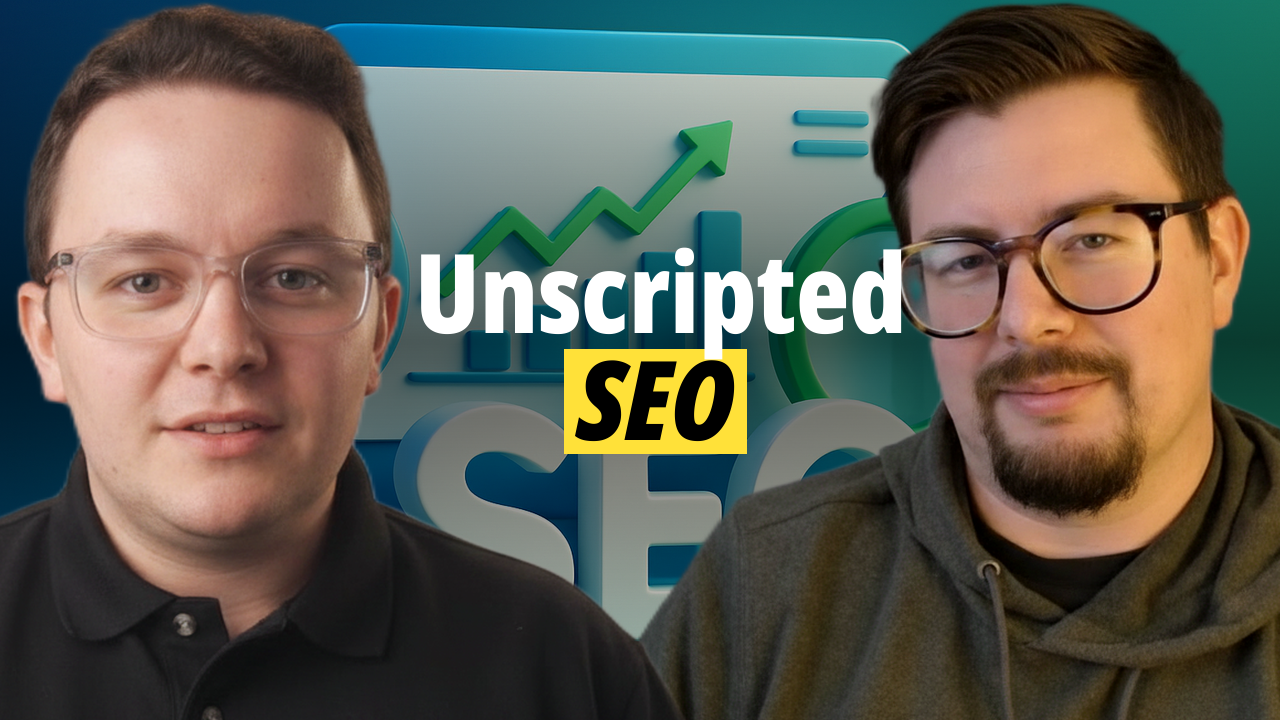
[00:00:00] Speaker A: Hello, I'm Jeremy Rivera, your unscripted podcast host. I'm here with Wyatt Bonicelli. Why don't you give yourself a quick introduction telling us about some of your experience in the industry that's made you an expert that we should pay attention to.
[00:00:15] Speaker B: Yeah. Hey, Jeremy, thank you for having me on. Like you said, my name is Wyatt Bonicelli. I'm the founder of Evolve Agency here in Edmond, Oklahoma. Started out as an engineer, found my niche here in marketing. So I've been growing this since and really I've kind of dialed it in with web development and SEO for home service contractors.
I currently have several window cleaning companies that I'm working with and really taking them, helping them make the jump from word of mouth marketing only to getting an online presence and getting leads coming to them instead of them doing all the door to door and stuff, they're able to kind of grow on autopilot. So it's working out really well.
[00:00:59] Speaker A: I also have a soft spot for home service providers.
You know, I've worked with roofers, plumbers, sunroom companies. What is it about that particular niche that speaks to you and your agency? What is it about that model that you find that you're able to find success with?
[00:01:19] Speaker B: Yeah, it really kind of started out with a couple of guys in the church that already in that realm of things. And I was looking into the rank and rent model and I was like, well, maybe I could just benefit them. And so started up websites for them, helped them grow in that way and saw that it was effective and decided to kind of turn it up more than that. And really I have a pretty good understanding of the industry.
We've owned a few homes now and renovated both of them. And I've had to deal with various contractors and just working with people. If you get recommended to somebody and they don't have any web presence at all, they don't have any online reviews or a website talking about what they do and where it's a little harder to trust them with a big check. So it's something that I know a good bit about through experience. And I've done some DIY renovation stuff myself, so that's kind of what got me started. And also those guys are not typically able to invest a lot in their marketing presence. And I see a lot of people charging 3,000 plus for a website. So that was kind of my introduction offer to people is like, hey, let's get you online, not going to charge you a ton and we'll help you grow in that way. And so that's kind of the lead magnet if you will, is kind of a lower ticket price website with the upsell of SEO and then meta ads, YouTube ads to kind of help pour fuel in the fire.
[00:02:38] Speaker A: What's been your experience looking at, you know, Google, my business, trying to create signals that this business really is in this locality. What are some of your go to tactics when it comes to building that reputation?
[00:02:52] Speaker B: Yeah, so for most of the guys, if they don't have a physical address to lock in, unfortunately they're pretty hampered by Google business profiles.
I've seen one company in particular, their average map ranking on Google maps was actually 99.
They weren't showing up anywhere at all.
And unfortunately that's tied to if you have a physical address or not.
And so I always pitch that to guys like hey, once you're doing really well and, and you're able to you know, take on like a small rental place somewhere, we can grow your leads with that as well. But then just a, having a service area Google business profile just somewhere that they can gather reviews, I push them towards that even if they're not able to, to get a address verified. So I push them to that and then of course you can embed that on, on their website and get the, the various Google properties, you know, talking to each other. It helps, like you said, establish that are where they say they are.
[00:03:48] Speaker A: Awesome. I'm curious, my friend Michael McDougall, the right thing Agency asked me this question and I thought I had a good answer. But I'm curious what another service area person might think. If you have a client and they, you know, say they're doing precast concrete walls and they're in multiple different states. Technically they can deliver anywhere in the United States but they have a few markets that they want to target as far as states.
Then on the states they want to, you know, target specific cities with location pages or areas with location pages.
How many location pages are too many? Was his question to me. I have my own answer. But I'm curious from your perspective and how Google has flipped on its head 2012, I don't know if this was in your era or not. In 2012 they literally called them doorway pages and they would smack your site down if you had too many. But somewhere, I think it was around 2020 ish we rediscovered location pages. It became part of their best advice, you know, tailor it down and you know, build a city specific page and but you know, too much of a good thing sometimes is too much and you can't Obviously create a site that has every, what, 300 that I was in. 3552 different American cities. You can't create a page for each of them. That's too much. But how many is too much in your opinion?
[00:05:20] Speaker B: That's a great question. I was going to bring up those doorway pages. In my experience with my clients, I haven't seen any manual manual actions, no penalties or anything from creating location pages.
In a multiple state situation, I would say first try to get those GMBs verified at certain addresses and then you can link each of those GMBs to their city or state specific page. That would be the best way to do it.
As far as how many is too many, I would probably start slow. It's kind of like topical authority. You don't want to go out there and publish 3,000 blog posts because obviously that looks like spam. But if you start with probably one page per state or city and see how your Google search console responds to that, if it's doing well, your impressions are trending up, you can probably drip in some more.
And of course I would kind of map out the high end clientele cities first. So for instance in Oklahoma I would target Nichols Hills, kind of a high end neighborhood before I would target, you know, Del City or just greater Oklahoma City just to really try to take advantage of a smaller market that would be a good market like your ideal clients. So I would start small and then climb up, you know, keeping keep an eye on an eye on your ideal clients.
[00:06:34] Speaker A: I agree. Here's what I told him that I would do. I said I think I would make a state level, make him a. For a state I'd target your three major metros that are going to bring the most value and then two or three of the top two cities under that. Now sometimes the metro area is defined by the city name. So that's like Nashville. So I'd target like Franklin and you know, Cool Springs or if it were, you know, where more of a region like Upper Cumberland where I live, you know, Cookville and Crossville or some of the two top cities or Sparta. So I wouldn't try to hit all of them. I just hit region plus one or two and then make sure that they interlink kind of into these hubs and then link between the two regions to support each other but not try to link Chattanooga area to the cities that are relevant to Cookeville for example. That was my thinking.
[00:07:35] Speaker B: Absolutely. Hub pages, good interlinking, just showing Google like any page on your website that doesn't have A link internally, externally it's probably not going to get indexed. So like you said, internal linking is key. So for any anybody out there that DIY'd their own website, go back and look, see if you can navigate to all of your pages within your site, ideally two clicks from the homepage.
[00:07:57] Speaker A: What's been some of the surprising sources or maybe just the slap your forehead, duh moments of hey, I've got this client, I need to get them links and authority. You know, that's part of the big play locally, getting them local links, getting them authority, getting relevant anchor text. What have been some of your methods, your wells that you dip into for the link building side for service businesses?
[00:08:23] Speaker B: Good question. Fortunately, it's pretty easy. There are a lot of good ways to do it. So one of my clients is an indoor golf simulator facility.
And so anything niche specific is always great. Like for tree trimmers, you'd want to get listed on tree trimming directories. Same thing with the indoor golf stuff.
But another thing to get like super local links would be just to talk to ChatGPT and like, hey, help me develop an advanced Google query where I can find sponsorships, business partnerships in my state, ideally in my city, but state would be fine too.
And then you reach out to those, you see what their pricing is and a lot of times they'll have like corporate stuff up to like 10 grand or more. If you're a smaller company, you're probably just going to want a link from their homepage if that's offered, or even a link from their event page. Now if you do that, you want to make sure that those, those pages are going to be indexable.
If not, then you know, you won't get that link benefit. But really it's, it's kind of searching by, it's like all in text. And it would be sponsor or business partnership, things like that, business sponsors, corporate sponsors, you're looking for that kind of verbiage on websites. And then it would also include like plus city or state. So in my case that would be plus Oklahoma or plus Oklahoma City. And then you can just crawl through each of those websites, look for anything that's a good match.
I've got a Google sheet with all the cities that I have clients in where I'm kind of sourcing these link options and then I'm pitching them to my clients as well. It's like if you're working with a church, obviously they're not going to want to be linked from just any website. It needs to be, you know, Appropriate or something like that. So it's always important you run them by the client if they're in anything sensitive like that.
[00:10:01] Speaker A: That definitely makes sense.
There's a good resource tool for that. It's called LSW Local Sponsor Finder by zipsprout. So if you look up zipsprout lsf, they have a free tool that lets you do that type of query and search.
They have a database that they maintain and they do Google crawls and it'll send you to sponsored pages.
Definitely recommend that.
[00:10:28] Speaker B: I have not heard it that I'm going to check that out.
[00:10:31] Speaker A: Yeah, there you go.
Definitely a solid tactic. Is something I've used for a couple of different clients here and there.
Local trash cleanup is also something that you can also do.
You know, you can set up a local trash cleanup, have your client come out and clean it up. There's event aggregator sites, Eventbrite event. Every city usually has two to three homegrown ones. Nice way to get some, a mix of follow and no follow. Get some participation from Facebook pages, Reddit pages. I always like that one.
[00:11:05] Speaker B: Sounds like good stuff for press releases as well.
[00:11:08] Speaker A: Yeah, because then you can come back and you can double down on it because you can then release top three green companies cleaning up X community and you just include the other two companies that have recently done trash cleanups, yours is at the top. And then you've got a third party position press release not coming from your client but listing them that can get you cited in local newspapers as well as, you know, just your traditional PR places which can get cited. Not to mention Copilot, Gemini and GPT, they all are very fast at checking. If you ask for what events are coming up, they either have an API access or Google is very fast at indexing it. I think it might be a combination of both. But I've put up events and been able to ask within 15 minutes of that eventbrite being posted. They're able to find it and reference it and remember it. So nice little extra way to get some AI agent visibility and additional citations out of that same sponsorship process.
[00:12:13] Speaker B: Absolutely. That's, that's really good. I haven't done any, any Eventbrite stuff with the intent of of PR or link building, but gonna add that to the back pocket for sure. That sounds like something right at my agency.
[00:12:26] Speaker A: Glad to give you good ideas. What are some of the off the wall or surprising things that you've, you know, discovered when you've been talking to your clients as far as marketing ideas, strategies that worked or perhaps something crazy. They tried that didn't work.
[00:12:43] Speaker B: It's a good question.
Got two here. The first one would be took on a client and he had built his own website and it looked good. It had hero section with a video playing of him, you know, squeegeeing windows and it looked really good. And he brought me on to do some SEO. And so I look and he's actually got the noindex tag on.
So you've had this website for years. I looked at the keyword search volume. People were already looking for his brand. He had branded searches but he had no way to convert them because he had accidentally left that tag on. So I gave him a hard time about that one. But of course he's a window cleaner. He's not deep diving into SEO. So he had no idea. But we got that fixed for him and his website improved quickly. But that was probably the most surprising thing so far. Another thing that works really well for kind of spreading out your leads would be Steve Hunzaker on YouTube. He's out in Arizona.
He, he's got this program where he gives out these, these gift cards to each completed client. So let's say he's a window cleaner and you give out three gift cards to each of your clients. On the back it says, you know, gift buy and you just Sharpie and the client's name. And depending on the service value, let's say it's window cleaning. So 300 plus for a service fee, let's say $50 off gift card. So you get three of those to the client, they've got their name on the back. They disperse those to other people, friends, family, person at the grocery store, like, hey, just got this gift card, you can have it. And so that brings you more leads. The person who's giving them away looks awesome because like hey, they just gave me a gift card. That's great. Also a good stocking stuffer, birthday gift card, et cetera. So then you also come back to the person who, the initial service customer and you get them like a chick fil, a gift card or, or whatever anytime that a card with their name gets redeemed. It's kind of like a built in affiliate program where all parties get, get a benefit. So you can basically set that gift card amount to whatever your, your normal cost per client comes out to. That way it's like, it's useful for them. It's not $5. Right. Like you're not going to be incentivized to do anything. But if it's A hundred bucks. They're going to go get those cards out pretty quick. So that's something pretty low budget that I've seen give some really good returns for clients.
[00:14:54] Speaker A: Those are pretty solid ideas. Just to let you know, I worked with a very large website that was cited by NASA.
They worked with. You could access telescopes across the country through their, through their online portal. So it was a huge program mentioned in New York Times, LA Times, hundreds of links. Director of programming had no. Followed everything except for the homepage. And I wouldn't ask why did you do that? He's like, I thought it was a good idea and was unable to substantiate exactly why he thought it was a good idea.
Just to point out that applying a nofollow to one site isn't a sin. That's limited just to the little guy.
I've done plenty of big brand relaunches, brand new website launches. Yep. Then launched it with the no volume. So it's definitely, definitely one of those items where you can shoot yourself in the foot.
[00:15:57] Speaker B: Yeah, yeah, no doubt.
I've also worked with a client who, it's the golfing facility. So they've got a parent company with their own website. And so I look through their, their backlinks to the parent site that are pointing to the Oklahoma City locations and I've reached out to those, those owners of those websites to say, hey, they've, they've got their own website now. So we're pulling authority from the parent company to get more local authority here in OKC with existing links. It's kind of like stealing your competitor's link except it's all within the same company. But it's more accurate, more relevant for the actual Oklahoma City website. And so that's another one. It's just, just finding links that aren't even broken necessarily, but could be updated to be more accurate.
[00:16:42] Speaker A: I love that because, you know, aside from, you know, the first step is making sure that you are internally linking from page to page and referring to yourself and oh, that you have an about page, which apparently for some people is a difficult, difficult concept to understand. I should have a page that's about me. But I think that comes from kind of an ignorance of how Google understands entities and puts together information about your business, not just from your page, but from other sources.
But definitely going up that corporate ladder, you know, any service programs that you're a part of, any accreditations that you have that you can get listed on directories if you're entrepreneur centers are great. If you're a local entrepreneur in a small city you can often, you know, join a co working hub or join a place like that that has entrepreneurial resources that should be connected to anyways, which are fantastic for leads, but they often have directories that you can get listings on or make contributions or host events there that'll gain you additional local links. I find a lot of people don't, don't know the power of connecting locally.
[00:17:58] Speaker B: Absolutely.
I've got several of the links that I've scraped are actually local sports team sponsorships which was an idea that I got from my son's like soccer league. It's like they don't really have any branding on the jerseys at all. So I'm like reaching out to them. You know, how much would it cost to sponsor the jerseys? Because then you're in every single photo in the whole metro.
That's another great option is getting hyperlocal and then anyone that could fit your ideal target of clientele again, where are they spending their time? And getting your company listed in those areas can be a huge ROI from a single link.
[00:18:39] Speaker A: What do you think is the future when it comes to the interplay of these new ChatGPT agents? Will we continue to see LLM based technology spread further into the consumer space? Do you think that it'll have a huge impact on consumer behavior or are we mostly just seeing the fallout of Google's adoption of LLM based technology and throwing those and yet another unique, unique SERP type for us to be concerned about or explore how to rank in. What do you think? LLM? SEO? AI SEO? How big of an impact is that going to have and in what ways should it shape aspects of your strategy?
[00:19:29] Speaker B: That's a great question. There's a lot of money to be made in that realm. Right now, with my focus largely on local clients, it doesn't seem to me that LLMs are taking over that space. You've got all of the Google business profile data is owned by Google, so they've kind of got a leg up there. So anytime you can get your physical address validated, that goes a long way for E commerce or something like that. Absolutely. You're going to need to be pushing LLM, SEO, AI SEO, geo, whatever you want to define it as. But for me and my clients, the local stuff seems to still be pretty heavy on the Google Maps and then less important on the organic SEO. But I'm expecting and planning that it will continue to play a larger role. I do think it's important to take a step back and look at the average Joe or even like the generation one or two steps older than us and see how they're using, how are they coming out with their information, Are they logging into Gemini and Perplexity? No, no. In fact, most people are not even aware of cursor AI or Claude code. You know, we're kind of in a bubble a lot of times and we think that everybody else is using the tools the same way that we are. I would say at least for home services right now the LLMs are not a huge player, but something that I imagine will continue to creep in closer. I mean you can of course ask for recommendations and from what I've seen it's, it's still crawling Google search results and Google Maps results as well. You know, it's not coming to its own determination from an intense research application. You know, the Google links are already there and to me that's, that's what I've seen. But from services, not a huge focus of me. My main thing is getting people a physical address verified and then building out local and organic SEO.
[00:21:24] Speaker A: What's been your experience with the state of social and its interplay with SEO? Is it mandatory to for a local service business to consider leveraging meta ads or placing ads on ads or in order to get market capture or just to solidify to Google? Oh hey, there are local people that are genuinely searching for this and one good way to get local people to click through to the site is to do a geo targeted ad campaign on meta so that you can prove, hey, you know it's that brand, secondary brand search that people are going to, if they see your short ad then they want to research you a little bit, research the industry a little bit. So almost paying for the ads just to bolster SEO, is that something that is in your head or is that part of your strategy or is it really more locked into roas return on ad spend directly from the platform?
[00:22:23] Speaker B: Yeah, that's a good question. So you know, I, I push people my clients like the SEO is kind of the, the bread and butter that I do but at the same time I like to set expectations clearly from the jump.
So depending on the client, their existing website, if they had it for five years and I've got some branded search, SEO is going to be pretty quick. If they don't, then the website is either I'm making it new for the first time or you know, they had a one page website that wasn't optimized at all. It's going to take a little bit Longer. And so I'm working to package meta ads in with my, my current offering to help them get some leads right away and get some return on investment, some roas from the jump. And so I'm, I'm kind of pushing both angles, right? We're going to, we're going to grow quickly with the paid ads, we're going to grow long term with the SEO. And we've seen a few clients get some really big like commercial window cleaning gigs through Google search, but those take time to get to like I said. So ideally both. And then with meta ads in particular, you're actually building brand at the same time.
Especially if you're doing kind of those owner intro ads where the owner is, you know, talking head, video, video style ad like, hey, my name is Wyatt, I'm with Evolve Agency. And you're like in front of a city landmark right behind you that establishes trust really quick. And then like I said, if you're in the branded polo, you've got the hat on potentially you're building brand, you're getting your stuff in front of the right eyeballs. And like you said, you can really dial it in. In particular on Meta, you can go drop that pin on the downtown area where people are working, give it like a 1 mile radius and then you can also do that around like your ideal pavements.
And so one of my clients started doing this recently where we, we set him up with some owner intro ads and hit like the, the main neighborhoods around his area with the affluent homes and he went out and did some door knocking a few days later and people are answering the door like, hey, I saw your ad already. And they signed up right away because they already trusted him, they, they'd already seen him and that was just Simply from a $10 a day meta ad. Now results are kind of limited with that low of a budget, but they built trust before he even got there. And now his branded search is going up. So they all work together and you can use both of them at the same time to kind of bounce off of one another. And then the more active you are on social, organic, social, whenever you're running ads, they can just click on you and go see your recent posts like, yes, this is a real company. That's the owner that's gonna, that's who is going to show up at my house.
So if anything, it'll increase your conversions for sure. But it's something I definitely recommend for short term growth as well.
[00:24:55] Speaker A: Curious if you've tried it yet with any of your clients.
There was a shocking study a few years ago where it showed that out of home service calls that were done to, I think the sample was about 200 businesses, that 90% of those calls actually were never returned at all by the business.
And I think it was 4% of the calls actually made it to a live agent and the remaining six were called back just once. Have you tried using any software that uses like an AI call return agent or an AI phone service or work to set up your clients with a call center, one of the two to kind of handle, you know, because if, if they're service professionals, you know, you either have a team or it might be some old guy who's been doing it forever and he might be in the midd of, you know, fixing a toilet or it might be up on the roof. And so he doesn't pick up the phone and misses the lead, doesn't follow up on it. So yeah, what's been your experience in coaching clients on improving their follow through, improving lead quality and also, you know, it's, it's a two way street. You know, sending them crappy leads is bad and then getting a bunch of auto dialers is not great. But also if they don't pick up the phone, it's hard to get them the business.
[00:26:18] Speaker B: Right, right.
Yeah, that's huge. That's a huge thorn in the side. And in fact, after running my first few meta ad campaigns, I've now told people from the jump, like, don't even consider this if you're not okay, double texting, triple texting, double calling people, because the meta ads, you're, you're interrupting them, they're just looking at cat videos on their phone. You interrupt them, they say, okay, sure, type in their name and then they've already forgotten about you.
So if you don't call them back within a minute or two, I mean, there's a Harvard study on that. Right. You're 400% more likely to convert if you call within the first five minutes, I believe. So I tell people, don't, don't even entertain this if you're not going to, you know, reach out to people and don't feel like you're bothering them. They raised their hand, they contacted you, they said, yes, please reach out to me. So that's, that's something that I've, I've pushed recently. And then whenever the colder leads start to come through, they're like, okay, I know what to do. I keep bugging them. And then some of those people, they don't convert on the fourth, fifth touch point. You gotta just keep at it. As far as I answering tools or anything like that, I haven't used any. I've been looking into some. Most of my clients are either single owner operator or they've got just a few people below them. Most of them have their, their wives helping them with you know, managing calls and stuff. So they've kind of got a built in backup there and so then I'm just building automations where you know this call was missed and then it'll email or text the wife or whatever business line. So I've done that in Zapier.
But yeah, if they're not going to answer the phone or get back to those people quickly, you're, you're paying for leads and then it's going right, right down the toilet. So that is a major pain point for these small home homeowned businesses and something they really have to do well to, to make the most of paid advertising for sure.
[00:28:02] Speaker A: Love it. So just kind of wrapping up. If you had to give low hanging fruit advice of hey you are a local service business owner, what is the easiest, you know, within the next 24 hours, maybe the next hour go and do this. It's going to benefit you. From an SEO or marketing perspective what would be your go to advice or probably one of the first steps you do when you onboard clients.
[00:28:31] Speaker B: Right?
Yeah.
So non SEO would be some print marketing. You're driving your vehicle around all day if it's not wrapped or at least has like a magnet on it that says who you are, what you do with a QR code or a phone number, you know you're missing out on you know a driving billboard. So that's something you can do for as little as like 50, 60 bucks on Amazon. Get like a 2 by 3 car magnet. Put one on each side in the back of your vehicle. That goes a long way.
In a similar vein you can get one of those A frame sandwich boards. I think they are also two by three around that size.
You get your branding on there, you get your name, what you do QR code, put that out in the street while you're servicing the job, people drive by.
It happens almost weekly now. I'll get a text, hey, just got a lead from my A frame and that's like 250, 301 time deal.
It'll pay for itself on your first lead. Especially if you're any decent sized ticket service. It's going to pay for itself quickly and again you're just establishing trust. You're Getting more eyeballs on your stuff and then kind of just more of that print marketing. Right. So door hangers, you can just leave a door hanger on like the nearest 10, 15 homes.
You can even write the person's name. Hey, just serviced your neighbor John, Use his name for a $75 discount, something like that.
I just, just preach this to the guys, the, the business owners. Like let's, let's turn one lead into more. Let's try to get three or four out of every one.
And that, that pyramid will just continue to grow. So that's all the, the non SEO stuff.
As far as SEO, you get it, you get a pretty nice bump whenever you join the, the Chamber of Commerce because that's always a good trust signal. So in the states that I have clients in, I've got sheets that kind of compare or contrast basically the biggest chambers in their state. Typically, I mean, not always the, the closest city chamber won't be the best for you as far as SEO goes. They might be smaller, they might be newer. So it's worth taking the time to evaluate the cities around you to see what your best option is.
[00:30:35] Speaker A: Love it. Thank you so much. Go ahead and call out your business URL and company name one more time. If you have anything downloadable or extra resources to refer to and shout that out too. I'll add it to the show notes.
[00:30:49] Speaker B: Yeah, yeah. So again, my name is Wyatt with Evolve agency in Edmond, Oklahoma. The URL is evolveagencyok.com I need to work on some PDF magnets, but I'll le everybody with one more tip. If you have a Google business profile and you are regularly driving to that location. So not a service area, but a location. Take your phone before you drive into work. Tell your staff to do it as well. Hit airplane mode. Wait 15 seconds, turn airplane mode off. Turn off wi fi, go to Google Maps, search your primary keyword. Click on your business scroll if you have to. Hopefully after a while you won't have to scroll and then take the driving directions. Turn that on, drive to work. When you get there, turn it off. That's one of those trust signals that goes a long way. It's pretty hard to fake that. You know, there are people getting like a hundred cards or 100 phones and SIM cards doing that. But if you have yourself and three other employees that are doing that every day, you've got a lot of trust signals. And just so you know, well, not you, but your audience, I know they're smart as well, but the airplane mode on off resets your IP address so you'll be a fresh user in their eyes each time.
[00:31:58] Speaker A: Very smart. Thanks for your time, Wyatt.
[00:32:01] Speaker B: Absolutely. Thank you for having me, Jeremy.