Episode Transcript
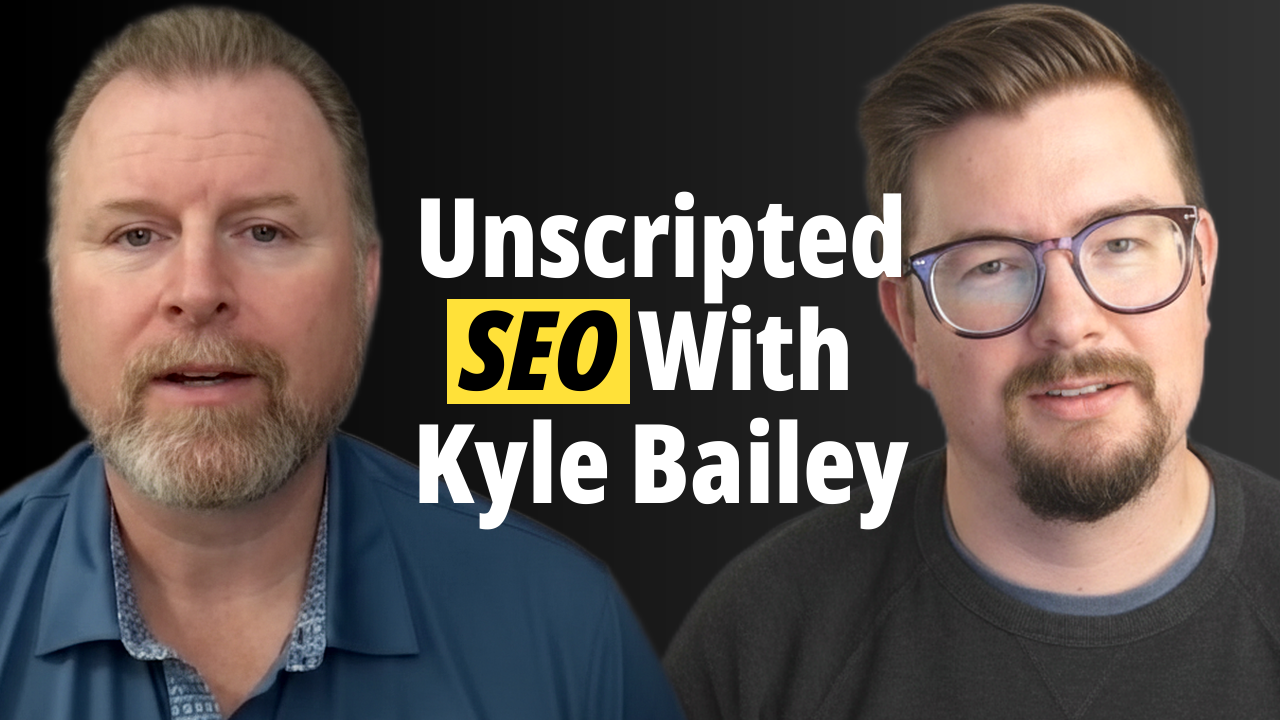
[00:00:01] Speaker A: Hello, I'm Jeremy Rivera, your unscripted podcast host. I'm here with Kyle Bailey. Why don't you give us an introduction to yourself, your company, and what you've been doing that's built up the expertise in that particular niche.
[00:00:17] Speaker B: Yeah. Thank you for that. I'm Kyle Bailey. I own Front Burner Marketing. It's an agency that I founded in 2010, so celebrating 15 years this year, and I specialize in home service businesses. I grew up in the trades, so I'm one of the few SEOs. I think I haven't done an actual poll, but I think I'm one of the few SEOs who have actually swung a hammer. I've done framing, roofing, drywall, lots and lots of kitchen and bathroom remodeling, and then I've done the in home sales consultation and performance side of that as well. So I bring kind of a unique skill set because when I approach a customer home service business, I'm really thinking about what their top, you know, their top struggles are like, getting the lead, keeping the customer, making the customer happy, getting them throughput. And the SEO and the local SEO is a part of that.
[00:01:04] Speaker A: I love working with home service businesses. They're very different from, you know, E commerce, and they're very different from, you know, national brands that are competing very large. You know, they focus in on a specific niche. You know, they're delivering their precast concrete walls, they're putting on roofs. What is it about, what is it that's challenging about working with a home service provider?
[00:01:27] Speaker B: The singular.
[00:01:30] Speaker B: Nature of that question is challenging. Which challenge?
[00:01:35] Speaker B: You have a big attention gap problem because they're so.
They're babysitting, they're putting out fires. So they're a firefighter and a babysitter all in one.
So getting in front of them with another task that they have to do. I try to take all those tasks off, for instance, images.
If you're in Houston or Dallas, Waco, Austin, San Antonio, you know, I'll. I'll drive to you. I need you to cover my time and gas, but I'll drive to you and take all the pictures. I'll go out to your jobs.
I'll take before and after pictures. You know, if we need two trips, we'll set that up. But that's one of the biggest things that is needed on a home service business, is before and after pictures. And it's also just one of the most difficult because if you're a professional at roofing, it's highly unlikely that you're Also a professional photographer or that you just know how to line a photo.
And so being able to do that for them takes all that off their plate. It's a one time cost. So that, that's one of the challenges is getting pictures in and getting answers on content and stuff. That can be tough just because again, they, they've, they've got to run their business and the all consuming nature of home service makes that difficult sometimes. On the flip side, what's going on with AI right now, that's one of the reasons I've pushed so hard into the podcast world is, I mean, if you own one of these business, you're, you're out of time, you have no choice, you have got to get on the AI train now. You've got to get out into the marketplace, figure out what's going on.
I doubt you have time to do that. That's where a professional is going to come in. But if you do have the time, you need to get out there and figure out what's going on because it's changing so fast. The entity and brand mention side of everything that's happening is, you know, it's like, you know, Death Star coming around the back of the moon. That's no moon, you know, that's AI.
So that getting, getting that truth across. Because it's been the same for 20 years. I mean, for 20 years it's been Google and now it's changed. Even Google itself has changed. So I would say those are the big challenges.
[00:03:34] Speaker A: What is it that you, what's the superpower of a small business owner when they come in and they're, you know, they've got their worldview, how can you best leverage their capabilities to maximize what you can do on the SEO side?
[00:03:50] Speaker B: Well, I'm glad you asked that. I'm actually writing a book. It'll be out here within probably 10 days. It's called what's yous Story?
And it's the path to connection with a homeowner. And the whole point of it is that there's a story that every single home service business owner has and that's what drove them into the business. That's what has kept them there, that's what's made them successful. But then the links in the community, that's the other side of the story. And it's just something that I've found that most homeowner home service business owners just don't know how to tell that story. They don't see the value in a lot of the pieces and they, they don't know how to put it all together.
And then the backside of it, executing that throughout the top to bottom throughout the brand. From the first moment somebody sees your ad to they see your truck, to they see your mailer, to they see your, your badge truck walk up, drive up to their, their house, to the materials, you're handing them to the sales process. You're telling that story all the way through if you do it right. And that's what the book is for, is to give them a template for it. I would say that most home service business owners are not ready for like the Donald Miller story brand. They're not quite there. This is a pre, this is kind of a setup to be ready for like the Donald Miller make the customer the hero. And so that's what the book is for. And the urgency of the book is again, you're out of time. You've got to make, you've got to make it so that your brand gets mentioned more.
So that a direct outcome of every marketing function you do in your community, a direct outcome of that is that your brand gets mentioned more.
So connections with local civic groups linking that up. Right. You talked before we started about interlinking assets and things like that. So that's what, that's what would maximize. That's the biggest lever that a home service business owner right now can pull because it's a fixed cost. You do that once and now you're just on your regular posting schedule, but you invest in that one time you tell your story and now you have this asset that's just going to keep printing cash for you.
[00:05:49] Speaker A: That makes sense because you know, roofing is very largely the same from California to Tennessee to Florida. As far as like the actual action, you know, we don't have such a radical diversity of different types of roofs. So when you're working with a service area business, you know, to find that differentiator, it's not necessarily in the product or the service itself, but in this, your personal connection to the story. And usually because a service area business can be much smaller in size, anywhere from, you know, 1 to 15, 20th on your team, you can really like reinforce a lot of the messaging of your personal story and your, and project your personal values all the way through the process. Which, you know, how do you get them to reflect those values in the marketing that they push out there? Whether it's, you know, on, on site copy or social media posts or ads. What, what's that through line of, of making sure that brand, brand concept and entity gets out there?
[00:07:03] Speaker B: Yeah, that's a great question because you see it executed wrongly both ways. One is it's all the kind of warm and fuzzy messaging. Then the other side, it's all keyword stuffing. And so both of those are fails. Nobody's going to buy a roof from you because you donate to the YMCA or whatever. On the other side, nobody's going to buy from you when they feel this kind of push. And a lot of times, of course, Google is going to not treat your site very well if it's keyword stuff over optimized.
So what it starts with, and that's what I start with in the book, is your story starts with your core values.
And so a detailed and exhaustive examination of your core values is where it starts. And that sounds, I don't know, cliche or whatever, pardon me, but the reality is we over, I think we overestimate the importance of other people's core values and then we underestimate the impact of ours, I think. And that goes into, you know, we always think everybody can do what we can do, that kind of thing.
But the reality is, you know, if you're now you have to be base integrity based as a company for this to work. You can't be out there ripping people off or taking shortcuts and stuff. Don't even like, try this. If you're that kind of company, you have to be a company who's dedicated to the betterment of your customer. And that, that has to be the beginning of it. Now after that, you're going to work out a lot of things, like on time, every time. We always use the best material, even if it cost us a job. We're always going to tell you the truth, even if it hurts and it might cost us a job. Those are core value statements. And the longer you work on, the more boiled down they get.
So they get really, really nice and compact. And I always compare it to the difference between a shotgun and a rifle.
So you take the same amount of gunpowder, you shoot a shotgun, it's ineffective after maybe 150 yards at max shoot a rifle, you can be effective over a mile.
So and it's, it's actually less bullet.
So it's about making that message very, very dense and then being able to communicate that as often as possible. So what you want to do through your, through this exercise that I take people through is you want to boil down what is the core.
If you could only say one thing to your homeowner, what would it be? And that takes some time that takes some effort and it takes some meditation. I always recommend that somebody take a couple of days, one of these home service business owners. You know, take a couple of days, get an Airbnb by the lake, get. Turn on, turn your phone off and really chew on what motivates you. Think about all of the dopamine payoffs you get from your business, and then that's where you really want to center on the core of your message and then think about how it works out. Now, after you get that done, now you do an employee audit.
By the way, this works. This is not going to work super well for a single person team with, like, contractors doing the roofers, the roofing.
This is gonna work best with a team, a company with a team. So they're running, you know, three to five trucks minimum. I would say you've got five or six salespeople out in the field. You've got four or five interoffice personnel, you've got warehouse personnel, you got install personnel.
Because that's where your culture is gonna come from if you don't have those people. It's hard to say you have a culture because you're subcontracting. And you might use the same subcontractors all the time, but it's still not the same.
So you do that employee audit now, do a friend audit and your last 25 customer audit. And, you know, then you begin to get this kind of osmosis of core values that maybe you wouldn't even recognize. I would. I would go so far as to say I would put money on. You're going to find core values that you didn't know you had.
Because again, you're always looking at things from your eyes. You're not looking from your customer's eyes, because that's not impossible. That's impossible. So that's where I would say, because that's going to put you on the road to be able to speak a different language than all your competition. It's an immediate differentiator. And again, this causes your. This will cause your brand to be mentioned more because it's a connecting thing.
You're not just one more roofer driving by.
You're that roofer who's connected to this, who. I felt. I felt this when I read their story.
You know, when you connect on core values with your ideal customer, they feel something. Even if they never buy from you, they feel it. So that's the goal.
[00:11:19] Speaker A: Curious how that applies if you happen to be like a franchise owner. You know, you picked up a pizza Franchise, there's obviously, you know, benefits to that of you've got an established brand, but within that, is there still wiggle room within that too for, you know, your franchise location to echo that, or is that more limited to non franchisees?
[00:11:45] Speaker B: Yeah, sadly, they're pretty limited. I've not found many franchises, if any, that will allow you to write your own story because it's about the franchise. Now, on the upside, the franchise, if they're doing their job right, they've got some kind of story. And I would just counsel anybody who's thinking about a franchise, just grab some of their marketing material, go grab three or four of their other websites in other cities and then just put it in front of some of your friends and ask for an objective look. And if you don't get an overwhelmingly positive response, that, that's a red flag because you're stuck with that. You are married to those folks. You are not getting out of that contract. You are going to pay that fee whether you, you know, whether you do anything or not.
And a lot of them, you know, they'll, they'll do marketing for you for the first year or so. Then that spigot starts to run dry. And so, you know, you're, you're on the hook for it. That's the downside. Because you remember Quiznos?
Yeah, yeah, Quiznos, man, they were so dominant that they made Subway change the way they did things, and then they just went away and all those franchisors were left holding the bag. I knew a couple of guys who had Quiznos franchises, and because they quit advertising and they were really, they were handcuffed because most franchises don't allow you to kind of go your own way. You can't create location pages, you can't. All the things in SEO that you need to be able to do to differentiate, you can't do it.
And then on the messaging side, you're even more handcuffed because. So I would say with franchises, I'm happy to do a free discovery call for anybody. I always do. My first call is always free.
I'll be happy to walk through it with you. And we can even sign in to the back of your website. You can. We'll share a screen and I'll see what changes we can make. And if it's good enough, then great, we'll put a package together for you. But I would say out of a hundred conversations I've had, maybe three, I mean, it's that low, maybe three could make the kind of changes that you. Yeah, Franchises are tough.
[00:13:37] Speaker A: That makes sense.
Going in a slightly different direction, but tied into something that you said previously about, about thinking about a business's especially small businesses, connection to community.
[00:13:50] Speaker A: Talking with Matt Brooks of SEO Tarek about this aspect that some of your best you in terms of marketing and hope, hopefully reaching out to somebody and getting a link or getting a blog post out somewhere is actually looking at the nexus that you're connected to. So if you're a realtor, you know, if you're a, a pool installer, the thing that connects you to other businesses is the home, you know, and you're trying to address that same homeowner audience as dozens, maybe even hundreds, maybe even thousands of other hungry business owners who want to get in front of that person. So what advice do you have to give to business owners about co marketing, about effective outreach, respectful connection and leveraging that capability in conversation to build links to, to do interviews of other small business owners. You know, have events that tie in marketing with other other organizations, hopefully in the same community, but maybe just within the same focus industry or niche. Not necessarily. I'm going to cross promote another competing realtor, but no home inspector, painter, landscaper.
[00:15:09] Speaker B: Yeah, man, that's such a good point. Because the reality is if you're a home service business owner, I can almost guarantee you you're driving past free money every day. Just think, every red light you come to, every red light you come to, there's a barrel of $100 bills over there and you just drive right by it. And here's what I mean.
Number one, every neighborhood you go into, if it's a, if it's a neighborhood that you want, it's almost certainly going to have signage on it.
I know here in Texas, I live in a place called Mayfield and Mayfield is on the exit, it's on the entrance, it's on several signs. There's parks around here that have names.
So you have the ability to take 5, 6 seconds, hop out of your truck, take a selfie with the neighborhood name in it, then shoot a quick selfie video. Hey, I'm over here in Mayfield today and you know we're doing this, we're doing another roof in Mayfield.
Now put that on your location pages.
You, you know, there's all kinds of stuff you can do with that. You put it on Instagram, you put it on TikTok, Facebook reels, YouTube shorts.
Now pull up to your job. If you're a roofer in Texas, it's almost 100% guarantee that you're not doing the Whole job. So hail is a big deal in Texas. I don't know if you know this, but Dallas, Texas is the DW area is the hail capital of the world. Literally, they get more hail than anybody else in the world.
And so you have, it's a very, very mature ecosystem. You know, you have dedicated painters who only do painting for hail damage. You have siding people, window people. And so all these roofers have these relationships, but you would never know it looking at their website. So going back to your point, I think if I've got this right, an easy win just, I mean it's free money. Take a quick selfie. I'm here with Pete the painter. We're about to paint this thing up. We had hail damage. This is the 2 inch hail we had over here on the east side of the metroplex. You guys know out here in Garland and Roc wall how tough it was. We're going to take care of this home. We're out here in Mayfield and you know, we're happy to be out here. Now you've got tying with Mayfield, you've got tie in with the rock wall and Garland, the city areas.
So you've got the macro location page, then you've got the micro. So macro location page would be like the city. Then, you know, do stuff for the neighborhoods that you really want or especially if you're a hail damage person because you locate marketing energy around where you're one and a half inch and up hail hit because that's, those are the places that are going to go.
You know, hail damage, roof repair, near X. Right. And so but then you've got the co marketing piece. Now you say, hey Pete, tell me what you're doing on this, this house. Well, we had 2 inch hail over here and you know, it hits this hardy plank starts breaking off the chips at the bottom. So what we use, we use X fill because this is the all weather fill. This is high quality and it'll last you, you know, 25, 30 years. Whatever it is. It also paints up now. So you can see here and do a little illustration on the job. Now take that video, go transcribe it. You got a blog post how you handle hail damage, paint repair. Put that on both your websites. You know, spin it so it's unique content. But most, most home service business owners don't have time to do that. Roofers don't have time to do all that. That's where a professional comes in and people balk at the cost. But it's just because they're looking at it backwards. If I told you you could have a high end employee for $15 an hour, you would jump all over it.
But because you think of the $30,000 a year bill, you're like, no way. Right? But if you've got somebody on your side that's a strategic thinker that can look into your daily, they can look into your calendar and get money out of it, that's what a high end local SEO and AI SEO person is going to be able to do. They're going to be able to take these things that you're already doing. You're already doing it every day.
Now let's just take that, tease it apart, grab the pieces of it, add a little bit of juice here and there and then you don't have to do anything else. You know, we take all that material and we're going to go. And that's how you tell that whole story locally. You know, we only connect with, with high end painters. You can look at Pete's reviews. He's got, you know, 325 reviews, five stars.
That's. And he's been in the area for 35 years. His dad was, you know, so you're doing these deep connections, you know, these deep connections. And then on the other side, you've got the community you were talking about. Community. You know, your community organizations. Pick three or four, pick three or four, you know, places that you give back to. Either you attend their gala every year. It could be gala, I always say gala.
You know, pick that link to their website, do some give back stuff during the year and find ways to link back to that, you know, the pet, the pet stuff. There's children's homes, there's lots and lots.
[00:19:52] Speaker A: Community cleanup.
[00:19:54] Speaker B: Yeah, totally.
[00:19:55] Speaker A: Yeah, I've seen great success with like.
[00:19:57] Speaker B: And they all need help.
[00:19:59] Speaker A: Yeah, our park is trash. We're going to send some people out, send a guy out for two hours to go pick up trash.
You will, like, if you post that on Reddit, you're going to get a huge, like, Reddit's often hard for very small businesses to find a good way to come up that isn't like, look at me. And then everybody's like, no down vote. But if you come in to the community and you're like, hey, I'm sponsoring a community cleanup. Going to have a couple of guys will have gloves and trash. Gloves, trash bags. I don't know if you know this, but there is actually for every county across the United States called Keep America Beautiful. You can contact them, tell them the Date and time. And they'll either deliver a batch of gloves, grabbers, buckets for you to execute a cleanup or let you go pick it up, bring it to the location, and bring it back to their central hub. There's a chain of nonprofits nationally, so, you know, I've got communitycleanlinks.com I kind of organize those over there and kind of execute that as my own nonprofit and help businesses execute on that. But it's always a great idea.
Yeah, it's low cost, high impact, and tons. Like there's like, you get the event directories because every community has three or four event sites that you can submit to. You've got the national aggregators, you know, eventbrite, event, Zillow type sites. Then Google itself has a special SERP for events. So you can show up directly in a SERP if somebody's looking for things to do in Houston. Well, hey, trash Clean up by, you know, by Newton Crouch, whatever brand mentions right there in the serp. Fantastic.
[00:21:40] Speaker B: That's it. Yeah. And you know, the best practice on that is to, you know, take three hours on a day, show up with your team. Everybody's branded. You know, we're coming out here, we're doing some work in this place, show pictures of it. You know, don't pitch. Just show your team out there at work, you know, and, you know, if you can do before and after, that's even better. So, yeah, that's all home. I want to connect with you on that and understand more about that. So please send me more information on that. I'll pass that along to my people.
[00:22:10] Speaker A: Absolutely. Would be happy to.
So kind of changing tax, we touched on it a little bit. It's the recognition of the horse in the room. My friend Michael McDougald says your least trained but most popular customer support representative is ChatGPT.
[00:22:28] Speaker B: So that's a good point.
[00:22:29] Speaker A: What can you do? Is there anything specific to do aside from the best practices we're already talking about on SEO? Making sure that your story is in the content that you're getting placed out there. Is there anything actually extra, or is it really just due diligence to take to execute on those things to make sure that you do show up and then just doing some spot checks to see, okay, does GPT that, you know, there's Noah Toa, there's other tools that are developed that you can kind of spot check whether you show up or not, but it isn't like rank tracking tools. You know, there's. There's a lot of ambiguity in that. So how do you. Yeah, how do you balance over. Over paranoia about showing up in those versus not doing anything specific to show up?
[00:23:17] Speaker B: I think Pareto principle 80, 20, 80% of your effort should just go to just telling your story in a really clean way.
And then 20% should be really strategic tactical assets and efforts to show up in G, in GPT. And, you know, easy way to do that is to publish a couple of blog posts a week, interlink those really well, and then see what shows up. But then see what is showing up for your competition as well.
So when you search your main keywords, what is showing up already? The nice thing about ChatGPT is, and all the other LLMs too, is that they'll tell you to an extent how they arrived at getting there. Cause they show you the links, they show you their sources, but that's not necessarily the whole truth. And I don't mean that they're hiding anything. I just think that we're, we're in the age of a maturing marketplace.
Yeah, I've got a page on my website. We just relaunched, so it's not working right now, but all the data's there. We just have to get it cleaned up. But it goes back, I think we started late last year and almost every week we do a comparison of Google, ChatGPT, Perplexity, Claude and maybe Gemini. And what we looked at is just Chicago Plumber. And what I wanted to see was week to week, what are the changes and what motivated that was. I have a remodeling company in Dallas and we were dominant. We were dominant on Google and I mean, we were probably number one for over 200 keywords. And when ChatGPT really came online as a mature force weren't present at all. And it was shocking. Even though at that point ChatGPT represented such a small slice of the pie. I knew that, you know, we got something going on here that we've got to address. And that was over a year ago. And that's why I say so often you're out of time because that was over a year ago and now it's matured more. And you can actually look through the list every week. You can see sometimes like week to week, it'll be a completely different three or five pack on Chat GPT early on, but now it started to kind of settle out to be more consistent. And Google's the same every week. That's. That's the crazy thing, you know, maybe once or twice in a year, will that three pack change in a big city like Chicago. But back to your question. You really just have to determine your North Star has to be serving your ideal client. And that's why telling your story is so huge. Because you're basically in a situation now where by the time somebody gets to your website, I say this a lot, that your website's now a vetting device rather than a discovery device because of the changes Google had already made. Google had already moved you down in the third.
Yeah, it used to be 10 blue links and you were going to get directly found from that. Then here comes the ads, then here comes the map now. Good grief. I mean, they, they seem to have done a concerted effort to jam as much stuff on there. That's not your website.
You know, you've got. People also asked. You've got the aggregators, you've got Reddit, which comes and goes sometimes. But then you've got the featured snippet. Well, now it's the AI overview.
And now AI overview kind of summaries are making their way even into the map descriptions. I don't know if you've seen that, but it said, I've started seeing recently this business offers this and this and this.
Where what it used to say was mentions, you know, window replacement. And it would bold it. And then when you clicked into it, it would kind of show you where they found that. But it was a direct mention, almost like a keyword click. Now it's actually a summary. So AI is going in there and summarizing things because when I went into the account, I could not find that little snippet anywhere. It was nowhere on the website. It was nowhere in there. So that's. Again, I keep getting back to this thing. You're out of time. You're in that. You're in that movie scene where, you know, the, the, the, the fairies pulling away, but the ramp still down, the car's trying to jump over. That's where you are right now. If you have not already started this process, that's where you're at. You've got to get on this because it's a, it's a massive positioning change that you, that you have to do. The days of optimizing for H tags and keywords are gone. You know, if it's not part of telling your story.
[00:27:30] Speaker A: Yeah, thanks so much for your time. Give a shout out to your company. Is there any, like, downloadable or. If you said you mentioned your book, is there any. Anything else people should be looking out for? Are you on any particular social channel? If people have questions and they want to follow up with you.
[00:27:47] Speaker B: Yeah, I'm the Kyle Bailey on LinkedIn and on Facebook and Twitter. I'm also burner marketing on Twitter. I think that's the same. But you can just look at front burner marketing on LinkedIn. Of course, my website, frontburnermarketing.net, i've got some downloadable resources right there. The new website for the book will be up pretty soon. I would say within a few weeks. So that'll be, you know, what's your story? But yeah, there's some downloadable guides and we put together a pricing calculator for roofers and we're working on one for H Vac. And so yeah, we've got plenty of assets. I've also got a pretty extensive book recommendation list that I'm updating all the time.
[00:28:21] Speaker A: Awesome. Thanks so much for your time. It's been a great interview. I'll see you around.
[00:28:26] Speaker B: Thank you so much for Jeremy. I really appreciate your time.